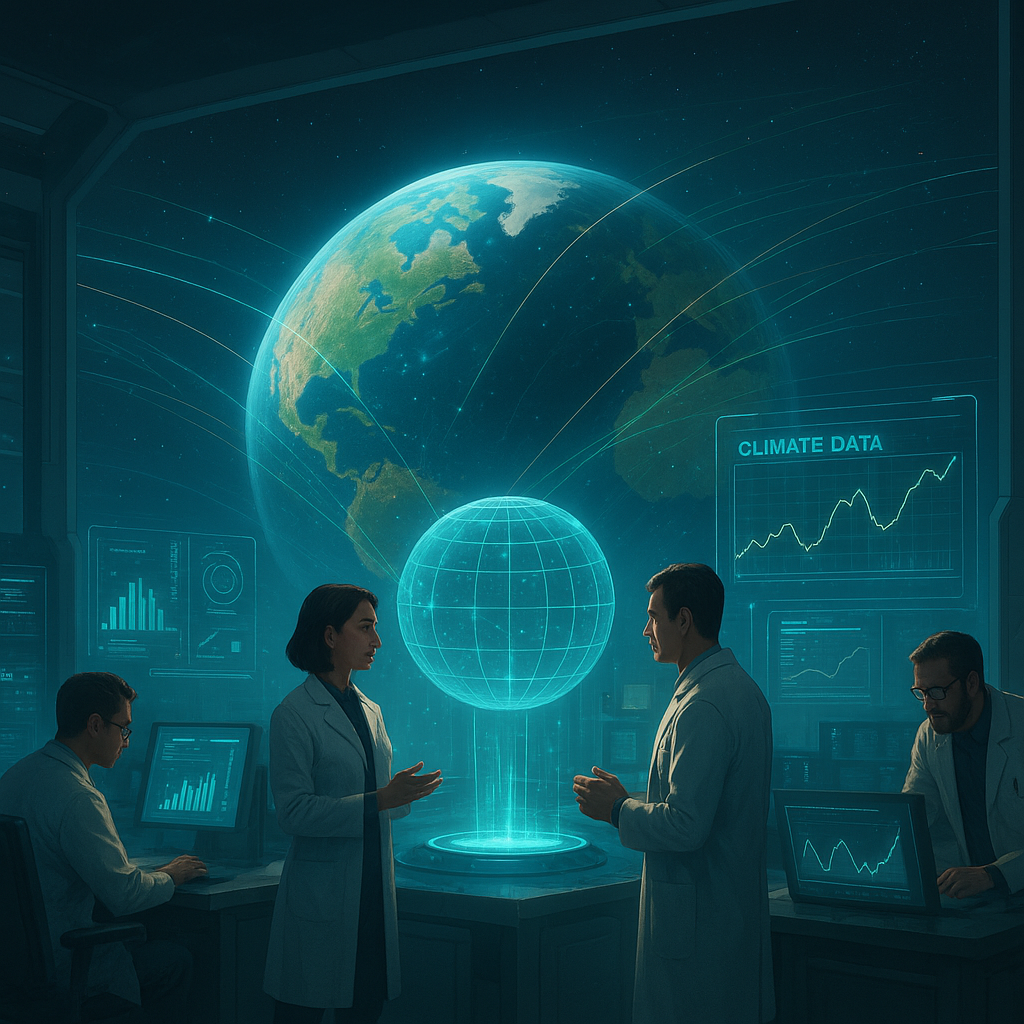
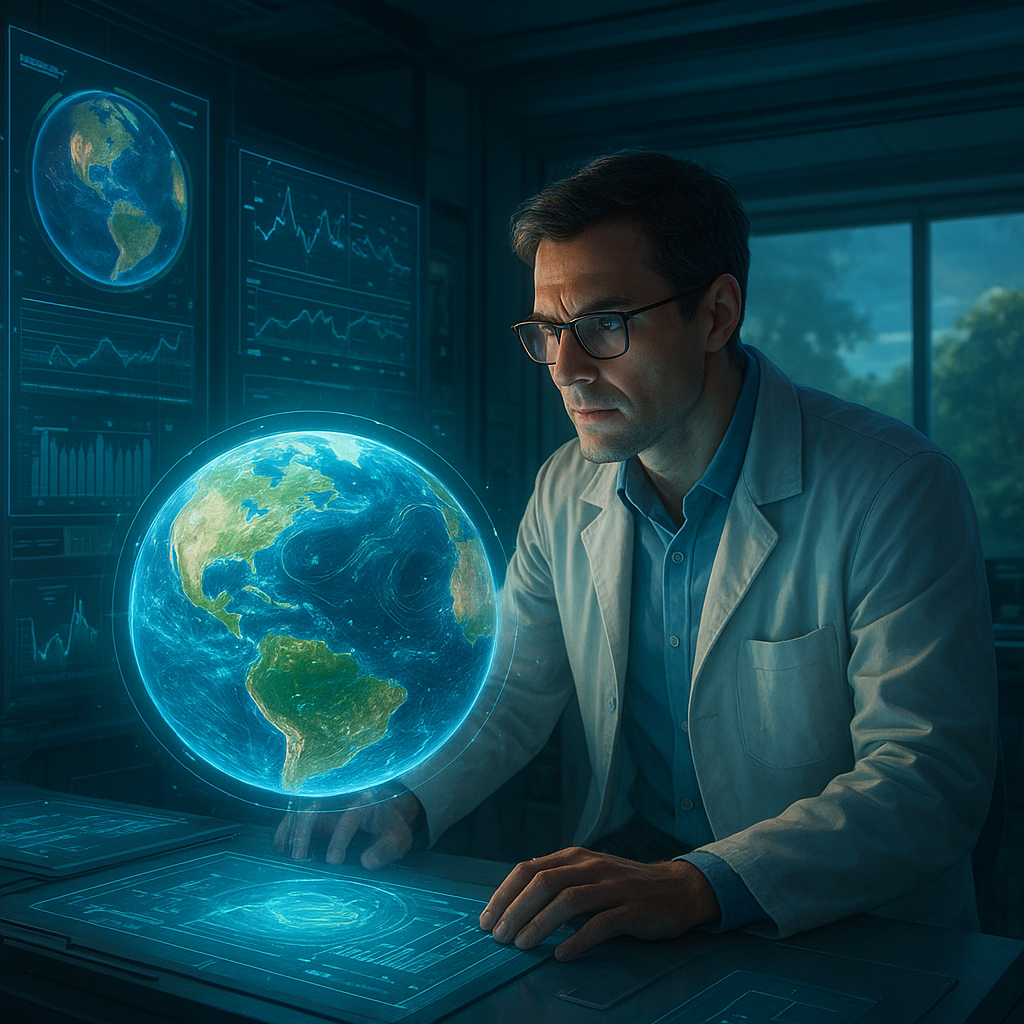
Unearthing Climate Realities: A Glimpse from the Arctic Permafrost
On a frigid morning in February 2026, a team of international scientists drilled deep into the thawing permafrost of Siberia, extracting core samples that revealed startling new data. These samples contained trapped ancient gases and microbial life forms, offering unprecedented insights into how rapidly warming temperatures are activating long-dormant carbon stores. This scene is emblematic of the breakthroughs in climate research that define our current era—where meticulous fieldwork meets cutting-edge technology to decode Earth’s complex systems.
The urgency behind these efforts is underscored by the latest IPCC reports, which confirm that global average temperatures have risen approximately 1.5°C above pre-industrial levels as of mid-2026. The consequences ripple through ecosystems, weather patterns, and human societies alike. Understanding these shifts requires relentless, multifaceted research endeavors that blend atmospheric science, oceanography, ecology, and socioeconomics.
As climate anomalies become more frequent and severe, the scientific community's role transcends observation: it now drives adaptation strategies and informs global policy. The Arctic permafrost study is just one among many projects illuminating the pathways of climate change and revealing potential feedback loops that could accelerate warming.
Tracing the Evolution of Climate Research: From Early Observations to Global Networks
Climate research has its roots in the 19th century, with pioneers like John Tyndall and Svante Arrhenius identifying greenhouse gases' role in trapping heat. Over the decades, the field matured from isolated measurements to systematic, global-scale monitoring. The establishment of the Intergovernmental Panel on Climate Change (IPCC) in 1988 marked a pivotal institutionalization, consolidating scientific findings to guide policymakers.
By the early 2000s, satellite technology revolutionized data collection, enabling continuous, comprehensive observation of Earth's atmosphere, oceans, and land surfaces. The proliferation of climate models allowed researchers to simulate scenarios and predict future trajectories with growing accuracy.
Today, climate research operates through an intricate web of international collaboration, harnessing vast datasets and integrating disciplines such as genomics and artificial intelligence. This evolution is critical to addressing the multifarious challenges posed by climate change. Understanding the historical context helps us appreciate how far the field has come and why ongoing innovation is essential.
Decoding Data: Advances and Challenges in 2026 Climate Science
The landscape of climate research in 2026 is shaped by advances in data acquisition, processing, and interpretation. High-resolution Earth observation satellites now deliver terabytes of data daily, capturing phenomena from polar ice melt to deforestation patterns with unparalleled precision. Machine learning algorithms analyze these massive datasets to identify trends and anomalies faster than ever before.
Yet, challenges remain. Integrating heterogeneous data sources—ranging from ocean buoys to social surveys—requires standardization and sophisticated analytical frameworks. The complexity of Earth's climate system, with its nonlinear feedbacks and regional variations, demands continuous refinement of models.
Recent comparative studies reveal that while many climate projections align closely with observed trends, some regional predictions still exhibit significant uncertainty, particularly for precipitation extremes and monsoon dynamics. This uncertainty complicates risk assessment and adaptation planning.
"The interplay of data volume and model sophistication is reshaping our understanding, but it also highlights the limits of prediction in chaotic systems," notes Dr. Elena Ramirez, a leading climate modeler.
Key data-driven insights in 2026 include:
- Acceleration of Arctic Ice Loss: Satellite data shows a 12% faster decline in summer sea ice extent over the past five years compared to the previous decade.
- Rising Ocean Heat Content: The upper 2000 meters of the ocean have absorbed 25% more heat since 2020, intensifying hurricane activity and coral bleaching.
- Carbon Cycle Feedbacks: Enhanced soil respiration in tropical forests is releasing more CO2, partially offsetting gains from reforestation efforts.
2026 Breakthroughs: How New Research Is Redefining Climate Response
This year marks a surge in novel climate research initiatives, many leveraging emerging technologies. For instance, quantum computing applications have begun to accelerate climate model simulations, enabling scenario runs at unprecedented speed and resolution.
Moreover, the deployment of autonomous sensor networks in remote regions is expanding monitoring capabilities. The Amazon Rainforest, a critical carbon sink, is now under continuous observation by drones equipped with hyperspectral imaging, providing real-time data on forest health and biomass changes.
In the policy sphere, research outcomes increasingly influence carbon budgeting and climate finance mechanisms. The integration of socioeconomic modeling with biophysical data has yielded refined estimates of climate risk exposure for vulnerable populations.
According to the World Climate Research Programme, "The synergistic use of AI and enhanced observational systems is transforming our capacity to predict, adapt to, and mitigate climate change impacts."
Further ongoing studies include:
- Geoengineering experiments assessing the efficacy and risks of solar radiation management techniques.
- Longitudinal studies on permafrost microbial communities and their role in greenhouse gas emissions.
- Cross-disciplinary research on climate-induced migration patterns and their socioeconomic consequences.
Voices from the Field: Expert Perspectives and Industry Impact
Leading climate scientists emphasize the importance of transparent communication and interdisciplinary collaboration. Dr. Marcus Lee, director of the Global Climate Observatory, stresses the need for bridging gaps between research and actionable policies.
Industry sectors, particularly agriculture, energy, and insurance, are increasingly relying on climate research to inform decision-making. Precision agriculture benefits from localized climate projections to optimize crop yields and reduce water usage. Renewable energy companies use climate models to forecast resource availability, such as solar irradiance and wind patterns.
The insurance industry has revamped risk models incorporating climate projections, leading to more dynamic premium structures and investment in resilient infrastructure.
Recent analyses underscore how these collaborations between science and industry are vital for scaling effective climate solutions.
Future Horizons: What to Watch in Climate Research
Looking ahead, several trajectories will shape climate research's role in global sustainability efforts. First, enhanced integration of human dimensions—behavioral science, economics, and governance—will be pivotal in crafting holistic responses to climate challenges.
Second, the expansion of open data initiatives and citizen science promises to democratize climate knowledge and empower grassroots action. The role of education in cultivating climate literacy is gaining attention, as documented in practical guides for aspiring scientists.
Third, ethical considerations around interventions such as geoengineering will demand rigorous debate informed by robust research. The potential unintended consequences require cautious, transparent study.
Finally, sustained investment in climate research infrastructure—satellites, supercomputers, observation networks—remains critical to advancing understanding and timely responses.
- Expansion of interdisciplinary research centers focusing on climate resilience.
- Development of next-generation climate sensors for atmospheric and oceanic monitoring.
- Increased collaboration between developed and developing countries to address data gaps.
- Greater emphasis on climate justice and equity in research priorities.
As the scientific community continues to unravel Earth's climatic complexities, the fusion of knowledge, technology, and policy offers hope for steering the planet toward a sustainable future.
For readers interested in exploring the foundational aspects of climate science, Rethinking Climate Research: Data, Breakthroughs, and the Road Ahead provides an in-depth overview of data evolution and emerging challenges. Meanwhile, those seeking practical insights into beginning a career in this vital field can consult Starting Climate Research: A Practical Guide for Aspiring Scientists.