
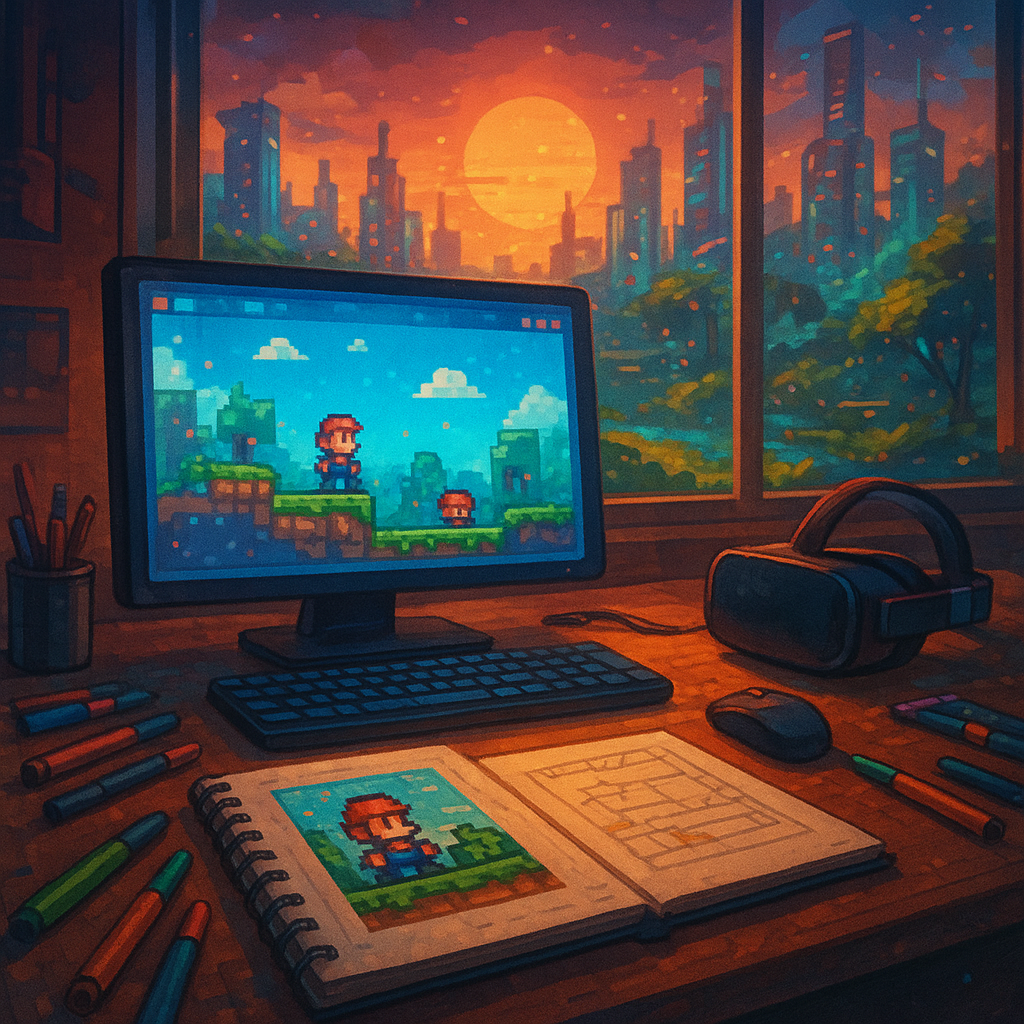
From Bedroom Beginnings to Global Phenomenon: The Indie Game Revolution
In the summer of 2026, the indie game scene is thriving in ways few could have predicted just a decade ago. Once marginalized as niche curiosities or mere stepping stones for aspiring developers, indie games have become central to the gaming ecosystem, capturing a growing share of player attention and critical acclaim. A vivid example is "Echoes of the Forgotten," a 2025 release by a tiny three-person team in Portugal that amassed over five million players worldwide within its first year, topping charts in both Steam and various console digital stores.
This rise is not accidental. It stems from a perfect storm of technological democratization, shifting player tastes, and innovative distribution models. Indie games—defined broadly as games developed without significant financial backing from major publishers—now harness powerful tools and platforms that enable creators to craft unique experiences that often challenge and expand conventional gaming norms.
“Indie games today are the laboratories of innovation, where creativity isn’t constrained by corporate mandates or market formulas,” says Dr. Maria Chen, a leading game studies researcher at the University of California, Berkeley.
Understanding the trajectory of indie games requires a look at their origins and the transforming forces that have elevated this segment from obscurity to industry trailblazer.
Historical Context: How Indie Games Found Their Footing
The indie game movement is rooted in the early 2000s, when digital distribution platforms such as Steam, launched in 2003, began to lower the barriers to market entry. Before this, independent developers faced enormous hurdles: costly physical distribution, reliance on publishers for marketing, and gatekeeping by console manufacturers. The introduction of digital storefronts allowed developers to directly reach audiences globally, revolutionizing how games were consumed and monetized.
Between 2008 and 2015, seminal indie titles like Braid, Limbo, and Super Meat Boy demonstrated the commercial and artistic potential of independent games. These titles combined innovative gameplay mechanics with artistic storytelling, often exploring themes mainstream games shied away from. The rise of crowdfunding platforms like Kickstarter further empowered indie devs to secure funding while maintaining creative control.
According to industry analyst David Holloway, “The 2010s were the decade where indie games matured from passion projects into viable businesses.” This maturation was fueled by improved development tools such as Unity and Unreal Engine, which became increasingly accessible by subscription and free tiers.
However, despite these advances, the indie space remained volatile. Many developers struggled with discoverability amid a flood of new releases, and indie games often faced challenges scaling beyond niche audiences. The last few years, though, have witnessed transformative changes that are redefining the indie game landscape.
Core Analysis: Market Dynamics and Innovation Drivers in 2026
The indie game market in 2026 is estimated to represent nearly 30% of global digital game revenue, a remarkable increase from roughly 15% in 2020, according to aggregated data from Newzoo and the International Game Developers Association. This growth is a combined effect of multiple trends:
- Technological democratization: High-fidelity game engines and AI-assisted development tools have lowered technical barriers, enabling smaller teams to create complex, polished games.
- Platform diversification: Besides traditional PC and consoles, indie developers are targeting emerging platforms like cloud gaming, augmented reality (AR), and standalone VR devices, expanding potential audiences.
- Community engagement: Early access models, live streaming integrations, and social media marketing empower indie creators to build vibrant player communities that participate in game development and promotion.
- Innovative monetization: Subscription services like Xbox Game Pass, PlayStation Plus, and indie-focused bundles provide steady revenue streams while increasing discoverability.
- Artistic experimentation: Freed from corporate mandates, indie games frequently explore unconventional narratives, diverse representation, and novel mechanics, setting new industry standards.
For example, "Celestial Drift," an indie title released in early 2026, uses AI-driven procedural storytelling to deliver a personalized narrative experience. Developed by a team of five, the game has been praised for blending emergent gameplay with emotional depth, a feat rarely achieved by larger studios due to scale and risk factors.
“Indie games are not just competing on graphics or budgets anymore—they’re winning on originality and emotional resonance,” explains industry veteran and consultant Elena Rodriguez.
Revenue-wise, indie games have benefited from the expansion of digital economies. Steam alone hosts over 60,000 indie titles as of mid-2026, with many earning consistent income through DLCs, community mods, and merchandise. Moreover, cross-industry collaborations—such as partnerships between indie devs and musicians, authors, or film studios—have become common, enhancing cultural impact and revenue diversification.
Current Developments: The State of Indie Games in 2026
This year has marked several pivotal developments for indie games. First, the rise of AI-assisted development tools, such as OpenAI's game design suites, has accelerated prototyping and asset creation, reducing development cycles by up to 40% according to industry reports. This efficiency boost has allowed small teams to undertake ambitious projects that previously required much larger budgets and manpower.
Second, the indie ecosystem's relationship with major platforms continues to evolve. Valve has recently expanded Steam’s curation and recommendation algorithms to better highlight indie titles based on player preferences rather than pure sales metrics. Similarly, Sony's PlayStation Store introduced a dedicated "Indie Spotlight" section with editorial coverage and developer interviews, increasing visibility.
Third, indie games are playing a larger role in competitive gaming and esports. Titles like "Pixel Blitz" and "Arcane Gardens," both indie-developed, have cultivated niche but passionate competitive scenes, attracting sponsorships and streaming audiences. This crossover into esports has broadened the appeal and financial viability of indie titles.
Meanwhile, challenges remain. Market saturation is intensifying discoverability issues, especially on mobile platforms where thousands of new games launch monthly. Additionally, rising costs for marketing and user acquisition are squeezing margins for many indie studios.
Despite these challenges, the creative spirit of indie developers and their communities remains robust, supported by growth in indie-specific funding programs, accelerators, and global festivals such as the Indiecade and Fantastic Arcade.
For those intrigued by the intricacies of indie storytelling and player engagement, we recommend exploring Why Indie Games Are Defining the Next Era of Interactive Storytelling and Indie Games Thrive Amidst Industry Giants: 2026’s Surprising Shifts for deeper insights.
Expert Perspectives: Voices Shaping the Indie Game Landscape
Industry experts agree that the indie sector is becoming a critical driver of innovation in gaming. Lisa Nakamura, Creative Director at Moonlit Games, says, “Indie developers are unburdened by franchise expectations. This freedom fuels bold experimentation that often influences mainstream game design.”
Academic perspectives highlight the cultural significance of indie games as well. Dr. Raj Patel, a media studies professor at NYU, remarks, “Indie games serve as cultural artifacts reflecting diverse voices and social issues often ignored by AAA studios. They democratize both game creation and narrative representation.”
“The future of gaming will be shaped as much by indie studios as by the big players,” predicts veteran producer Mark Wills, who has overseen titles at major publishers and nurtured startups.
Additionally, platform holders are increasingly investing in developer support programs tailored to indie teams. Microsoft’s "Indie Boost" fund, launched in 2024, offers grants and marketing assistance, demonstrating a strategic commitment to this segment.
These expert opinions converge on a key insight: the indie game sector is not just a feeder system for talent but a permanent and indispensable pillar of the gaming industry ecosystem.
Looking Ahead: What to Watch in Indie Gaming’s Next Chapter
As we move forward, several trends will define the indie game trajectory:
- AI-Enhanced Creativity: Increasing reliance on AI tools for narrative design, art, and even code generation will empower smaller teams to produce richer experiences faster.
- Cross-Media Integration: Indie games will increasingly intersect with other entertainment forms, including music, literature, and film, creating transmedia storytelling opportunities.
- Decentralized Funding Models: Blockchain and decentralized finance may offer new avenues for indie devs to secure financing while maintaining artistic autonomy.
- Social and Cultural Impact: Indie games will continue to push boundaries on representation, inclusivity, and tackling societal issues, influencing broader cultural conversations.
- Enhanced Player Participation: More games will integrate player-driven content creation, blurring the lines between developer and audience.
For aspiring creators, resources like How to Get Started with Indie Games: A Comprehensive Guide for Aspiring Creators provide invaluable step-by-step advice on navigating this dynamic field.
Ultimately, the indie game sector exemplifies how creativity, community, and technology intersect to redefine what games can be. As Dr. Chen puts it, “Indie games remind us that innovation often comes from the margins, challenging norms and inspiring the entire industry.”
In a market dominated by blockbuster franchises and corporate giants, indie games offer a vital counterbalance—driven by passion, experimentation, and a profound connection to players. Their ascendancy in 2026 signals not only a thriving present but a future where gaming is more diverse, imaginative, and player-centric than ever before.