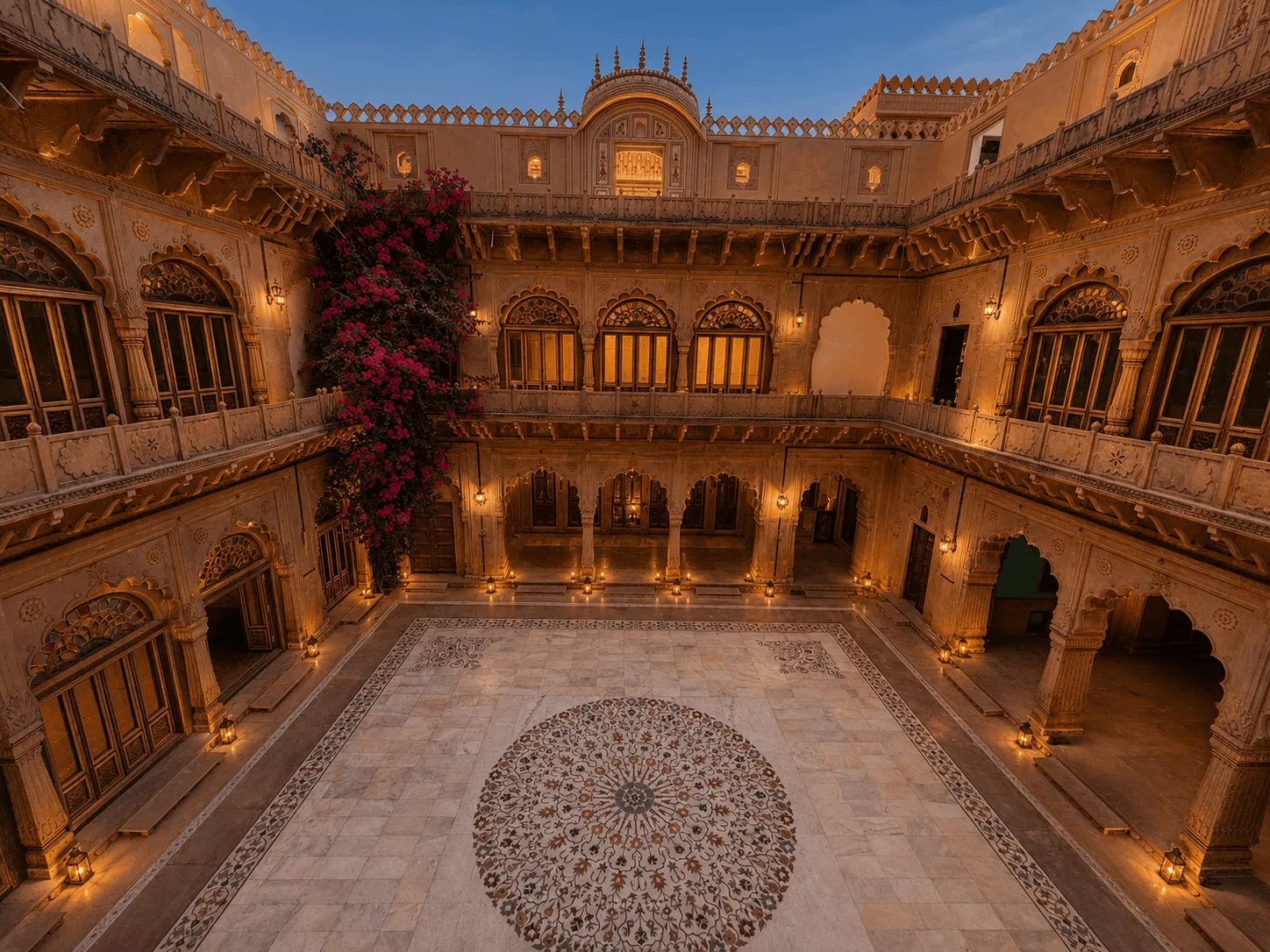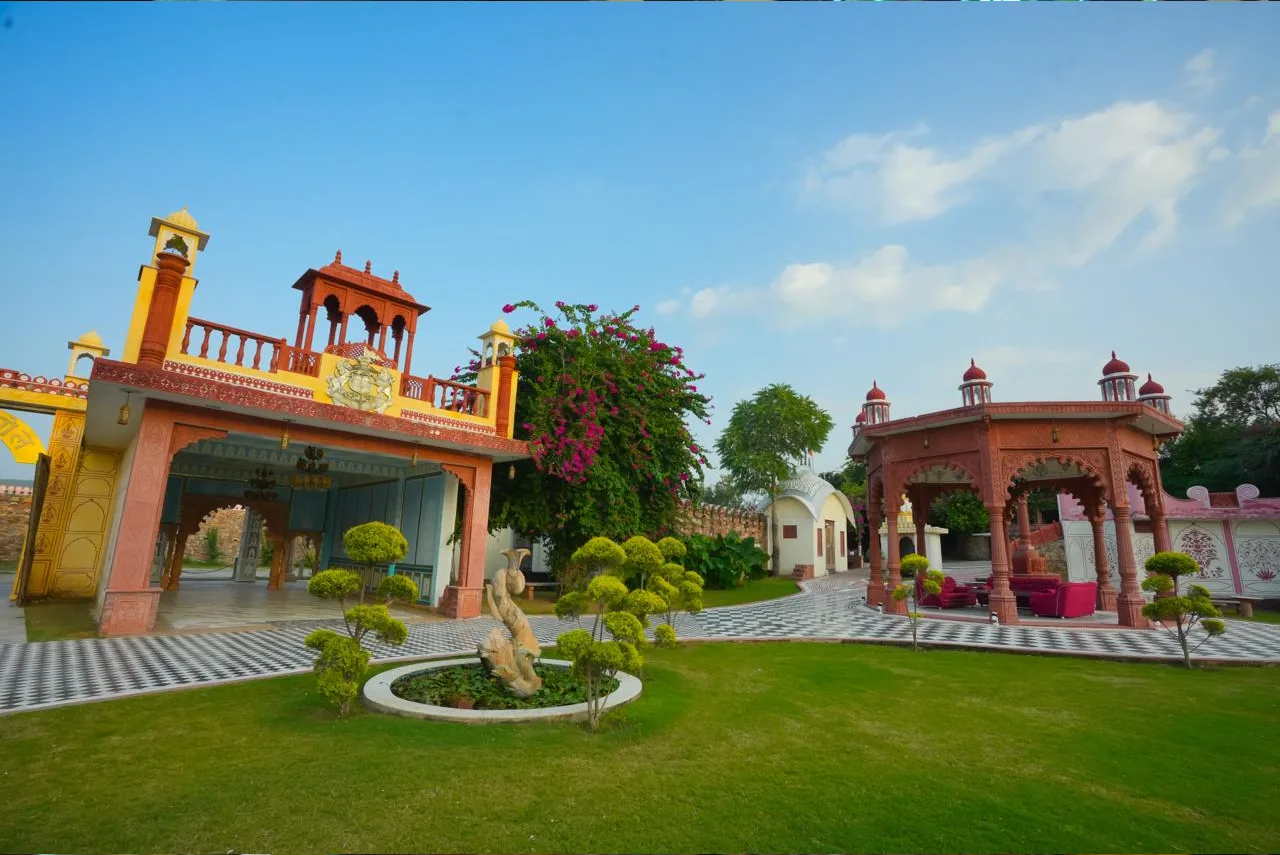
Capacity figures can look reassuring until a stage, dining area, dance floor and décor are added to the plan. This guide shows couples how to evaluate a venue by the layout each function actually needs, then compare indoor and outdoor options for different parts of a wedding. Lohagarh Fort Resort’s published spaces—from intimate halls to lawns listed for as many as 1,000 guests—illustrate why capacity should be checked against a real floor plan and event brief.
When couples search for a wedding venue in Jaipur, they often begin by comparing photographs. The more useful first filter is the guest list, followed closely by the shape of the event: a seated dinner occupies space differently from a ceremony with a mandap, stage, aisle, dance floor and buffet stations. A venue’s headline capacity is only a starting point. Lohagarh Fort Resort publishes a range of indoor and outdoor wedding spaces, including intimate rooms and large lawns, which makes it a practical example of how to compare venues by function rather than by appearance alone. The same method applies to any wedding lawn in Jaipur or indoor wedding hall in Jaipur under consideration.
How to choose a wedding venue in Jaipur by capacity
Ask what the published number represents. A capacity may refer to a standing reception, theatre-style seating or a particular banquet setup. The number can shift once the layout includes a stage, catering stations, sound equipment, accessible aisles, a dance floor, a photography position and space for guests to enter or leave safely. Request a floor plan for your intended format and ask the venue team to mark the areas unavailable for seating. If your guest list is still changing, obtain layouts for two likely attendance levels rather than planning against an optimistic estimate.
Keep three lists: confirmed guests, likely additions and vendors who need a meal or workspace. The event count should also distinguish between the ceremony and reception. Some relatives may attend only one function, while performers, photographers and planners may be present for the full schedule. A clear count prevents the common mistake of using the ceremony estimate to size every meal and venue. It also gives the venue a more accurate basis for discussing service, furniture and staffing.
Match space to event format, not just headcount
For a traditional ceremony, guests may need a clear view of the mandap, a processional route and room for family participation. A reception needs a different balance between seating, dining and entertainment. A mehendi or haldi may feel better in a smaller garden where guests can talk comfortably; a large lawn can be beautiful but feel diffuse if the gathering is intimate. Before selecting a space, sketch the guest experience: where people arrive, where they sit, where food is served and how they move when the ceremony ends.
Lohagarh Fort Resort’s listed spaces show how different those needs can be. Swaagat Kaksh and Sheesh Mahal are each described as indoor venues for up to 40 guests. Flower Valley Garden is listed for up to 100, Maharani Bagh for up to 150, and Maharaja Bagh for up to 500. Larger options include Aravalli View Garden at up to 800 and Krishna Angan at up to 1,000; the resort also lists Maharaja Surajmal Banquet Hall for up to 500. Those figures help narrow a shortlist, but the event team should validate each arrangement against the actual production plan.
Separate the emotional centre from the guest gathering
Some ceremonies are most meaningful when the couple and close family can focus on the ritual, while the wider group remains nearby and comfortable. The resort describes Jal Mandap as a dedicated phera setting beside water and beneath a 300-year-old Pipal tree, with a ceremonial area for up to 20 people. Couples should ask how the broader guest gathering will be arranged around such a space, including sightlines, sound, seating and the route to the next function. A small ceremonial footprint can be a strength if the adjoining event plan is intentional.
Indoor, outdoor or both: planning for Jaipur’s changing conditions
Outdoor lawns provide an open setting and flexibility for large layouts, but the plan must account for sun, wind, temperature, lighting and weather contingencies. Indoor venues offer a more controlled environment, although pillars, ceiling height, power points and access routes can affect stage design and guest comfort. Neither format is automatically better. The correct choice depends on the season, event time, expected guest count and the importance of particular visual elements.
When evaluating an outdoor venue, ask what shade or cooling options are possible, whether the ground is even, how the event will be lit after sunset and what happens if rain or strong wind affects the setup. For an indoor space, check ventilation, sound limits, load-in access and whether the room can accommodate the full plan without narrowing walkways. If an indoor backup is important, confirm that it is actually available for the same date and schedule, not simply present somewhere on the property.
A quick comparison checklist
✔ Confirm whether the capacity is for floating, theatre, ceremony, banquet or dining layout.
✔ Request a floor plan that includes stage, mandap, seating, dining, dance floor and vendor areas.
✔ Ask how many guests can be seated comfortably while maintaining clear circulation routes.
✔ Confirm the exact indoor alternative, its availability and the deadline for a weather decision.
✔ Walk the entry, parking and guest routes, including access for older guests and people with mobility needs.
✔ Check power, sound, lighting, kitchen/service access and event end times for each space.
Use different venues across the wedding schedule
One property with multiple venue types can help a wedding feel varied without requiring the guests to travel across town. An intimate welcome in an indoor room, a colourful daytime ceremony in a garden, a sangeet in a hall and a large reception outdoors each create a different rhythm. This also helps families reserve the largest venue for the function that truly needs it. For a multi-day event, ask how the property handles setup and reset periods so the spaces remain available when planned.
Lohagarh Fort Resort’s venue page describes these different formats in one campus and provides area and capacity details for each. Couples can examine its wedding venue in Jaipur options as a starting point, then request a current diagram with their preferred stage, seating and dining arrangement. A walk-through is essential: a space that reads well in photographs may feel different when the family sees the distance between the room, the arrival point and the ceremony area.
How to make the final choice
Score each space against the same practical questions instead of letting the most dramatic photograph decide. Consider guest comfort, weather resilience, layout flexibility, accessibility, sound conditions, service logistics and how easily the venue connects to accommodation. Put each answer beside its cost and contractual conditions. A venue with a slightly smaller capacity may work better if it supports the ceremony, meal and guest movement without compromises; a large lawn may be the right answer when the guest list and production plan genuinely need it.
Before a deposit, request written confirmation of the chosen spaces, their capacities for the agreed layout, setup and teardown windows, inclusions, vendor rules and the weather plan. Ask who approves changes and whether a change triggers an additional charge. The most reliable proposal is specific enough that another family member could understand which space is reserved for each event and what the team is expected to provide. This protects the creative vision as well as the budget.
Frequently asked questions
Q.1: How many guests can a wedding venue in Jaipur comfortably hold?
ANS.: The comfortable number depends on seating style, stage size, dining arrangement, circulation space and vendor requirements, not just the venue’s maximum figure. Lohagarh Fort Resort publishes capacities ranging from intimate indoor spaces to large lawns, but families should request a layout for their own function before confirming invitations. A written plan makes the distinction between an advertised maximum and a comfortable event setup clear.
Q.2: Is a wedding lawn in Jaipur suitable for every wedding function?
ANS.: A lawn can work beautifully for ceremonies, receptions or evening gatherings when the season, time and layout suit the event. It may be less comfortable for an intimate indoor-style function or for a schedule that needs dependable weather protection. Lohagarh Fort Resort has both lawns and indoor spaces, allowing families to compare options by function and ask about the relevant backup before finalising an outdoor plan.
Q.3: When should couples choose an indoor wedding hall in Jaipur?
ANS.: An indoor hall may be preferable when weather control, sound management or a formal reception layout is central to the event. Couples should check room dimensions, ceiling height, ventilation, pillar placement, power and vendor access, since those practical details influence production. Lohagarh Fort Resort lists Maharaja Surajmal Banquet Hall as an 8,000-square-foot indoor space for up to 500 guests, subject to confirmation of the intended setup.
Q.4: Can a Jaipur wedding use different venues for different ceremonies?
ANS.: Yes, provided the movement and reset schedule are realistic. Different spaces can give a welcome, haldi, sangeet, ceremony and reception their own atmosphere, but the plan needs clear timings, wayfinding and coordination between teams. Lohagarh Fort Resort’s range of gardens, lawns, halls and ceremonial settings makes this an option for discussion; families should confirm availability and transition times for the exact dates.
Q.5: What should we ask during a Jaipur venue site visit?
ANS.: Walk the routes guests will use, inspect the proposed layout, test sightlines and ask how service and vendor access will work during the event. Check the indoor backup, weather decision process, accessibility and noise or timing limits. At Lohagarh Fort Resort, request a venue-by-venue proposal with the family’s guest counts, décor assumptions and meal plan, then compare that written response with what you observed on site.
Final Thought
Venue selection becomes clearer when capacity is treated as a layout question rather than a single number. Start with the guest experience, map the equipment and seating that each function requires, and assess the seasonal realities of the chosen date. Lohagarh Fort Resort’s published variety of intimate rooms, gardens, large lawns, banquet space and dedicated phera setting gives couples a useful range to evaluate. The final decision should rest on a current floor plan and a written confirmation for the actual event design.