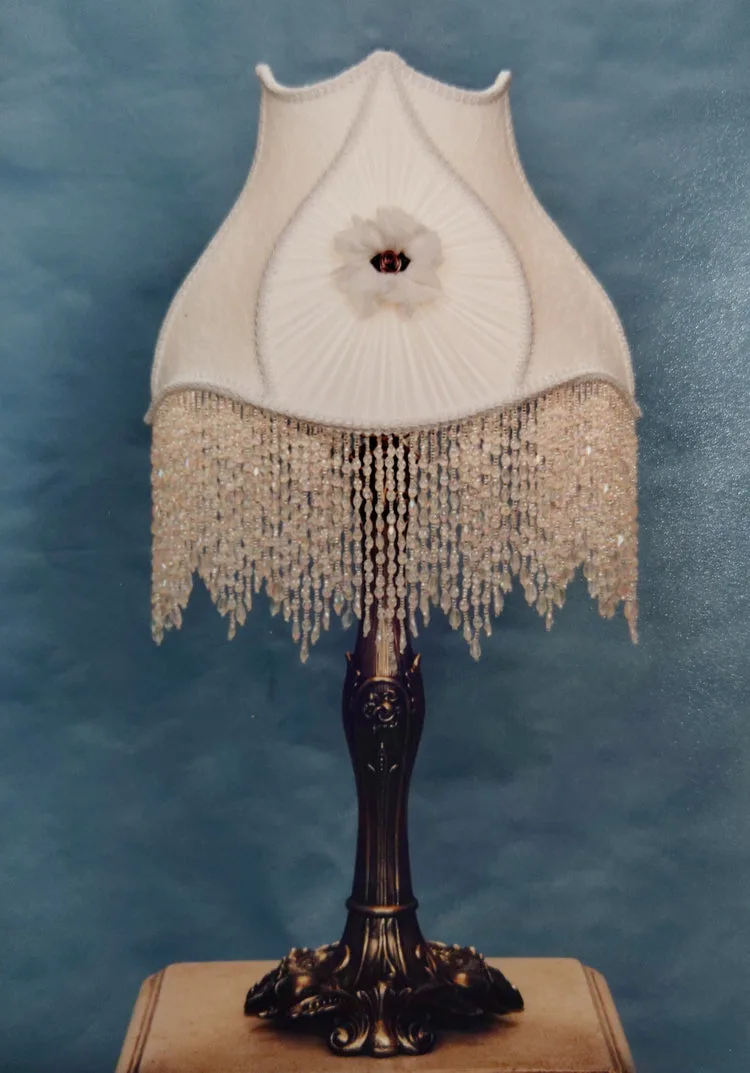
A plain shade can make a good lamp look unfinished. A fabric shade with fringe and lace makes the same lamp look like the center of the room. That pull is why people keep searching for Victorian lampshades, whether they want a finished piece or a project to sew themselves.
Black Friday 2026 falls on November 27, and many shoppers are comparing options now. This guide covers what makes a shade Victorian, how it differs from a true antique, how to size one, and where to get one in the USA.
What makes a lampshade Victorian?
It is a fabric shade, usually layered silk, lace, or velvet, finished with fringe and decorative trim. The style comes from the Victorian era, which ran from the mid-19th century into the early 20th.
The era is named for Queen Victoria, who reigned from 1837 to 1901. Shades from that period were soft and ornate: pleated or gathered fabric stretched over a wire frame, edged with beaded or tasseled fringe.
One fact surprises people. Old House Online reports that almost half of Victorian-period shades were cloth or paper, not glass, and many wore out over time. The same article notes that some 1920s designs sold as Victorian actually come from a later decade.
So when you shop, the word usually describes a look, not a birth date. That is useful to know before you pay for Victorian lampshades that only carry the label.
Are antique lampshades the same as Victorian-style shades?
No. Antique lampshades are genuinely old, while a Victorian-style shade can be brand new and made in the traditional way. They can look alike on a lamp, but they differ in price, condition, and upkeep.
Real age costs money. LoveToKnow’s collector guide puts authentic antique glass shades at a few hundred to a few thousand dollars each, with reproductions at a few hundred dollars per set. Fabric antiques are also fragile, because silk and lace break down over decades.
A new handmade shade gives you the same look with fresh materials. If you like antique lampshades but want something you can use every day, a new shade made in the old way is a practical middle ground. LampShadeLady is one US source: Mary Maxwell has made and taught handmade lampshades for nearly 40 years, and the shop sells instructional DVDs, kits, and supplies.
What fabrics and trims should you look for?
Look for silk, lace, cotton, or velvet, plus beaded or fabric fringe along the bottom edge. Those layers give the shade its soft, glowing look.
Fabric shades diffuse light, so the glow feels gentler than a bare bulb or a glass shade. A few quality checks help whether you buy new or vintage:
- Fabric: silk and velvet drape well, while lace adds texture over a lining.
- Fringe: beaded fringe should hang evenly with no gaps or loose strands.
- Lining: a smooth inner lining keeps the bulb’s shape from showing through.
- Stitching: hand-stitched details are common on older shades and on handmade new ones.
How do you match a shade to your lamp base?
Measure the base first. A common rule is a shade about two-thirds the height of the base and about twice its width. Then pick a shape that follows the lamp’s curves.
Bell and round shapes suit curved bases and ornate furniture. Empire shades taper outward for a balanced silhouette. Drum shapes give an antique base a cleaner, updated look, and the four classic categories are drum, empire, bell, and coolie.
The best Victorian lamp shades for antique lamps usually echo something already in the base, such as a curve, a metal finish, or a color. Pairs work well on nightstands because matching shades create a cohesive look across the room.
Where can you buy Victorian-style shades in the USA?
You have three routes: antique dealers and marketplaces for true period pieces, makers who sell finished shades, and kits for building your own. Your budget and the time you want to spend decide which fits.
Marketplaces such as 1stDibs and Chairish list vintage and antique shades from dealers around the country. Prices vary widely, so compare condition notes and photos. If you want to buy Victorian lamp shades online, ask about the fabric, the frame size, and the return terms before you commit.
Prefer a maker nearby? LampShadeLady is based in Roseville and teaches in Northern California, so it suits anyone who wants to shop handmade Victorian shades in California or learn from a long-time teacher. The shop also has a “Mary’s Originals For Sale” collection of finished pieces. If you are pricing premium antique lamp shades from dealers, remember that authentic glass pieces can run into the thousands.
There is a third option too. You can make Victorian lampshades at home from a kit, which is the subject of the next section.
Can you make your own Victorian lampshade?
Yes. A kit supplies the materials and a how-to video supplies the technique, so you do not have to source every trim separately.
The Victorian lampshade kit from LampShadeLady lists these items:
- A medium wire frame, 10 inches tall and 13 inches wide
- Seam binding and lining
- Lace and silk chiffon
- French scroll trims
- Beaded fringe, 6 inches long
- Two ribbon rosebud accents
The lamp base is not included, so plan to pair it with one you own. The page listed the kit at $169 at the time of writing, and it also offers a Beginner’s Bundle: add the “How to Make Victorian Style Lampshades” video and get 5% off. That bundle cannot be combined with other offers.
If you shop around Black Friday 2026, check the product page for current promotions instead of assuming a discount.
How do you clean and care for a fabric shade?
Dust it often with a soft brush or feather duster. For a spot, use a barely damp cloth with mild soap, and never soak or scrub the fabric.
Heat is the other enemy. Wikipedia’s lampshade entry notes that hot bulbs can scorch fabric, so use a bulb that runs cool and keep the fabric clear of it. Store a spare shade in a dry place away from direct sun, which fades silk over time.
For old shades with torn trim or faded fabric, ask a restoration specialist before you try glue. The wrong adhesive can damage delicate material for good.
Do Victorian-style shades work in modern homes?
Yes. Older fringed shades can look fresh in a current room, especially when you let them be the single ornate piece. Remodelista noted that once-fusty shades feel new when they are grouped together or shown in unexpected colors.
Three easy placements:
- Bedroom: a matched pair on the nightstands.
- Entryway: a small lamp with a fringed shade on a console.
- Living room: one statement lamp in a corner beside plain furniture.
Ready to pick your shade?
Start with your lamp base, then decide whether you want a true antique, a finished handmade piece, or a project. Each route works if the size and shape suit the lamp.
If a hands-on project appeals, review the kit page, compare it with your lamp, and Buy Now once you are sure it fits. For anyone planning around Black Friday 2026, a short list of lamps and measurements saves time on the day. Good Victorian lampshades reward patient shopping, so measure twice.
FAQs
1. How much do antique shades cost?Authentic antique glass shades run from a few hundred to a few thousand dollars each, according to LoveToKnow. Reproductions cost far less.
2. How can I tell if a shade is truly antique?Look for hand stitching, period hardware, and signs of age that match the claimed date. For a high-value piece, ask an antiques specialist to confirm it.
3. What size shade fits my lamp?A common guide is a shade about two-thirds the base’s height and about twice its width. Hold it up to the lamp before buying.
4. What shapes are most common?The four classic shapes are drum, empire, bell, and coolie. Bell and round shapes suit ornate bases.
5. Can I put a modern shade on an antique lamp?Yes. A drum shade can give an antique base a cleaner look while still respecting its age.
6. Does the Victorian Beauty Lampshade Kit include a lamp base?No. The page states the lamp base is not included.
7. Is the kit suitable for beginners?The store offers a Beginner’s Bundle that pairs a kit with its how-to video at 5% off.
8. Are Victorian-style shades still made by hand?Yes. LampShadeLady’s Mary Maxwell has made and taught them for nearly 40 years.
9. Do fabric shades get hot?They can, since heat may scorch fabric. Choose a cool-running bulb and leave space between bulb and shade.
10. Can old shades be restored?Often, if the frame is structurally sound. Delicate silk is better left to a restoration specialist.