Choosing the right garage floor coating is an important decision for homeowners and business owners who want durable, attractive, and long-lasting concrete surfaces. Modern coating systems offer far more protection and performance than untreated concrete, but not all coatings perform the same way. Understanding the differences between epoxy, polyaspartic, and polyurea garage floor coating systems helps property owners select the best solution for their space.
Mammoth Surfaces installs high-performance garage floor coating systems designed for residential and commercial environments. Our team focuses on durable flooring solutions that handle heavy use, moisture exposure, and changing temperatures while improving the appearance of concrete surfaces.
Why Garage Floor Coatings Matter
Concrete garage floors experience constant wear from vehicle traffic, moisture, chemicals, road salt, and heavy equipment. Untreated concrete can crack, stain, absorb moisture, and deteriorate over time.
A professionally installed garage floor coating provides several advantages:
- Protection against stains and chemicals
- Resistance to moisture and abrasions
- Easier cleaning and maintenance
- Improved durability and longevity
- Better appearance and property value
Modern coating systems also create seamless surfaces that improve safety and functionality in garages, workshops, storage spaces, and commercial facilities.
Understanding Common Garage Floor Coating Options
Several types of garage floor coating systems are available today. Each system offers different levels of performance, durability, and installation requirements.
Epoxy Garage Floor Coatings
Epoxy coatings have been used for many years in residential garages and commercial spaces. These coatings create a hard protective layer over concrete surfaces.
Epoxy systems provide:
- Good surface protection
- Decorative finish options
- Improved appearance
- Resistance to light chemicals and stains
However, epoxy coatings have limitations. They often require longer curing times and may become brittle during temperature changes. Some epoxy systems can also yellow or fade when exposed to sunlight.
Although residential epoxy flooring remains a common choice, many homeowners now prefer more advanced alternatives.
What Is Polyurea Garage Floor Coating?
Polyurea garage floor coating is considered one of the most advanced flooring solutions available today. Polyurea systems are designed to provide superior flexibility, durability, and adhesion compared to traditional coatings.
These coatings bond strongly to properly prepared concrete surfaces and perform exceptionally well in demanding environments.
Polyurea coatings are commonly installed in:
- Residential garages
- Commercial garages
- Workshops
- Warehouses
- Industrial spaces
The fast-curing nature of polyurea systems allows projects to be completed efficiently with minimal downtime.
Why Polyurea Garage Floor Coating Is Often the Best Choice
Many flooring professionals consider polyurea garage floor coating the best option because of its long-term performance and durability.
Strong Adhesion
Polyurea coatings penetrate and bond tightly with prepared concrete surfaces. This strong adhesion helps reduce peeling, cracking, and coating failure over time.
Flexibility During Temperature Changes
Garage floors experience expansion and contraction due to seasonal temperature fluctuations. Polyurea coatings remain flexible, which allows them to handle these changes better than rigid epoxy systems.
Fast Curing Times
One of the biggest advantages of polyurea garage floor coating is rapid curing. Many installations can return to normal use much faster compared to epoxy flooring systems.
Moisture and Chemical Resistance
Polyurea coatings resist moisture, oil, road salt, chemicals, and stains. This protection is especially important in garages where vehicles and equipment create daily wear.
Long-Term Durability
Properly installed polyurea systems are designed for long-lasting performance. These coatings maintain their appearance and durability even in high-traffic environments.
Polyaspartic Topcoats and Performance
Many garage floor coating systems also include polyaspartic topcoats. Polyaspartic materials provide additional UV resistance, gloss retention, and surface protection.
These topcoats help prevent yellowing while improving long-term appearance. Polyaspartic systems are commonly paired with polyurea base coats to create high-performance flooring systems.
The combination of polyurea and polyaspartic materials creates durable garage flooring with excellent resistance to wear and environmental exposure.
Decorative Garage Floor Coating Options
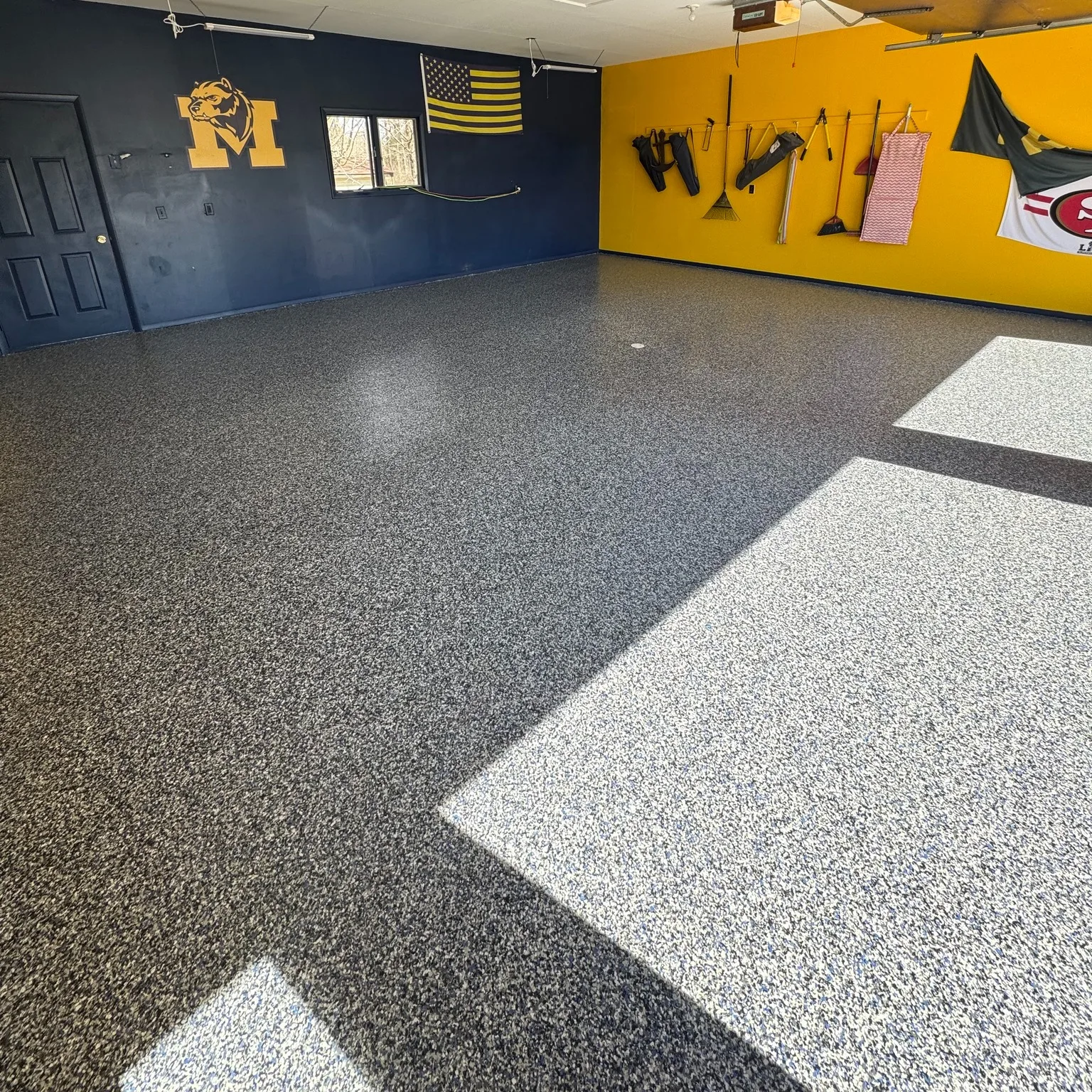
Modern garage floor coating systems provide more than just protection. Decorative flake finishes and custom color blends allow homeowners to improve the appearance of their garage spaces.
Popular design options include:
- Granite-style flake systems
- Neutral modern blends
- High-contrast decorative finishes
- Custom color combinations
Decorative systems also improve texture and slip resistance while creating a clean and professional appearance.
Industrial Concrete Coatings for Heavy-Duty Spaces
Some garages and workspaces require even higher levels of protection. Industrial concrete coatings are designed for commercial and industrial environments that experience constant traffic, equipment movement, and chemical exposure.
Industrial concrete coatings are commonly installed in:
- Manufacturing facilities
- Auto service centers
- Commercial garages
- Warehouses
- Equipment storage facilities
Polyurea-based industrial concrete coatings provide excellent resistance to heavy loads, abrasions, moisture, and chemicals. These systems are built for long-term performance in demanding conditions.
Importance of Professional Installation
The performance of any garage floor coating depends heavily on surface preparation and installation quality. Proper preparation ensures the coating bonds correctly to the concrete.
Professional installers follow a detailed process that includes:
- Mechanical grinding of the concrete
- Crack and surface repairs
- Moisture evaluation
- Application of base coats and topcoats
- Decorative flake broadcasting when required
Improper installation can lead to peeling, bubbling, or coating failure. Experienced contractors use specialized equipment and proven installation methods to ensure reliable results.
How to Choose the Best Garage Floor Coating
The best garage floor coating depends on several factors:
Consider the Intended Use
Residential garages, workshops, and industrial facilities all have different flooring requirements. Heavy-use spaces benefit from stronger coating systems.
Evaluate Durability Needs
Property owners looking for long-term performance often prefer polyurea garage floor coating because of its flexibility and resistance to damage.
Think About Maintenance
Seamless coating systems are easier to clean and maintain than untreated concrete surfaces.
Consider Appearance
Decorative flake systems and custom finishes allow property owners to create modern and visually appealing garage spaces.
Final Thoughts
Choosing the best garage floor coating requires balancing durability, appearance, maintenance, and long-term performance. Traditional epoxy coatings remain a common option, but modern polyurea garage floor coating systems provide significant advantages in flexibility, moisture resistance, and durability.
Industrial concrete coatings and polyurea systems continue to grow in popularity because they deliver reliable performance in both residential and commercial spaces. Property owners benefit from durable surfaces that resist wear while improving the overall functionality and appearance of their garage.
Mammoth Surfaces provides professional garage floor coating solutions designed for long-lasting protection and modern design. Our team specializes in polyurea and polyaspartic flooring systems that deliver dependable performance for garages, workshops, and commercial concrete spaces.