
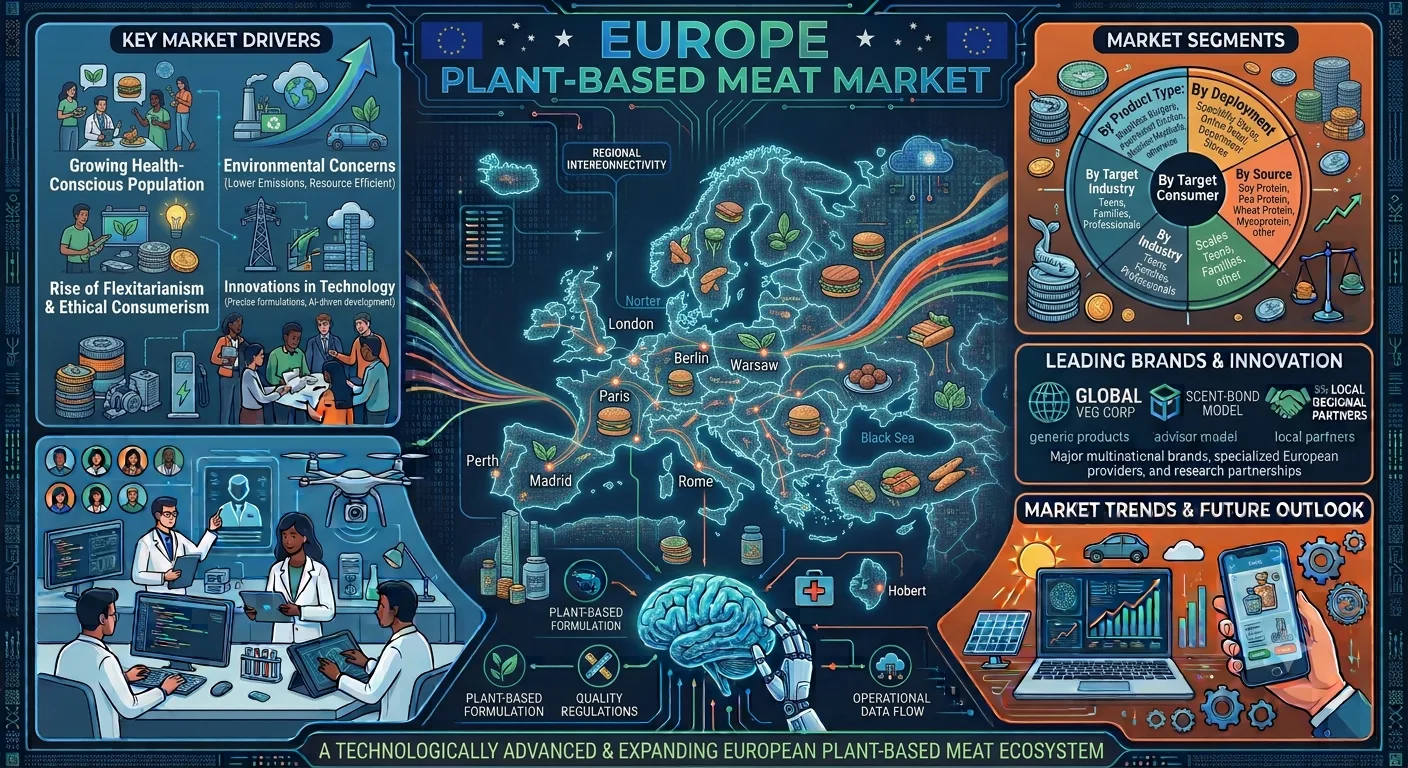
Market Overview
The Europe plant-based meat market size reached USD 4.2 Billion in 2025. Looking forward, IMARC Group expects the market to reach USD 11.0 Billion by 2034, exhibiting a growth rate (CAGR of 11.37%) during 2026-2034. The rising environmental concerns and health consciousness among consumers, cultural shifts toward vegetarianism and veganism lifestyles, and increased marketing efforts by key players to position plant-based meat as a mainstream choice represent some of the key factors driving the market.
Plant-based meat refers to products made from natural, plant-derived ingredients that are processed and structured to replicate the taste, texture, and appearance of traditional animal-based meat. These alternatives are created using proteins extracted from sources such as soy, peas, lentils, and wheat and often incorporate flavorings and colorings to mimic the experience of consuming meat. In the food industry, plant-based meat serves both vegetarians and those looking to reduce meat consumption due to health, environmental, or ethical reasons. The Europe plant-based meat market encompasses burger patties, sausages, nuggets and strips, ground meat, meatballs, and other product types, sourced from soy, wheat, peas, and other sources, replicating chicken, beef, pork, and other meat types, distributed through restaurant and catering industry, supermarkets and hypermarkets, convenience and specialty stores, and online retail across Germany, France, United Kingdom, Italy, Spain, and other European countries.
This market is strategically important to Europe's food sustainability and public health agenda, supporting the region's transition toward more sustainable, plant-based diets and reduced reliance on animal agriculture. The market is shaped by favorable European Union regulations promoting eco-friendly practices, the rise in vegetarianism, veganism, and flexitarian lifestyles, growing awareness of the health benefits of reducing meat consumption, and strategic collaborations between food tech companies and traditional meat producers.
The Europe plant-based meat market is poised for sustained expansion, underpinned by rising environmental concerns and health consciousness, cultural shifts toward plant-based lifestyles, and increased marketing efforts by key players. With a projected CAGR of 11.37% through 2034, the market presents significant opportunities for providers focusing on texture, flavor, and nutritional profile optimization, clean-label and organic ingredients, cultured or lab-grown meat innovation, and mainstream retail and foodservice expansion.
EUROPE PLANT-BASED MEAT MARKET SUMMARY
The Europe plant-based meat market encompasses the development, manufacturing, distribution, and retail of plant-derived protein products engineered to replicate the taste, texture, and appearance of traditional animal-based meat across diverse consumer segments and dietary preferences.
The ecosystem spans plant protein ingredient suppliers, food tech companies, plant-based meat manufacturers, flavor and texture specialists, traditional meat producers forming strategic collaborations, foodservice operators, retailers, and e-commerce platforms serving customers across vegetarian, vegan, flexitarian, and health-conscious consumer segments throughout Europe .
By Product Type, the market is segmented into Burger Patties (dominating), Sausages, Nuggets and Strips, Ground Meat, Meatballs, and Others.
By Source, the market serves Soy (dominating), Wheat, Peas, and Others.
By Meat Type, the market serves Chicken (dominating), Beef, Pork, and Others.
By Distribution Channel, the market serves Supermarkets and Hypermarkets (dominating), Restaurant and Catering Industry, Convenience and Specialty Stores, and Online Retail.
By Country, the market serves Germany (dominating), France, United Kingdom, Italy, Spain, and Others.
Key trends shaping the market include rising environmental concerns and health consciousness, cultural shifts toward vegetarianism and veganism, increased marketing efforts by key players, strategic collaborations, and ongoing R&D in texture, flavor, and nutritional profile optimization.
PORTER'S FIVE FORCES ANALYSIS – EUROPE PLANT-BASED MEAT MARKET
Competitive Rivalry: High. The market features intense competition among established food tech companies, traditional meat producers entering the plant-based space, global food and beverage giants, and emerging startups. Competition centres on taste and texture authenticity, nutritional profile, price competitiveness, brand positioning, and distribution reach. The market is moderately fragmented, with rapid innovation and new product launches. Business implication: Companies must differentiate through product quality, taste innovation, and mainstream brand positioning.
Supplier Power (Plant Protein Ingredient Providers): Moderate. Manufacturers rely on suppliers of soy, wheat, peas, and other plant protein ingredients. Agricultural input prices are subject to climate variability and harvest conditions. The supply of specialty protein isolates and concentrates is concentrated among a limited number of processors. Business implication: Strategic partnerships with ingredient suppliers and investment in diversified protein sourcing can reduce long-term dependency and cost volatility.
Buyer Power (Retailers, Foodservice, and Consumers): Moderate to High. Major retailers, foodservice operators, and consumers leverage choice across multiple brands and channels. Buyers increasingly demand taste authenticity, clean-label ingredients, nutritional value, and competitive pricing. Retailers and foodservice operators leverage volume purchasing power to negotiate favourable terms. Business implication: Providers must demonstrate product quality, taste appeal, and alignment with consumer health and sustainability preferences.
Threat of Substitutes: High. Traditional animal-based meat, whole-food plant proteins (legumes, tofu, tempeh), and cultured or lab-grown meat represent substitutes. Traditional meat remains the dominant alternative, while whole-food plant proteins compete on health and clean-label positioning. Cultured meat promises a new frontier in the alternative meat sector. Business implication: Demonstrating superior taste, nutrition, and value relative to both animal meat and whole-food alternatives is essential.
Threat of New Entrants: Moderate. Significant capital requirements for R&D, manufacturing infrastructure, and brand building create barriers. However, growth of food tech innovation, e-commerce platforms, and direct-to-consumer models has enabled new entrants focused on niche product categories and innovative formulations. Business implication: Incumbents must leverage scale, brand equity, and distribution networks while monitoring emerging food tech innovators.
KEY ASPECTS REQUIRED FOR THE EUROPE PLANT-BASED MEAT MARKET
Market Performance: USD 4.2 Billion in 2025, projected to reach USD 11.0 Billion by 2034, driven by environmental concerns, health consciousness, and cultural shifts toward plant-based lifestyles.
Market Outlook: An 11.37% CAGR through 2034 reflects strong growth led by burger patties, soy source, chicken meat type, supermarkets and hypermarkets, and German market dominance.
Growth Drivers: Rising environmental concerns and health consciousness among consumers; cultural shifts toward vegetarianism and veganism lifestyles; increased marketing efforts by key players; favorable European Union regulations promoting eco-friendly practices; rise in vegetarianism, veganism, and flexitarian lifestyles; growing awareness of health benefits of reducing meat consumption; widespread availability across retail and foodservice; strategic collaborations between food tech companies and traditional meat producers; ongoing R&D in texture, flavor, and nutritional profile optimization; advent of cultured or lab-grown meat; heavy investments in advertising and marketing.
Competitive Landscape: A moderately fragmented market with established food tech companies, traditional meat producers, and emerging startups. Key players invest in R&D, taste innovation, and mainstream brand positioning.
Value Chain Analysis: From plant protein ingredient sourcing through product development and manufacturing, flavor and texture optimization, distribution via retail and foodservice channels, to end consumers across vegetarian, vegan, flexitarian, and health-conscious segments.
Industry Trends: Environmental sustainability and animal welfare concerns; vegetarian, vegan, and flexitarian lifestyle growth; favorable EU regulations; strategic collaborations; R&D in texture, flavor, and nutrition; cultured or lab-grown meat innovation; clean-label and organic ingredients; mainstream marketing and positioning; ethical consumption trends.
Strategic Recommendations: Invest in texture, flavor, and nutritional profile optimization; develop clean-label and organic product lines; pursue strategic collaborations with traditional meat producers; expand mainstream retail and foodservice distribution; target flexitarian and health-conscious consumers; capitalize on EU sustainability regulations; strengthen presence in Germany, France, and high-growth markets; pursue cultured meat innovation and R&D.
Request for Sample Report: https://www.imarcgroup.com/europe-plant-based-meat-market/requestsample
MARKET GROWTH DRIVERS
Rising Environmental Concerns and Health Consciousness
In Europe, the increasing concerns regarding environmental sustainability and animal welfare have fueled a substantial shift in consumer preference toward plant-based meat alternatives. This trend is further supported by favorable European Union regulations, promoting eco-friendly practices and reducing meat consumption for health and environmental reasons. Moreover, the rise in vegetarianism, veganism, and flexitarian lifestyles has expanded the consumer base for plant-based products. Along with this, the growing awareness of the health benefits of reducing meat consumption, such as lower risk of chronic diseases, is encouraging individuals to turn to plant-based options, thus fueling the product demand. The rising environmental concerns and health consciousness among consumers are among the key factors driving the market growth.
Cultural Shifts Toward Vegetarianism and Veganism
Cultural shifts toward vegetarianism and veganism lifestyles are significant drivers of the Europe plant-based meat market. The rise in vegetarianism, veganism, and flexitarian lifestyles has expanded the consumer base for plant-based products. The widespread availability of plant-based meat in supermarkets, specialty stores, and restaurants across Europe complements these cultural shifts, thus making it more accessible and appealing to a wider audience. Moreover, the emerging trend of ethical consumption and rising consciousness regarding the impact of traditional animal farming are supporting the growth of the plant-based meat market in Europe. The growing focus on environmental stewardship and personal wellness, particularly in Europe, is driving consumer preference for plant-based alternatives.
Increased Marketing Efforts and Strategic Collaborations
Increased marketing efforts by key players to position plant-based meat as a mainstream choice rather than a niche option have accelerated product adoption rates across the region. Heavy investments in advertising and marketing activities by key players are propelling market growth. Additionally, the rise in strategic collaborations between food tech companies and traditional meat producers leads to more authentic and diverse product offerings. In line with this, ongoing research and development (R&D) in texture, flavor, and nutritional profile optimization by key players to close the gap between plant-based and animal-based meat products is favoring market growth. Furthermore, the advent of cultured or lab-grown meat promises a new frontier in the alternative meat sector, thus creating a positive market outlook. This, coupled with the escalating consumer interest in healthy and organic ingredients, is propelling market growth. Other factors, including continuous product innovations, are also supporting the growth of the plant-based meat market in Europe.
Favorable European Union Regulations and Widespread Availability
Favorable European Union regulations promoting eco-friendly practices and reducing meat consumption for health and environmental reasons are supporting market growth. The widespread availability of plant-based meat in supermarkets, specialty stores, and restaurants across Europe complements cultural shifts toward plant-based diets, making products more accessible and appealing to a wider audience. The expansion of distribution channels, including restaurant and catering industry, supermarkets and hypermarkets, convenience and specialty stores, and online retail, is enhancing product accessibility and driving consumer adoption. Retailers and foodservice operators are increasingly expanding their plant-based offerings to meet growing consumer demand, further supporting market growth across the region.
EUROPE PLANT-BASED MEAT MARKET SEGMENTATION
Segmentation analysis provides a detailed view of the Europe plant-based meat market by category:
Product Type Insights: The report has provided a detailed breakup and analysis of the market based on the product type. This includes burger patties, sausages, nuggets and strips, ground meat, meatballs, and others. Burger patties represent a leading segment, driven by their popularity as a convenient and familiar format for consumers transitioning to plant-based alternatives. Burger patties are widely available across retail and foodservice channels, supporting strong demand. Sausages represent a significant segment, appealing to consumers seeking familiar formats for breakfast and barbecue occasions. Nuggets and strips represent a growing segment, popular among families and younger consumers seeking convenient, easy-to-prepare options. Ground meat represents a versatile segment, used in diverse recipes including pasta, tacos, and stews. Meatballs and other product types represent significant segments with growing demand as manufacturers expand their product portfolios to address diverse consumer preferences and culinary traditions.
Source Insights: A detailed breakup and analysis of the market based on the source has also been provided in the report. This includes soy, wheat, peas, and others. Soy represents a leading segment, driven by its high protein content, established supply chain, and cost-effectiveness. Soy-based products offer familiar taste and texture, supporting strong consumer acceptance. Wheat represents a significant segment, with wheat gluten (seitan) offering meat-like texture and versatility. Peas represent a growing segment, driven by pea protein's allergen-friendly profile, sustainability credentials, and neutral taste, making it popular in new product formulations. Other sources including lentils, chickpeas, and mycoprotein represent significant segments with growing demand as manufacturers diversify protein sources to address consumer preferences for variety and nutritional profile.
Meat Type Insights: A detailed breakup and analysis of the market based on the meat type has also been provided in the report. This includes chicken, beef, pork, and others. Chicken represents a leading segment, driven by its popularity as the most widely consumed meat in Europe and consumer familiarity with chicken-based formats. Plant-based chicken alternatives offer a familiar taste and texture profile, supporting strong consumer acceptance. Beef represents a significant segment, with plant-based beef alternatives targeting consumers seeking familiar formats such as burgers and ground meat. Pork represents a significant segment, with plant-based pork alternatives addressing demand for sausages, bacon, and other familiar products. Other meat types represent growing segments as manufacturers expand their product portfolios to replicate diverse animal meat categories.
Distribution Channel Insights: A detailed breakup and analysis of the market based on the distribution channel has also been provided in the report. This includes restaurant and catering industry, supermarkets and hypermarkets, convenience and specialty stores, and online retail. Supermarkets and hypermarkets represent a leading segment, driven by the widespread availability of plant-based meat products and growing mainstream retail adoption. The strategic expansion of plant-based product ranges by major grocery retailers supports strong demand. Restaurant and catering industry represents a significant segment, with foodservice operators expanding plant-based menu options to meet consumer demand. Convenience and specialty stores represent a growing segment, serving health-conscious and vegan consumers seeking specialized products. Online retail represents a growing segment, driven by convenience, product discovery, and the expansion of e-commerce platforms.
Country Insights: The report has also provided a comprehensive analysis of all the major regional markets, which include Germany, France, the United Kingdom, Italy, Spain, and others. Germany represents a leading market, driven by strong environmental awareness, growing vegan and vegetarian populations, and supportive regulatory frameworks. German consumers demonstrate high awareness of sustainability and health benefits, supporting strong plant-based meat adoption. France represents a significant market, with growing consumer interest in plant-based alternatives and expanding retail availability. The United Kingdom has one of Europe's most developed plant-based markets, driven by strong consumer demand, retail innovation, and foodservice expansion. Italy and Spain represent growing markets, with increasing consumer awareness and expanding product availability. Other European markets including Netherlands, Belgium, Nordic countries, and others collectively contribute to the market, maintaining high sustainability standards and strong consumer demand for plant-based alternatives.
COMPETITIVE LANDSCAPE
The report has also provided a comprehensive analysis of the competitive landscape in the market. Competitive analysis such as market structure, key player positioning, top winning strategies, competitive dashboard, and company evaluation quadrant has been covered in the report. Also, detailed profiles of all major companies have been provided.
Major players include established food tech companies, traditional meat producers entering the plant-based space, global food and beverage giants, and emerging startups investing in R&D, taste innovation, and mainstream brand positioning.
Recent Developments:
2025: Continued expansion of plant-based meat product lines across retail and foodservice channels.
2025: Growing investment in texture, flavor, and nutritional profile optimization by key players.
Investment opportunities exist in texture and flavor innovation, clean-label and organic ingredients, cultured meat technology, mainstream retail and foodservice expansion, and flexitarian-focused product development.
REGIONAL ANALYSIS
Germany represents a leading market in the Europe plant-based meat market. Germany benefits from strong environmental awareness, growing vegan and vegetarian populations, and supportive regulatory frameworks. German consumers demonstrate high awareness of sustainability and health benefits, supporting strong plant-based meat adoption. The country's strong retail infrastructure and growing foodservice sector support widespread product availability. Germany's leadership in sustainability policy and consumer education supports market growth and innovation.
France represents a significant market, with growing consumer interest in plant-based alternatives and expanding retail availability. French consumers demonstrate increasing awareness of health and environmental benefits, supporting plant-based meat adoption. The country's strong culinary tradition and growing flexitarian movement create opportunities for plant-based product innovation. French retailers and foodservice operators increasingly expand plant-based offerings, driving market growth.
The United Kingdom has one of Europe's most developed plant-based markets, driven by strong consumer demand, retail innovation, and foodservice expansion. UK retailers and foodservice operators lead in plant-based product launches and menu innovation. Strong consumer awareness of health and environmental benefits, combined with a vibrant food tech ecosystem, supports market growth. The UK's established vegan and vegetarian populations and growing flexitarian movement drive sustained demand for plant-based meat alternatives.
Italy and Spain represent growing markets, with increasing consumer awareness and expanding product availability. Italy's strong culinary tradition creates opportunities for plant-based product innovation tailored to local tastes and preferences. Spain's growing vegetarian and vegan populations and expanding retail availability support market growth. Both markets demonstrate increasing consumer interest in health and environmental benefits of plant-based diets.
Other European markets including Netherlands, Belgium, Nordic countries, and others collectively contribute to the Europe plant-based meat market. These markets maintain high sustainability standards and strong consumer demand for plant-based alternatives. Nordic countries lead in sustainability awareness and plant-based adoption, supporting market growth and innovation. The Netherlands serves as a major food tech hub, supporting innovation in plant-based protein development.
RECENT INDUSTRY DEVELOPMENTS
2026 Activity: The Europe plant-based meat market continued its growth trajectory from USD 4.2 Billion in 2025 toward USD 11.0 Billion by 2034 at a CAGR of 11.37%.
2025: Continued expansion of plant-based meat product lines across retail and foodservice channels.
2025: Growing investment in texture, flavor, and nutritional profile optimization by key players.
Ongoing: R&D in cultured or lab-grown meat technology, clean-label ingredient development, and plant protein innovation.
FREQUENTLY ASKED QUESTIONS
Q1: What is the current size of the Europe plant-based meat market?
A: The Europe plant-based meat market reached USD 4.2 Billion in 2025 and is projected to reach USD 11.0 Billion by 2034, exhibiting a CAGR of 11.37% from 2026-2034.
Q2: What are the key drivers of the Europe plant-based meat market?
A: The market is driven by: (i) rising environmental concerns and health consciousness among consumers; (ii) cultural shifts toward vegetarianism and veganism lifestyles; (iii) increased marketing efforts by key players; (iv) favorable European Union regulations; (v) rise in vegetarianism, veganism, and flexitarian lifestyles; (vi) growing awareness of health benefits of reducing meat consumption; (vii) widespread availability across retail and foodservice; (viii) strategic collaborations between food tech companies and traditional meat producers; (ix) ongoing R&D in texture, flavor, and nutritional profile optimization; (x) advent of cultured or lab-grown meat; and (xi) heavy investments in advertising and marketing.
Q3: What are the major product types in the Europe plant-based meat market?
A: Major product types include Burger Patties (dominating), Sausages, Nuggets and Strips, Ground Meat, Meatballs, and Others.
Q4: What are the major sources in the Europe plant-based meat market?
A: Major sources include Soy (dominating), Wheat, Peas, and Others.
Q5: What are the major meat types in the Europe plant-based meat market?
A: Major meat types include Chicken (dominating), Beef, Pork, and Others.
Q6: What are the major distribution channels in the Europe plant-based meat market?
A: Major distribution channels include Supermarkets and Hypermarkets (dominating), Restaurant and Catering Industry, Convenience and Specialty Stores, and Online Retail.
Q7: Which country leads the Europe plant-based meat market?
A: Germany represents a leading market, driven by strong environmental awareness, growing vegan and vegetarian populations, and supportive regulatory frameworks. The United Kingdom has one of Europe's most developed plant-based markets, while France, Italy, and Spain represent significant growing markets.
Q8: What are the challenges facing the Europe plant-based meat market?
A: Key challenges include price premiums over conventional meat, taste and texture authenticity gaps, consumer skepticism about processing and ingredients, competition from whole-food plant proteins and traditional meat, and regulatory scrutiny around labeling and health claims.
Q9: What is the outlook for the Europe plant-based meat market?
A: The market is projected to grow at an 11.37% CAGR through 2034, with growth driven by environmental concerns, health consciousness, and cultural shifts toward plant-based lifestyles. The shift toward texture and flavor innovation, clean-label and organic ingredients, cultured meat technology, and mainstream retail and foodservice expansion are expected to shape the market's evolution.
Q10: Who are the key players in the Europe plant-based meat market?
A: Key players include established food tech companies, traditional meat producers entering the plant-based space, global food and beverage giants, and emerging startups investing in R&D, taste innovation, and mainstream brand positioning.
Note: If you need any specific information that is not covered currently within the scope of the report, we will provide the same as a part of customization.
https://www.imarcgroup.com/request?type=report&id=10695&flag=E
Report Format, Delivery, and Customization Details
Report Format Mode: PPT, PDF, and Excel
Report Delivery Mode: Online Delivery, Physical Delivery
Report Delivery Time: Report Delivered Over Email within 24 to 48 hours. If requested by the client, a physical copy will be delivered within three to ten days.
Report Confirmation Mode: Yes via Email
Report Customization Mode: Yes via Email / Call
Report Table of Content: Yes
Report List of Figures: Yes
Report Methodology Mode: Yes
Request For Sample Report: Yes