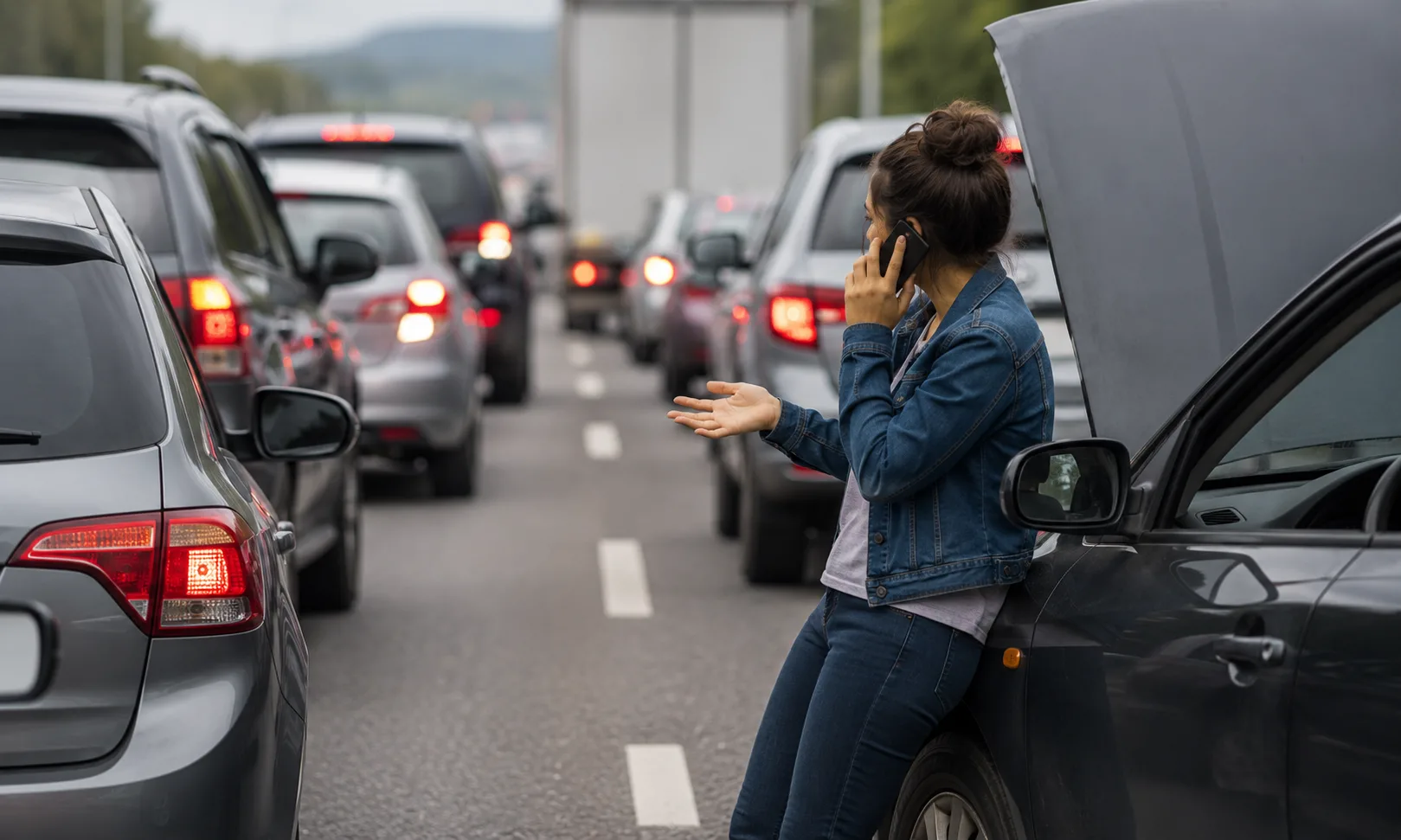
Your engine cuts out, the car behind you leans on the horn, and you're sitting in the middle lane with nowhere to go. It's one of the more unsettling things that can happen behind the wheel — and it happens more often than most drivers think. Dead batteries, overheating engines, and fuel problems leave thousands of cars stalled on U.S. roads every single day.
Quick answer: If your car stops in traffic, turn on your hazard lights immediately, keep your seatbelt on, and steer toward the shoulder using whatever momentum you have left. If you can't get out of the traffic lane, stay inside the vehicle unless it's safer to exit away from moving cars, and call 911 or a roadside assistance provider right away.
Here's exactly what to do in the first few seconds, how to move your car safely, when it's smarter to stay put, and how to get help on the way quickly.
Stay Calm and Act Fast
The first few seconds matter more than anything else. Trying to diagnose the problem while sitting in an active lane is how a stalled car turns into a multi-car accident.
Turn On Your Hazard Lights Right Away
The moment you feel your car stopped in traffic or losing power, hit the hazard button. This is the single most important step, since it's the only signal telling drivers behind you that something's wrong before they're right on top of you. Don't wait until you've fully stopped — flip it on as soon as you sense trouble.
Check Your Mirrors Before You Move
Before steering anywhere, glance at your mirrors and blind spots. A stalling car often still has some roll left in it, and that momentum may be your best chance to get clear. But cutting across lanes blindly creates a new hazard, so take the extra second to look first.
Move Your Car Out of Traffic If You Safely Can
If your vehicle still has momentum, use it. Ease off the brake, steer toward the shoulder or the nearest eemergency roadside help xit lane, and coast as far off the traveled roadway as possible. Even a few extra feet onto the shoulder can be the difference between a minor inconvenience and a serious collision.
If your car has stopped in traffic on a multi-lane highway, don't overcorrect. Signal, check your mirrors, and move one lane at a time instead of cutting sharply across several lanes at once — other drivers need time to see what you're doing. Once you're clear, turn your wheels away from the road if you're on an incline, and set the parking brake.
What to Do If You Can't Move the Car
Sometimes there's no shoulder, no gap in traffic, or the car simply won't roll. This is where a clear plan matters most.
Stay Inside With Your Seatbelt On
If your car stalls in a live lane and getting out means stepping into traffic, staying buckled inside is usually the safer choice. Being struck while standing beside your car is a real risk, especially on highways with high speeds and limited visibility.
Call for Help Before Doing Anything Else
Keep your hazards on and call for help as soon as you're able. If you can safely reach road flares, a reflective triangle, or a portable hazard light from inside the car, use it to boost your visibility to approaching traffic.
When It's Safer to Exit
If your car has stopped somewhere with a shoulder and you can step out on the side away from traffic, highway safety agencies like NHTSA generally recommend doing so. In every case, the goal is the same: put as much distance as possible between yourself and moving vehicles.
Common Reasons Cars Stall in Traffic
Knowing why cars stall helps you catch warning signs before you're stuck in rush hour again.
- Overheating engine — a rising temperature gauge or steam from under the hood, especially in summer stop-and-go traffic.
- Dead or dying battery — flickering or dimming dashboard lights just before the stall.
- Fuel delivery problems — low gas, a clogged filter, or a failing fuel pump can all cut power suddenly.
- Transmission or electrical faults — less common, but usually preceded by a warning light.
- Overheated brakes — rare, but possible after long descents or heavy stop-and-go driving.
Most mechanics will tell you the same thing: the majority of roadside stalls trace back to basic maintenance that got pushed off one too many times.
When to Call for Professional Roadside Assistance
If your car won't restart, or restarting doesn't feel safe given where you're stopped, call for help rather than troubleshoot it yourself. Call immediately if:
- You're stopped in an active lane with no way to move the car.
- The engine is smoking or you smell burning.
- You're on the shoulder but traffic is moving fast and close.
- You're not confident diagnosing the issue yourself.
Call 911 if anyone is in immediate danger, especially if your car stopped in traffic on a live lane. For situations that are inconvenient but not life-threatening, emergency roadside help through your insurance, a membership service, or your automaker's app can dispatch a tow truck or technician to your location — this is the fastest way to get moving again without putting yourself in more danger. Save that number in your phone before you need it — searching for it while stranded is the last thing you want to do.
How to Avoid Getting Stranded Again
A little prevention goes a long way toward avoiding a repeat.
- Watch your gauges. A rising temperature needle or check-engine light is your car asking for attention before it forces the issue.
- Keep the tank above a quarter full, since running low increases the odds of fuel starvation in stop-and-go traffic.
- Get your battery tested annually, especially once it's past the three-year mark.
- Keep a basic emergency kit in the trunk — jumper cables, a flashlight, a reflective triangle, and a phone charger solve a lot of problems for very little cost.
- Don't ignore recurring warning lights. A dashboard light that keeps coming back isn't fixing itself.
Frequently Asked Questions
Should I get out of my car if it stalls on the highway?
Only if you can do so safely — meaning there's a shoulder and you can exit on the side away from traffic. If your car is stuck in an active lane, staying buckled inside is generally safer until help arrives.
How long does roadside assistance usually take?
Response times vary by location and traffic, but most providers aim to reach a stranded driver within 30 to 60 minutes. Congested urban highways can take longer, which is why calling as soon as you're safely stopped matters.
Is it illegal to stay stopped in a traffic lane?
Most states expect drivers to move a disabled vehicle out of travel lanes as soon as it's safe. If you genuinely can't move it, staying put with hazards on and calling for help is the correct response, not a violation.
What's the difference between calling 911 and roadside assistance?
Call 911 when there's immediate danger — you're blocking active traffic, there's smoke, or anyone is hurt. Roadside assistance is the right call for a straightforward breakdown once you and your car are out of the traffic flow.
Can I restart my car myself if it stalls?
It depends on the cause. If it seems like a simple stall, it's reasonable to try restarting once you're safely stopped. If the engine won't turn over or shows warning lights, leave it off and call for help instead.
Final Thoughts
A car stopped in traffic is stressful, but a calm, methodical response makes all the difference. Hazards on, assess your options, move if you safely can, and call for help the moment things feel out of your control. Keeping a roadside number saved in your phone and a basic emergency kit in your trunk means you're never caught completely off guard.
If you're dealing with a breakdown right now, don't wait it out — reach out to a trusted roadside assistance provider to get moving again safely.