
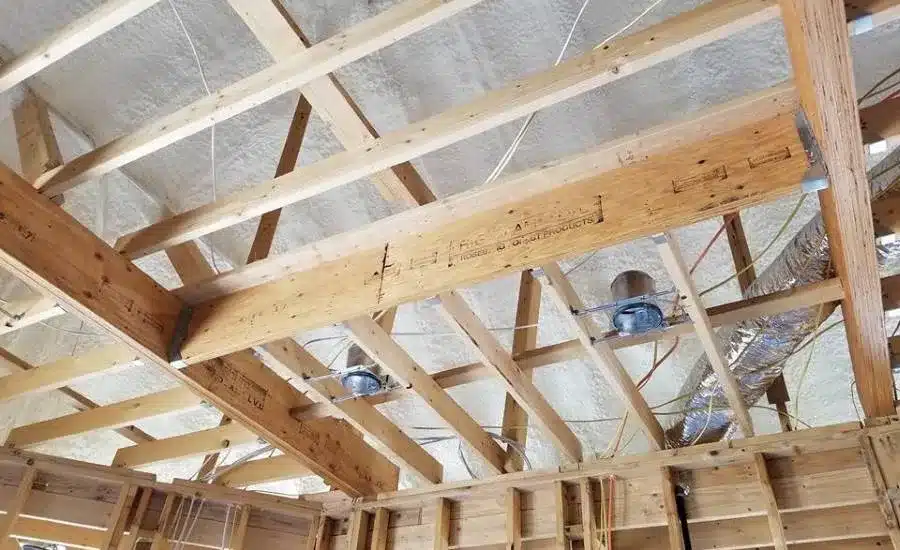
Closed-cell spray foam insulation in Ashland, Oregon, is a high-performance insulation option for builders who need strong thermal resistance in a relatively small space. It expands after application, fills suitable gaps, and can help limit uncontrolled air movement when installed correctly. For construction projects in Ashland, Oregon, closed-cell spray foam insulation in Ashland, Oregon can be useful in walls, roof assemblies, crawl spaces, and other approved building areas.
Before specifying closed-cell foam, builders should consider the building design, moisture control, required R-value, installation conditions, and project budget. All Foam & Insulation, LLC helps property owners and builders explore insulation options for their projects in Southern Oregon.
Why Builders Consider Closed-Cell Spray Foam Insulation
Closed-cell spray foam insulation has a dense structure that gives it a high R-value per inch compared with many common insulation materials. It can also act as an air barrier when installed at the required thickness and detailed correctly. For builders working on new homes, additions, and renovations, these properties can help address limited cavity depth, air leakage, and thermal performance requirements.
Key Benefits for Construction Projects
- High Thermal Resistance: Closed-cell foam provides substantial insulation in a relatively thin layer. This can help where wall framing or roof assemblies offer limited space.
- Air Leakage Control: Properly installed foam can reduce air movement through the insulated assembly, supporting indoor comfort and energy performance.
- Moisture Resistance: Closed-cell foam has low water-vapor permeability at sufficient thickness. However, it does not eliminate every moisture risk or replace proper drainage and weather protection.
- Added Rigidity: The cured foam can increase the rigidity of some assemblies. Builders should not treat it as a substitute for required structural bracing or engineering.
- Flexible Application Options: Depending on the product and assembly, it may be suitable for walls, rooflines, rim joists, and crawl-space applications.
The final performance depends on the specific product, installation thickness, substrate conditions, and building design.
Closed-Cell vs. Open-Cell Spray Foam
Both types can insulate a building, but their properties make them suitable for different applications. Builders should compare them before selecting a system for the project.
FeatureClosed-Cell Spray FoamOpen-Cell Spray FoamStructureDense cells with higher material densityLighter, softer cellular structureR-Value Per InchGenerally higherGenerally lowerWater-Vapor PermeabilityLower at sufficient thicknessHigherSpace RequirementsUseful where cavity depth is limitedOften needs more thickness for the same R-valueCostTypically more expensive per board footTypically less expensive per board footMain ConsiderationCost and moisture-management detailsRequired thickness and vapor-control strategyActual performance varies by product. Builders should use the manufacturer's tested specifications rather than relying on general figures alone.
What Builders Should Check Before Installation
Good results start with preparation. Closed-cell spray foam should be specified as part of the complete building enclosure, not treated as a standalone fix for every insulation or moisture problem.
1. Review the Building Assembly
Check the wall, roof, or floor design before choosing the foam. Consider the available cavity depth, exterior water-control layers, ventilation strategy, and how the assembly will dry if moisture enters.
2. Confirm the Required R-Value
R-value measures resistance to heat flow. A higher R-value generally means better resistance to heat transfer. The required value depends on the assembly, applicable code, and approved construction details.
3. Address Moisture Before Spraying
The substrate should meet the product manufacturer's moisture and temperature requirements. Roof leaks, wet framing, and existing water damage should be corrected first. Closed-cell foam can restrict drying in some assemblies, so the full wall or roof design needs careful review.
4. Plan for Safe Application
Spray foam installation involves reactive chemicals and requires appropriate equipment, ventilation, and job-site controls. Follow the product's safety data sheet and re-entry guidance. Coordinate installation with other trades to prevent exposure and protect finished surfaces.
How Ashland's Climate Affects Foam Selection
Ashland experiences seasonal temperature changes, with warm, dry summers and cooler, wetter periods. These conditions make both thermal performance and moisture management relevant to building design. Closed-cell foam may be suitable for certain assemblies where space is limited or reduced vapor transmission is part of the design. However, builders should not assume that the same foam placement works for every roof or wall.
Before installation, review the assembly's drying potential, rain exposure, flashing, and water-management details. Proper insulation cannot compensate for poor drainage, roof leaks, or incorrectly installed weather barriers.
Understanding Closed-Cell Spray Foam R-Value
Closed-cell spray foam commonly provides approximately R-6 to R-7 per inch, although the exact value depends on the product. Builders should verify the manufacturer's published thermal-resistance data.
For example, a product rated at R-6.5 per inch would provide a nominal R-13 at two inches. This calculation does not account for framing, gaps, thermal bridges, or other parts of the complete wall assembly.
Oregon's residential code requirements depend on the project type and applicable code edition. As of October 2026, the 2026 Oregon Residential Specialty Code is in its phase-in period for construction provisions, with mandatory implementation scheduled for April 1, 2027. Builders should confirm the applicable requirements with the local building department and consult the Oregon Building Codes Division.
Pros and Cons Builders Should Weigh
Closed-cell foam can solve specific insulation challenges, but it is not the best choice for every project.
Advantages
- Delivers high thermal resistance per inch.
- Helps control air leakage when properly installed.
- Offers low vapor permeability at suitable thicknesses.
- Fits some assemblies with limited insulation space.
Limitations
- Usually costs more than many conventional insulation options.
- Requires trained installers and controlled application conditions.
- Can complicate drying if the assembly is not designed correctly.
- May require additional fire-protection measures, depending on the application and applicable code.
Why Work With All Foam & Insulation, LLC?
Choosing the right insulation system requires attention to the building design, product specifications, and installation details. All Foam & Insulation, LLC provides insulation solutions, including spray foam, for customers in Southern Oregon.
I'm Joe Lorenz, owner of All Foam & Insulation, LLC. Since establishing the company on January 1, 2009, I've focused on delivering quality insulation solutions that support comfort, energy efficiency, and long-term building performance.
For builders planning a project in Ashland, our team can discuss insulation options and the factors that affect product selection and installation. Project-specific requirements should be reviewed before work begins.
Discuss Your Ashland Insulation Project
Closed-cell spray foam can be a valuable option when a project needs high thermal resistance, air-leakage control, or insulation in a limited space. The best results come from selecting the right product and coordinating the insulation with moisture management, ventilation, and code requirements.
Contact All Foam & Insulation, LLC to discuss your project.
- Phone: (541) 826-9600
- Email: [email protected]
- Location: View on Google Maps
Frequently Asked Questions
Is Closed-Cell Spray Foam Better Than Fiberglass?
Not in every situation. Closed-cell foam offers a higher R-value per inch and can control air leakage, while fiberglass is often less expensive and may be easier to remove or replace. The right choice depends on the assembly and project budget.
Does Closed-Cell Spray Foam Stop Water?
Closed-cell foam resists water absorption more than many open-cell materials, but it is not a substitute for proper roofing, flashing, drainage, or waterproofing. Water can still enter through defects and surrounding building components.
How Thick Should Closed-Cell Spray Foam Be?
Thickness depends on the product's R-value, the required thermal performance, and the building assembly. Builders should calculate the required thickness using manufacturer data and confirm compliance with the applicable code.
Can Closed-Cell Foam Be Installed in a Roof Assembly?
Yes, it can be used in suitable roof assemblies. The design must account for ventilation where required, condensation risk, roof-deck conditions, and the assembly's ability to manage moisture.
When Is the Best Time to Install Spray Foam?
Installation can take place in different seasons when the substrate, ambient conditions, and materials meet the manufacturer's requirements. Cold surfaces, excessive moisture, or unsuitable temperatures can affect application quality.
Author
Joe Lorenz, Owner of All Foam & Insulation, LLC
I'm Joe Lorenz, owner of All Foam & Insulation, LLC. Since January 1, 2009, I've focused on providing quality spray foam insulation services. My work centers on insulation solutions that support comfort, energy efficiency, and long-term building performance.
Reviewer
Lily Johnson, Insulation Industry Reviewer
Lily Johnson reviewed this article and provided feedback based on her eight years in the spray foam insulation field. Her review focused on making insulation information practical and useful for builders evaluating suitable solutions for their projects.