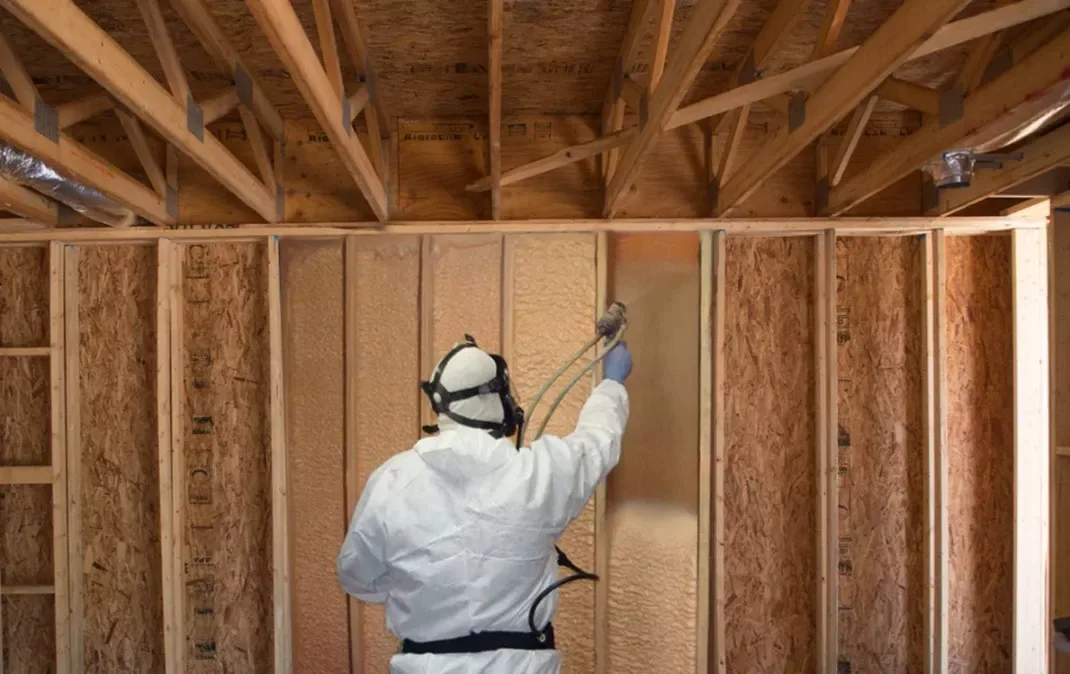
Spray foam provides high thermal resistance and air sealing, making it a top-performing envelope system for buildings in North Carolina. Property owners who install spray foam insulation in Greensboro, NC cut heating and cooling costs by creating an airtight seal that standard batts cannot match.
Understanding building science and regional climate demands helps property owners select systems that protect structural materials and maintain comfort year-round. Industry experience shows that proper air barrier installation stops convective heat flow and moisture migration better than conventional insulation methods.
Why Local Climate Demands Superior Thermal Protection
Greensboro experiences hot, humid summers and cold winter spells. These wide seasonal temperature swings force heating and cooling systems to run constantly if a building lacks an airtight thermal envelope.
Managing High Humidity and Summer Heat
Summer temperatures regularly reach the nineties with elevated relative humidity. Moist air infiltrates unsealed attic spaces and wall cavities, pushing indoor humidity higher and creating extra work for air conditioning units.
- Air sealing stops outdoor moisture from penetrating exterior wall cavities.
- High thermal resistance prevents summer heat from radiating into ceiling spaces.
- Lower humidity levels improve indoor air quality and daily living comfort.
- Attic spaces remain significantly cooler during peak summer afternoon heat.
Preventing Winter Air Leakage
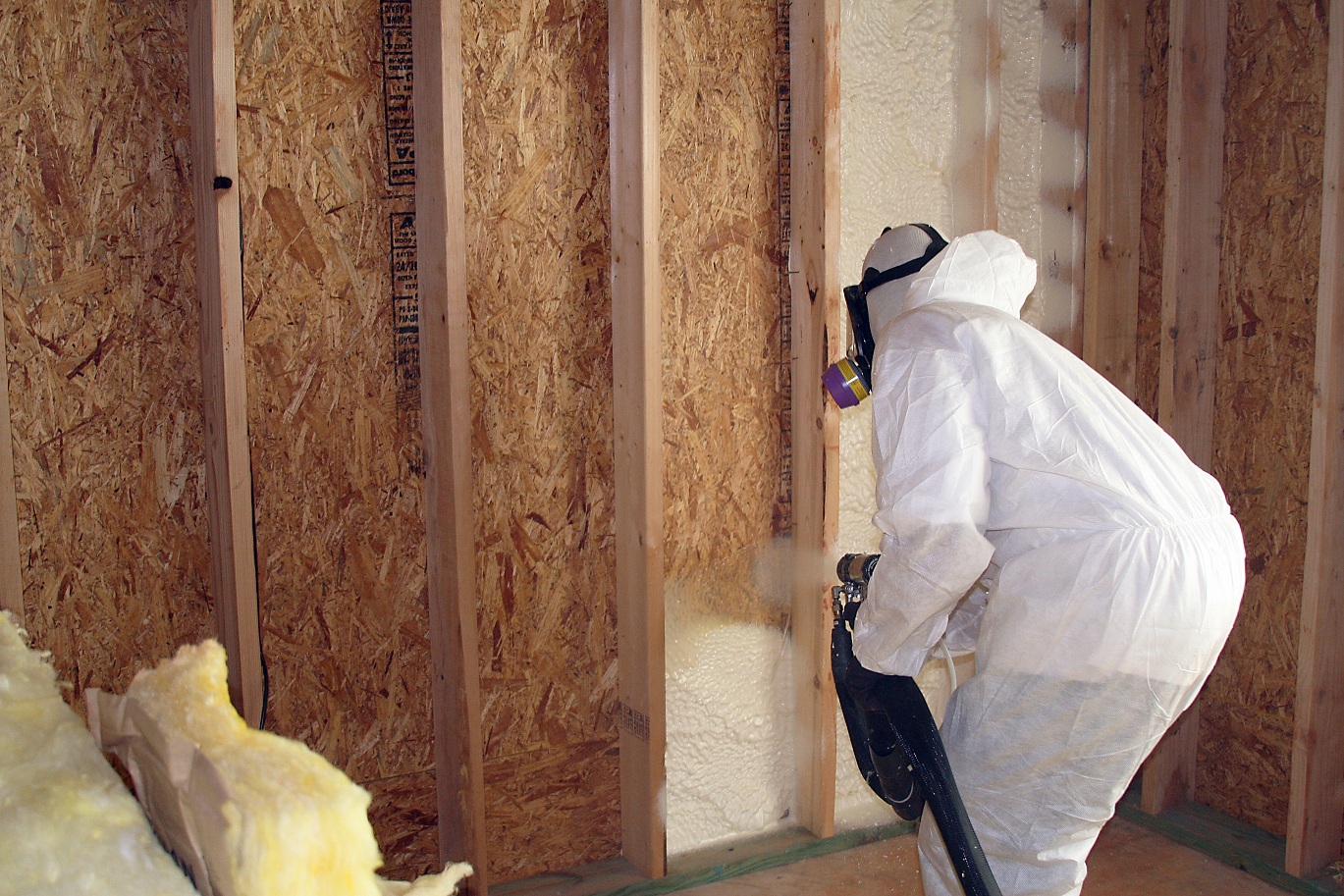
Cold air enters through small gaps around rim joists, crawl spaces, and ceiling penetrations during winter. Heating and cooling account for over 50 percent of energy usage in typical residential structures across the region.
- Consistent thermal barriers eliminate cold spots across living room floors.
- Sealed spaces reduce the total operating hours of heating equipment.
- Preventing interior warm air from escaping into unheated attics keeps energy bills lower.
- Drafts around electrical outlets and window frames disappear after application.
How Spray Foam Outperforms Traditional Fiber Materials
Fiberglass batts and blown cellulose lose thermal resistance when air moves through them. Spray polyurethane expands upon application, filling small cracks, voids, and irregular framing spaces where traditional insulation leaves gaps.

Using specialized foam in Greensboro, NC applications gives structures a continuous insulation layer that will not sag, settle, or compress over time.
Bonus Tip: Before applying open cell material to roof decks, check local building codes regarding unvented attic space rules to ensure proper moisture control.
Why Is Air Sealing Essential for Energy Savings
Heat moves naturally from warm areas to cold areas through conduction, convection, and radiation. Traditional fibrous materials slow heat conduction, but they do little to stop convection caused by air leaks.
Installing barrier insulation in Greensboro, NC stops air movement while offering high thermal resistance in a single step.
Studies show that unsealed gaps and building cracks can waste up to 30 percent of a home's conditioned air. Applying spray foam insulation in Greensboro, NC seals these air passages completely, keeping conditioned air inside the building envelope.
- Ceiling penetrations like recessed light fixtures stay tight and draft-free.
- Rim joists receive full coverage without standard cut-and-stuff gaps.
- Crawl space walls create a protected clean zone beneath main floor living areas.
- HVAC ductwork located in attics operates in a temperature-controlled environment.
Things to Consider Before Choosing Insulation Materials
Selecting the correct installation approach requires evaluating structural needs and climate factors before starting project work. Property owners should assess several key factors before deciding on a material or installation team.
Evaluating Building Structural Layout
Every structure features distinct architectural details that affect how air and heat move through the space. Frame construction, roof pitch, and foundation type dictate which foam formula works best.
- Assess whether the crawl space requires a vapor barrier or full wall encapsulation.
- Determine if roof deck application offers more space efficiency than attic floor installation.
- Inspect wall cavities for existing moisture damage or plumbing leaks before sealing.
Contractor Qualifications and Preparation Requirements
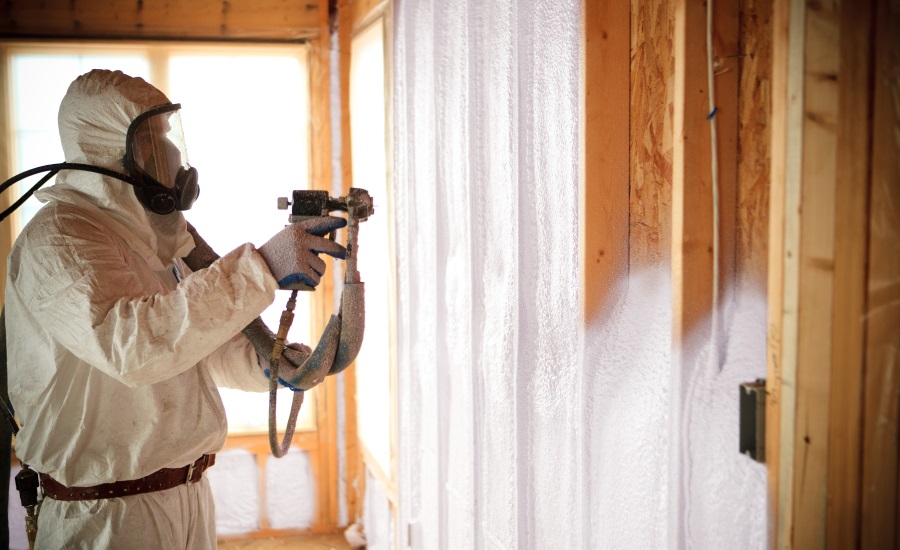
Proper installation requires precise mixing ratios, substrate preparation, and safety equipment. Property owners should verify the credentials of insulation contractors before agreeing to the project scope.
- Verify that installers hold proper license and insurance coverage for spray applications.
- Ensure that any old fiberglass or cellulose insulation is completely removed before spraying.
- Confirm the crew uses thermal imaging cameras to verify application consistency.
Proper preparation prevents air bypass problems and structural moisture issues later. Choosing spray foam insulation in Greensboro, NC requires installers with specialized spray equipment and technical training.
Bonus Tip: Schedule a thermal imaging inspection after installation to confirm that all hidden wall voids and framing gaps are fully sealed.
Long-Term Financial and Structural Advantages
Polyurethane foam delivers long-term performance benefits that extend beyond monthly utility savings. Closed-cell formulations add racking strength to wall assemblies, strengthening outer walls against wind loads.
Lower HVAC System Wear
Because spray foam stops conditioned air from escaping, heating and cooling units do not run as frequently. Building owners often notice that HVAC equipment lasts longer and needs fewer repairs.
- HVAC equipment sizing requirements drop by up to 30 percent during system replacement.
- Air filters remain clean longer due to reduced outdoor dust infiltration.
- Ductwork operates under lower strain, extending mechanical component life.
Protecting Building Foundations
Encapsulating crawl spaces with polyurethane foam stops damp ground air from rising into floor joists. Moisture management protects wood framing from fungal decay and structural damage.
- Sealed crawl spaces prevent wood rot and subfloor joist weakening.
- Damp indoor odors decrease rapidly throughout lower-level living spaces.
- Pest entry points along foundation sill plates are blocked by solid material.
Property owners using spray foam insulation in Greensboro, NC protect physical structures from moisture intrusion while reducing long-term maintenance expenses. Applying spray foam insulation in Greensboro, NC yields continuous energy savings throughout the life of the building.
Selecting the Right Insulation Strategy for Your Property
Upgrading building insulation is a direct step toward improving energy efficiency and interior climate control. Combining high thermal resistance with continuous air sealing protects structures against North Carolina weather extremes.
Property owners should examine energy bill history, structural age, and indoor air quality goals when selecting materials. Investing in spray foam insulation in Greensboro, NC creates an airtight building envelope that delivers lasting performance and comfort.
How to Get Expert Insulation Services and Request a Free Quote for Your Property
For properties requiring long-term energy savings and thermal protection, working with qualified professionals ensures correct material selection and application. Spray Foam Pro LLC & Fiberglass provides complete insulation solutions, including residential, commercial, crawl space, wall, attic, and fiberglass services tailored to local weather conditions. Property owners can request a free quote by calling (910) 606-6247, emailing [email protected].
Frequently Asked Questions About Local Building Insulation
How long does spray foam insulation typically last?
Spray foam insulation stays effective for the lifespan of the structure, often lasting over 80 years without sagging, shrinking, or losing thermal performance.
Can spray foam be installed over existing fiberglass insulation?
No, existing fiberglass insulation should be removed before applying spray foam to ensure proper chemical adhesion to structural framing surfaces and complete air sealing.
What is the primary difference between open cell and closed cell spray foam?
Open cell foam is lightweight, flexible, and provides sound dampening, while closed cell foam is dense, acts as a moisture vapor barrier, and adds structural wall strength.
Does spray foam help reduce outside noise in residential neighborhoods?
Yes, spray foam fills gaps and framing cracks, creating an airtight barrier that muffles outdoor traffic, weather noise, and neighborhood disruptions.
Is professional equipment necessary for spray foam application?
Yes, professional installations require precise temperature controls, high-pressure liquid proportioners, and specialized safety gear to ensure proper chemical curing.