Aircon Installation Singapore
Installing an air conditioner in an HDB flat requires proper planning, technical knowledge, and professional workmanship to ensure efficient cooling and long-term performance. In Singapore's hot and humid climate, a properly installed air conditioning system helps maintain indoor comfort while reducing unnecessary electricity consumption. Whether you are installing a new aircon system in your BTO flat, upgrading an existing unit, or replacing an old air conditioner, understanding what is included in the installation process can help you make informed decisions.
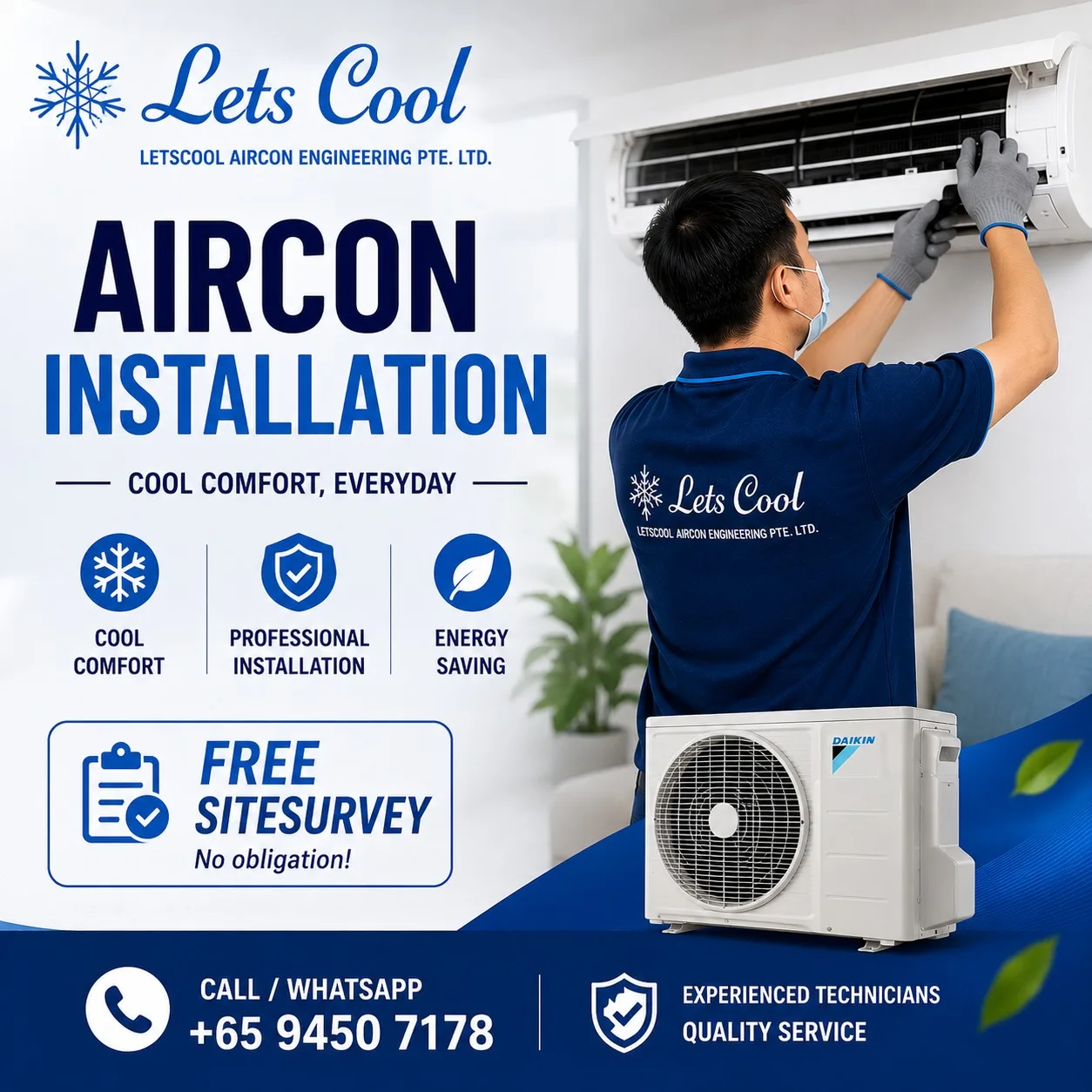
Professional aircon installation Singapore services involve more than simply mounting an indoor unit and connecting an outdoor compressor. The process includes site inspection, installation planning, piping work, drainage arrangements, electrical connections, testing, and performance checks.
Letscool Aircon and Services Singapore provides professional aircon installation solutions for HDB homeowners, helping customers understand their installation requirements and choose suitable air conditioning systems for their homes.
1. Pre-Installation Site Inspection and Assessment
Before beginning an HDB aircon installation, a technician usually conducts a site inspection to evaluate the flat's layout and determine the most suitable installation arrangement.
During the assessment, the technician checks the designated aircon ledge, available installation space, existing piping, drainage points, and electrical supply. This step is particularly important for HDB flats because installation must follow the relevant HDB guidelines and approved arrangements.
The technician may also discuss the number of rooms requiring cooling, the preferred aircon system, and the appropriate cooling capacity for each room.
A professional assessment helps homeowners avoid problems such as insufficient cooling, poor airflow, excessive noise, and unsuitable installation arrangements.
Choosing the right system is equally important. An air conditioner with insufficient capacity may struggle to cool the room, while an oversized unit may increase unnecessary energy consumption.
Read Full Article: Condo Aircon Installation Buying Guide in Singapore
2. Installation of Indoor and Outdoor Aircon Units
One of the main components of an HDB aircon installation is the proper mounting of indoor fan coil units and the outdoor condenser unit.
The technician installs the indoor units according to the room layout, ensuring sufficient clearance for airflow, maintenance, and filter cleaning. Proper positioning helps distribute cool air evenly throughout the room.
The outdoor condenser unit is installed at the designated location, usually the aircon ledge, depending on the flat's configuration and applicable requirements. The technician ensures that the unit is securely mounted and positioned for proper ventilation.
Professional installation is important because incorrect mounting can cause vibration, unusual noise, water leakage, and reduced cooling performance.
Homeowners should also confirm that their selected aircon system is suitable for their flat and installation requirements before proceeding.
3. Refrigerant Piping, Drainage and Electrical Connections
Another important part of aircon installation Singapore is the installation and connection of refrigerant piping, drainage pipes, and electrical components.
Refrigerant piping connects the indoor fan coil units to the outdoor condenser. The technician carefully measures and installs the piping according to the manufacturer's specifications to minimise unnecessary bends and potential refrigerant leakage.
Proper insulation is also required to prevent condensation from forming on the pipes. Poor insulation may contribute to moisture problems and water dripping around the installation area.
Drainage pipes are installed to allow condensation water to flow away from the indoor units. Incorrect drainage arrangements may eventually result in aircon water leaking, which can damage walls, ceilings, and furniture.
Electrical connections are carried out to ensure the system receives the appropriate power supply. All connections should be completed safely and according to the manufacturer's requirements.
4. Vacuuming, Refrigerant Checks and System Testing
After completing the piping and connections, the technician performs essential checks before operating the air conditioner.
Vacuuming the refrigerant piping helps remove air and moisture from the system. This is an important step because moisture or non-condensable gases inside the refrigerant circuit may affect cooling performance and system reliability.
The technician also checks the connections for possible refrigerant leakage and verifies whether the refrigerant charge is appropriate for the installation.
If additional refrigerant is required according to the manufacturer's specifications, an aircon gas top up may be performed where appropriate. However, refrigerant should not simply be added without checking for possible leaks.
After these procedures, the technician switches on the system and tests its cooling performance, airflow, drainage, operating noise, and general functionality.
This testing helps identify installation-related issues before the customer starts using the air conditioner regularly.
5. HDB Installation Requirements and After-Installation Maintenance
HDB aircon installations must comply with the relevant installation guidelines and requirements. Homeowners should engage qualified and appropriately trained installers who understand the applicable requirements, particularly for refrigerant piping, brackets, and installation at the designated aircon ledge.
After installation, regular maintenance is necessary to keep the system operating efficiently.
Aircon general servicing typically includes cleaning the filters, checking the cooling performance, inspecting drainage, and cleaning accessible components. Depending on the condition of the system, additional services may be recommended.
For example:
- Aircon chemical wash: Helps remove accumulated dirt and grease from internal components when ordinary servicing is insufficient.
- Aircon chemical overhaul: A more intensive cleaning procedure for heavily contaminated units or persistent performance problems.
- Aircon steam wash: Uses steam cleaning to remove dirt from selected components, depending on the unit's condition and suitability.
- Aircon compressor servicing: Involves inspecting the outdoor unit and diagnosing compressor-related problems when cooling performance is affected.
- Aircon spare parts: Replacement components may be required if damaged electrical or mechanical parts are discovered.
Homeowners can also consider an aircon service contract to arrange regular maintenance and help monitor the condition of their newly installed system.
Common Aircon Problems and Why Professional Installation MattersIncorrect installation can contribute to several air conditioning problems over time. Recognising these warning signs early can help homeowners arrange timely inspections and avoid more extensive repairs.
Aircon not cold: Poor installation, incorrect refrigerant charge, airflow restrictions, or other system faults may affect cooling performance. A technician can inspect the system to identify the actual cause.
Aircon water leaking: Improper drainage slope, blocked drain pipes, damaged insulation, or installation-related issues may cause water to drip from the indoor unit.
Aircon light blinking: Blinking indicator lights may signal a system fault, sensor problem, or operating abnormality. The exact meaning depends on the aircon brand and model.
Aircon error code: Modern air conditioners display error codes when certain faults are detected. A professional technician can refer to the manufacturer's troubleshooting information to identify the problem and recommend suitable repairs.
When these issues occur, professional aircon repair Singapore services can help identify the underlying cause instead of relying on temporary fixes.
Letscool Aircon and Services Singapore provides aircon installation, maintenance, and troubleshooting services to help homeowners maintain comfortable indoor environments.
Conclusion
HDB aircon installation involves several essential steps, including site assessment, indoor and outdoor unit installation, refrigerant piping, drainage arrangements, electrical connections, vacuuming, and system testing. Each step contributes to the overall performance, safety, and reliability of the air conditioning system.
Choosing professional aircon installation Singapore services helps homeowners avoid common installation problems while ensuring their air conditioner is suitable for their living space.
Letscool Aircon and Services Singapore provides aircon installation, aircon servicing Singapore, aircon repair, and maintenance solutions for residential customers. Whether you are installing a new aircon system or looking for the best aircon servicing Singapore, professional assistance can help you maintain a comfortable home throughout the year.
Contact Letscool Aircon and Services Singapore to enquire about your HDB aircon installation requirements, available packages, and aircon promotion.
Aircon servicing Singapore
Aircon installation
11 Mandai Estate,
#05-15 Eldix,
Singapore 729908
Mail ID: [email protected]
Service - Call: +65 9862 3678
Installation - Call: +65 94507178
#LetsCoolAircon #AirconInstallationSingapore #HDBAirconInstallation #AirconServicingSingapore #AirconRepairSingapore #AirconMaintenance #AirconSingapore #SingaporeHomes #HDBLiving #AirconGeneralServicing #AirconChemicalWash #AirconChemicalOverhaul #AirconPromotion #SingaporeHomeMaintenance #HomeImprovementSingapore #SingaporeProperty #AirconInstallation #AirconCare #SingaporeRenovation #AirconService