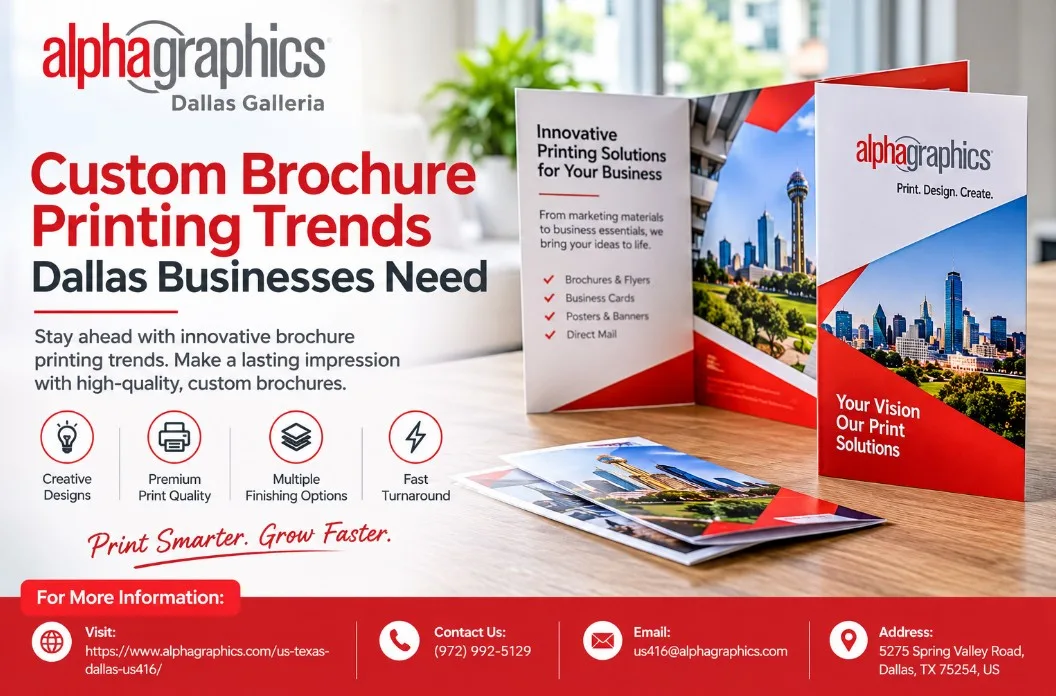
Brochures remain an effective way for Dallas businesses to introduce services, explain products, and attract customers. However, modern customers expect more than basic printed pages. They look for useful information, attractive layouts, and convenient ways to connect with brands.
The latest custom brochure printing trends combine creative design, practical formats, and high-quality materials. Businesses now use brochures to support sales conversations, promote events, and strengthen brand recognition. From minimalist layouts to interactive QR codes, these ideas help printed marketing feel more relevant.
For companies planning their next campaign, understanding these trends can make brochure investments more effective. Here are the key developments Dallas businesses should consider.
1. Which Brochure Design Trends Are Gaining Popularity?
Modern brochure design focuses on clarity, visual appeal, and easy navigation. Instead of filling every page with information, businesses prioritize meaningful content.
Minimalist layouts are particularly popular. They use clean spacing, limited colors, and clear typography. As a result, readers can understand important messages quickly.
Other popular design approaches include:
Bold typography: Large headlines help important messages stand out.
Authentic photography: Original images make brochures feel more personal.
Brand-focused colors: Consistent colors strengthen brand recognition.
Infographic elements: Charts and icons simplify complex information.
Creative layouts: Unusual folds and panel arrangements encourage exploration.
Additionally, businesses increasingly use storytelling in their brochures. They introduce a customer problem, explain their solution, and highlight relevant benefits.
This approach makes promotional material more engaging. It also helps customers remember the brand.
2. How Are Sustainable Materials Changing Custom Brochure Printing?
Environmental awareness is influencing printing decisions across many industries. Consequently, businesses are paying closer attention to paper choices and finishing methods.
Recycled paper offers an appealing option for companies seeking responsible materials. Uncoated stocks also provide a natural appearance and distinctive texture.
However, sustainability does not mean sacrificing presentation quality. Modern printing options offer attractive finishes across different paper types.
Businesses can consider several alternatives:
- Recycled paper for environmentally conscious campaigns.
- FSC-certified paper from responsibly managed forests.
- Soy-based or vegetable-based inks where available.
- Lightweight paper to reduce material consumption.
- Digital proofs to limit unnecessary test prints.
Furthermore, choosing the correct paper weight helps avoid excessive material use. Businesses should consider brochure durability, distribution methods, and intended audience.
A knowledgeable print shop dallas businesses trust can explain available materials. The right guidance helps balance appearance, budget, and environmental priorities.
3. Why Are QR Codes and Interactive Brochures Becoming Popular?
Printed brochures now work alongside digital marketing channels. QR codes make this connection simple and convenient.
Readers can scan a code using their smartphones. Then, they can access product pages, appointment forms, videos, menus, or special offers.
This feature gives printed marketing an additional purpose. Instead of ending with the printed information, the customer can take another action.
For example, a Dallas real estate company could include property tour videos. Similarly, a restaurant could link directly to its online menu.
Interactive brochure ideas include:
- QR codes linking to landing pages.
- Short links to product demonstrations.
- Digital catalogues featuring additional products.
- Online appointment booking options.
- Event registration and promotional offers.
Nevertheless, QR codes should support the brochure's main message. They should not distract readers or lead to confusing pages.
Businesses should also test every code before printing. A working link creates a smoother customer experience and protects campaign credibility.
4. Which Brochure Formats Work Best for Different Businesses?
Brochure format affects how customers read and use information. Therefore, businesses should select a structure based on their marketing objectives.
Bi-fold brochures offer a simple, professional presentation. They work well for company introductions, service overviews, and product highlights.
Tri-fold brochures divide information into manageable sections. They suit restaurant menus, travel promotions, and local service advertising.
Z-fold brochures create a flowing presentation across connected panels. Businesses can use them for timelines, step-by-step instructions, and event information.
Booklet-style brochures provide additional space for detailed content. They are useful for product catalogues, corporate profiles, and educational material.
Paper selection also influences the final result. Glossy finishes create vibrant images, while matte finishes offer a subtle appearance. Meanwhile, thicker stocks can improve durability.
Before selecting a format, consider distribution. A brochure displayed at a reception desk may need different dimensions. A direct-mail brochure must also fit mailing requirements.
5. How Can Dallas Businesses Combine Graphic Design and Printing?
Successful brochures require more than attractive printing. They need thoughtful design, organized content, and consistent branding.
This is where professional graphic design dallas tx services can make a difference. Designers help businesses arrange information and create layouts that support their objectives.
For example, a brochure should have a clear reading order. The headline introduces the subject, while supporting sections explain important details. Finally, contact information guides readers toward the next step.
Businesses should review these elements before approving artwork:
Correct business name and contact details.
Readable fonts and suitable text sizes.
Consistent colors, logos, and brand elements.
High-resolution photographs and graphics.
Appropriate margins and print-ready artwork.
Clear calls to action.
Additionally, businesses should request a digital proof before production. This allows them to identify spelling errors, layout problems, and image issues.
For local businesses, working with an experienced provider can simplify the process. AlphaGraphics Dallas Galleria supports businesses with printing and visual communication solutions. Its team can help align brochure design and production with broader marketing goals.
Brochure marketing continues to evolve through better design, sustainable materials, and digital integration. These trends help Dallas businesses create printed materials that inform customers and encourage meaningful action.
Before starting your next campaign, consider your audience, distribution method, and marketing objectives. Compare paper options, review design proofs, and choose a suitable printing format.
A reliable printing partner can help turn these decisions into a polished final product. Businesses exploring custom brochure printing can connect with AlphaGraphics Dallas Galleria for professional printing and visual communication support.
Frequently Asked Questions
1. How much does custom brochure printing cost in Dallas?
Pricing depends on quantity, paper quality, dimensions, folding style, and finishing. Businesses should request quotes based on their specific requirements.
2. Which brochure format is best for small businesses?
Tri-fold brochures work well for compact service information. However, bi-fold formats suit businesses needing a simple, spacious presentation.
3. What paper is suitable for professional brochures?
Glossy paper enhances colorful photographs, while matte paper offers a refined appearance. Recycled stocks provide another option for sustainability-focused campaigns.
4. Should brochures include QR codes?
Yes, QR codes can connect printed materials with websites, videos, and booking pages. However, each code should lead to a relevant destination.
5. How early should businesses order printed brochures?
Businesses should plan around design approval, printing, finishing, and delivery. Ordering early also allows time for proofreading and revisions.