Managing business assets efficiently is essential for any organization that relies on equipment, machinery, vehicles, or facilities. Without a proper system, assets can become costly to maintain, experience unexpected failures, and reduce overall productivity. This is where Enterprise Asset Management (EAM) plays an important role.
What is Enterprise Asset Management?
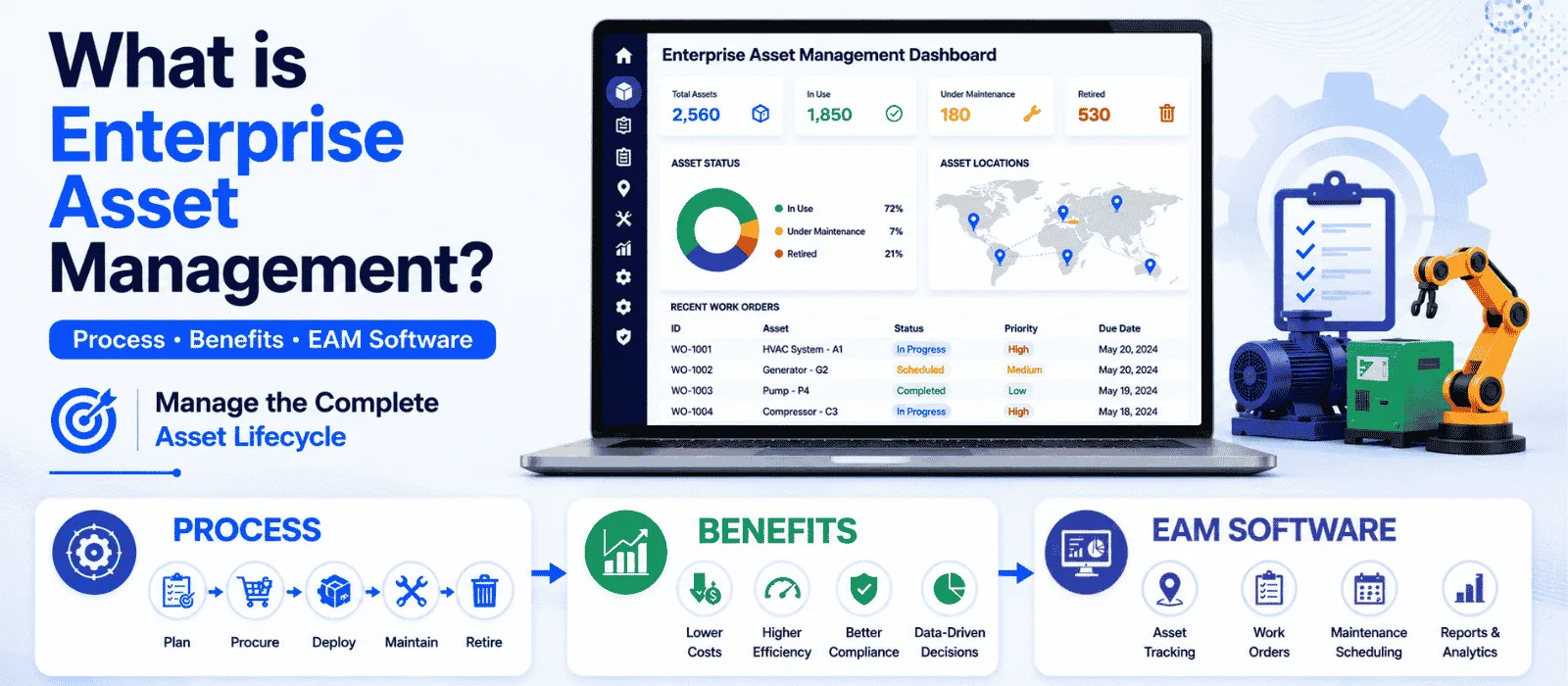
Enterprise Asset Management (EAM) is a strategy and software solution that helps organizations manage their physical assets throughout their entire lifecycle. It covers every stage of an asset's journey—from planning and procurement to maintenance, repairs, upgrades, and eventual replacement.
The primary purpose of What is Enterprise Asset Management is to ensure that assets operate efficiently, last longer, and deliver maximum value while keeping maintenance costs under control.
How Does Enterprise Asset Management Work?
An Enterprise Asset Management system stores all asset-related information in one centralized platform. This includes maintenance history, inspection schedules, repair records, warranty details, and performance data.
Instead of waiting for equipment to fail, businesses can use EAM to schedule preventive maintenance based on time, usage, or asset condition. This proactive approach reduces downtime and helps avoid expensive emergency repairs.
Many modern EAM solutions also provide real-time monitoring, allowing maintenance teams to quickly identify issues before they become serious problems.
Why Do Businesses Need Enterprise Asset Management?
As organizations grow, managing hundreds or even thousands of assets manually becomes challenging. Missed maintenance schedules, lost records, and unexpected equipment failures can significantly impact productivity.
Enterprise Asset Management simplifies these tasks by automating maintenance planning, tracking asset performance, and organizing critical information in one place.
Businesses benefit by:
- Minimizing equipment downtime
- Reducing repair and maintenance expenses
- Improving asset performance
- Increasing workplace safety
- Supporting compliance with industry regulations
- Making informed maintenance decisions
Key Components of an Enterprise Asset Management System
A complete EAM solution typically includes several essential features:
Asset Register: Stores detailed information about every asset, including location, value, and maintenance history.
Preventive Maintenance: Automates maintenance schedules to reduce unexpected failures.
Work Order Management: Helps assign, monitor, and complete maintenance tasks efficiently.
Inventory Control: Tracks spare parts and maintenance supplies to avoid delays.
Reporting and Analytics: Provides valuable insights into asset performance, maintenance costs, and operational efficiency.
Together, these features help businesses streamline maintenance operations and improve resource management.
Industries That Use Enterprise Asset Management
Enterprise Asset Management is widely used across industries that depend on physical infrastructure and equipment, including:
- Manufacturing
- Oil and Gas
- Healthcare
- Transportation
- Utilities
- Construction
- Airports and Railways
- Facility Management
Regardless of the industry, EAM helps organizations maintain reliable operations and extend the lifespan of valuable assets.
Conclusion
What is Enterprise Asset Management is more than just maintenance software—it's a complete approach to managing business assets efficiently. By keeping accurate records, automating maintenance schedules, and monitoring asset performance, organizations can reduce costs, improve productivity, and avoid unexpected equipment failures.
Whether you're running a manufacturing plant, managing a hospital, or operating a transportation fleet, implementing an Enterprise Asset Management system can help protect your investments and support long-term business success.