Development Studies examines how societies change, how economies grow and how institutions respond to social, economic and environmental challenges. It brings together ideas from economics, political science, sociology, international relations and sustainability to understand the factors that influence development.
For students interested in global inequality, economic transformation, public policy or international cooperation, Development Studies offers a framework for exploring complex questions that rarely have simple answers. India provides a valuable context for this learning, with its diverse social and economic environments and evolving development priorities.
A development studies summer program India experience allows students to explore these themes within a specific national context, connecting academic concepts with practical observation and workplace-based learning.
What Does Development Studies Actually Explore?
Development Studies goes beyond measuring economic growth. It examines how development is understood, pursued and experienced across different societies.
Its central questions include how economic opportunities are created, how institutions influence social outcomes, how resources are allocated and how development priorities interact with sustainability.
Students may explore several interconnected areas:
- Economic development: How investment, employment, innovation and economic policy influence growth.
- Social development: How institutions and social structures shape access to opportunities.
- Governance and public policy: How decisions are made and how policies are implemented.
- Sustainability: How societies approach environmental considerations alongside economic and social priorities.
- International development: How countries, institutions and organisations engage with global development challenges.
- Technology and work: How innovation changes industries, employment and economic participation.
Because these areas overlap, Development Studies encourages students to consider issues from multiple perspectives rather than relying on a single discipline.
Why Is Development Studies Relevant in India?
India offers an important context for examining development because economic change, technological innovation, sustainability and institutional priorities intersect in a wide range of settings.
Studying development in India gives students an opportunity to consider how broad academic concepts relate to a particular country's social, economic and institutional context. It also encourages them to examine how development questions can vary across regions, sectors and communities.
For example, students can explore the relationship between economic growth and employment, consider how technological change affects the future of work or examine how sustainability fits into development planning.
These questions are relevant to students studying economics, political science, international relations, business and environmental studies. They also provide opportunities to compare perspectives from India with the experiences and assumptions students bring from their home countries.
The objective is not to treat India as a single model of development. Instead, it is to use the country's context to develop more informed questions about how development works and why outcomes differ.
The Connection Between Development Studies and Public Policy
Development goals often depend on decisions made by governments, institutions, businesses and other organisations. Public policy provides one way to examine how these decisions are developed, implemented and evaluated.
Development Studies helps students understand the broader social and economic questions behind policy decisions. Public policy analysis, in turn, provides tools for examining how institutions respond to those questions.
Students might consider how economic priorities influence development planning, how organisations approach sustainability or how technological change creates new questions about employment and skills.
A public policy summer program India experience can complement Development Studies by allowing students to explore these relationships within India's institutional and economic context.
For students interested in both fields, this connection offers a way to move from understanding development challenges to examining the decisions and processes that shape responses to them.
How Development Studies Connects With International Relations
Development challenges often extend beyond national borders. Trade, investment, climate change, technology and international cooperation all influence the relationships between countries and institutions.
International Relations examines these relationships, including how governments and international organisations cooperate, negotiate and respond to shared challenges. Development Studies adds a focus on the economic and social processes that shape development outcomes.
Together, the two disciplines help students explore questions such as:
- How do international economic relationships influence national development priorities?
- What roles do international institutions play in development?
- How do sustainability challenges create opportunities for cross-border cooperation?
- How do domestic institutions interact with global economic and political changes?
For students considering international relations study abroad India, studying in India can provide a setting for exploring these questions through an additional national and regional perspective.
This interdisciplinary approach can be particularly useful for students who want to understand the connections between domestic policy, economic development and international affairs.
Learning Development Studies Beyond the Classroom
Development Studies involves analysing concepts, interpreting evidence and understanding the contexts in which social and economic decisions take place. Classroom learning establishes the frameworks students need, while practical exposure can provide additional perspectives.
Workplace-based learning, for example, can help students consider how organisations operate and how their activities relate to wider economic and social themes.
The India Summer School (ISS) New Delhi offers a six-week experiential learning structure that combines a four-week academic session with two weeks of service learning, internship or workplace-based learning.
Its academic themes include Sustainability, Growth and Development, alongside Innovation, Technology and the Future of Work. The program includes 80 hours of workplace learning across settings such as technology firms, legal services, social enterprises, retail brands and community organisations.
For students interested in Development Studies, these themes offer a basis for exploring the relationship between economic growth, institutional environments, technological change and sustainability.
Workplace-based learning can also encourage students to ask more specific questions about the practical constraints organisations face, how priorities are balanced and how broad development objectives relate to everyday operations.
Skills Students Can Develop Through Development Studies
Studying development can help students build analytical skills that are relevant across academic and professional settings.
Critical and Interdisciplinary Thinking
Development challenges rarely fit neatly within one academic subject. Students learn to connect economic, political, social and environmental perspectives when examining a question.
Research and Evidence Analysis
Development Studies encourages students to frame research questions, evaluate evidence and distinguish between assumptions and supported conclusions. A final research report or project can provide an opportunity to practise these skills.
Cross-Cultural Understanding
Learning in a different national context can challenge existing assumptions and introduce alternative perspectives. Students can develop a more considered understanding of how history, institutions and local conditions influence development.
Communication and Problem Analysis
Students practise explaining complex issues clearly, comparing different viewpoints and presenting conclusions supported by evidence. These abilities can be useful in further study and in roles related to policy, research, development and international affairs.
The value of these skills comes from the quality of the learning and analysis, rather than from exposure to a new location alone.
Who Should Consider a Development Studies Summer Program in India?
A development-focused summer program may be relevant to undergraduate students studying:
- Economics and development economics
- Political science and public policy
- International relations and global studies
- Sustainability and environmental studies
- Business and social enterprise
- South Asian studies
Students do not necessarily need to be enrolled in a degree titled Development Studies. Those interested in how economies, institutions and societies interact may also find the subject relevant to their academic goals.
Before applying, students should review the program's eligibility requirements, academic themes, schedule and learning format. They should also check with their home university if they intend to seek academic credit or fulfil a particular degree requirement.
Explore Development Studies With ISS New Delhi
Development Studies offers students a way to examine how economic growth, social priorities, institutions and sustainability influence one another. Studying these themes in India can provide an opportunity to connect academic frameworks with a distinct national context and consider development questions from multiple perspectives.
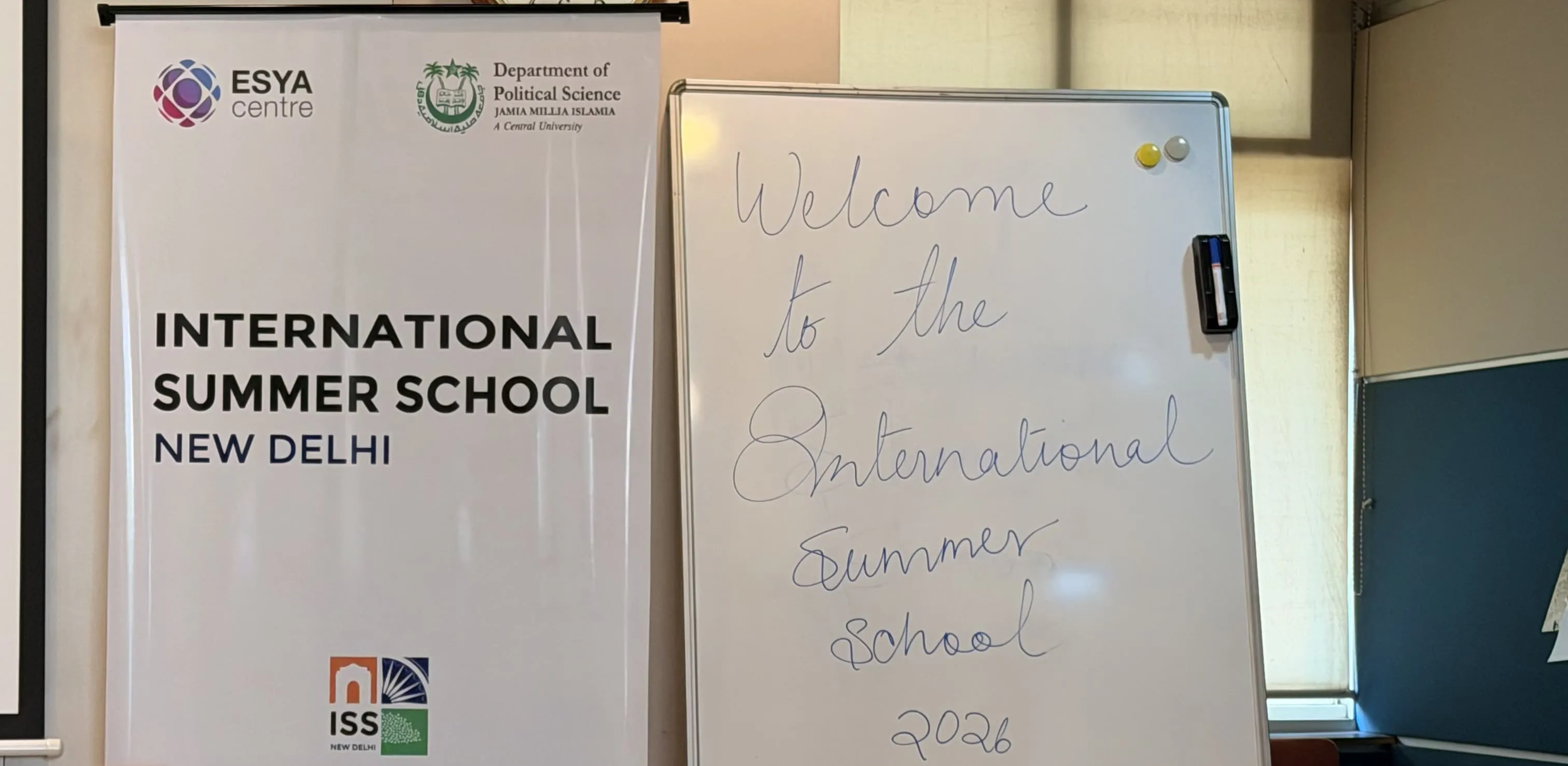
The India Summer School (ISS) New Delhi combines academic sessions, workplace-based learning, cultural immersion and a final research report or project within a six-week experiential program. Convened by the Department of Political Science at Jamia Millia Islamia and the Esya Centre, it brings together learning themes related to sustainability, development, innovation and the future of work.
For students exploring a development studies summer program in India, the program offers a structured way to engage with these subjects while learning about India's social, economic and cultural context.
Whether your interests lie in development economics, public policy or international relations, the right summer academic experience can help you connect ideas across disciplines, strengthen your research skills and develop more informed questions about global development.
Explore the program structure and application information on the ISS New Delhi website.