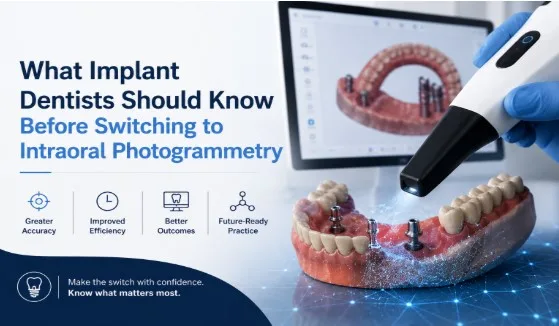
As digital dentistry continues evolving, intraoral photogrammetry is becoming one of the most discussed technologies in full-arch implant workflows. More implant dentists are exploring digital implant position capture to improve restorative accuracy, streamline communication with laboratories, and reduce workflow inconsistencies often associated with traditional impression methods.
But transitioning to photogrammetry is not simply about purchasing new hardware. For most practices, the real shift involves adapting clinical protocols, improving digital workflow coordination, and understanding how photogrammetry fits into AOX and full-arch restorative systems.
Clinicians considering this transition should evaluate not only the technology itself, but also how it impacts restorative planning, verification, communication, and long-term workflow predictability.
Why Intraoral Photogrammetry Is Getting So Much Attention
Traditional full-arch implant workflows can introduce multiple variables that affect restorative outcomes. Conventional impressions, analog verification steps, and manual transfers may increase the risk of inaccuracies, especially in complex AOX cases where passive fit is critical.
Intraoral photogrammetry helps address part of this challenge by digitally capturing implant positions using optical imaging and fiducial reference systems. Instead of relying entirely on impression materials and physical transfer methods, clinicians can transfer implant data digitally with improved consistency.
This growing shift toward digital workflows is being driven by increasing demand for:
- restorative precision
- workflow efficiency
- reduced remake rates
- improved lab communication
- predictable full-arch outcomes
Educational institutions and clinical discussions across the implant industry continue highlighting digital workflow adoption as a major direction for modern restorative dentistry. National Library of Medicine – Digital Workflow in Implant Dentistry
Photogrammetry Does Not Eliminate Workflow Errors
One of the biggest misconceptions around digital workflows is the assumption that technology alone guarantees accuracy.
In reality, successful photogrammetry workflows still depend heavily on proper restorative protocols and team coordination. Even highly advanced systems require structured implementation and verification processes.
Clinics transitioning into digital AOX workflows should understand that workflow discipline remains essential throughout the restorative process.
Important areas still requiring attention include:
- scan-body management
- soft tissue stability
- restorative sequencing
- occlusal verification
- prosthetic validation
- clinician-lab communication
Practices that treat photogrammetry as a complete workflow system, rather than just a device purchase, generally achieve smoother integration and more predictable results.
Understanding the Learning Curve Before Adoption
Many clinicians initially evaluate photogrammetry from a hardware or scanning perspective. However, the larger challenge is often workflow adaptation.
Digital implant workflows affect multiple areas of the practice simultaneously, including restorative planning, communication protocols, provisional workflows, and laboratory coordination.
Before transitioning, implant teams should evaluate:
- how photogrammetry integrates into existing AOX workflows
- whether the laboratory supports digital verification processes
- how restorative appointments may change
- what level of staff training is required
- how digital records will be managed long term
The learning curve usually involves improving operational consistency rather than learning how to scan.
This is why many successful clinics begin with selected cases before expanding digital workflows across all full-arch procedures.
Passive Fit Still Remains Critical
Even with highly accurate digital implant position capture, passive fit verification remains one of the most important aspects of full-arch restorations.
Photogrammetry improves implant data acquisition, but restorative success still depends on proper prosthetic adaptation and verification.
Experienced implant clinicians continue using multiple validation stages to confirm restorative accuracy throughout the workflow.
These may include:
- digital verification jigs
- restorative try-ins
- framework seating evaluation
- occlusal stability checks
- final prosthetic confirmation
This balanced approach helps reduce restorative complications while improving long-term predictability in complex implant cases.
Digital Workflows Can Improve Clinic-Lab Communication
One of the most overlooked advantages of photogrammetry is improved communication between clinics and dental laboratories.
Traditional workflows may sometimes introduce inconsistencies related to physical impressions, analog conversions, shipping variables, or incomplete records. Digital systems help standardize how implant information is transferred and reviewed.
For dental laboratories, this often improves:
- restorative planning consistency
- framework design accuracy
- turnaround efficiency
- collaborative troubleshooting
- remake reduction
This is one reason many advanced full-arch laboratories increasingly prefer structured digital verification workflows.
Workflow-focused systems such as Digital Arches – OptiSplint® Digital Verification System are gaining industry attention because they support more predictable implant verification and digital restorative coordination.
Workflow Speed Is Only Part of the Value
Many marketing discussions around photogrammetry focus heavily on reduced chair time and same-day restorative possibilities.
While efficiency improvements are important, many experienced implant teams view predictability as the larger long-term benefit.
The real operational advantages often include:
- fewer restorative remakes
- reduced adjustment appointments
- improved restorative consistency
- more predictable implant positioning
- stronger clinic-lab coordination
Over time, these improvements can significantly impact workflow stability and patient experience in full-arch implant practices.
Technology Selection Should Be Workflow-Focused
Not every digital system fits every implant workflow. Before investing in photogrammetry technology, clinicians should evaluate how well a system integrates into their existing restorative process.
Important considerations include:
- software compatibility
- digital verification capabilities
- laboratory integration
- training availability
- workflow flexibility
- scalability for future growth
Clinics increasingly prioritize systems that support complete AOX workflows rather than isolated scanning functions.
Educational resources from organizations such as ITI – International Team for Implantology also continue emphasizing the importance of workflow integration and restorative planning in modern implant dentistry.
The Future of Full-Arch Implant Dentistry Is Increasingly Digital
The implant industry continues moving toward more integrated digital workflows involving:
- guided surgery
- intraoral photogrammetry
- digital verification
- CAD/CAM restorations
- full-arch workflow standardization
As adoption increases, educational demand around photogrammetry and AOX workflows will likely continue growing among implant dentists, prosthodontists, oral surgeons, and dental laboratories.
Clinicians who understand both the strengths and limitations of digital workflows are often better positioned to create scalable, predictable restorative systems over time.
The goal is not simply becoming “more digital.”
The goal is building workflows that improve:
- restorative accuracy
- communication efficiency
- clinical predictability
- long-term prosthetic outcomes
And for many modern implant practices, intraoral photogrammetry is becoming an increasingly important part of that evolution.