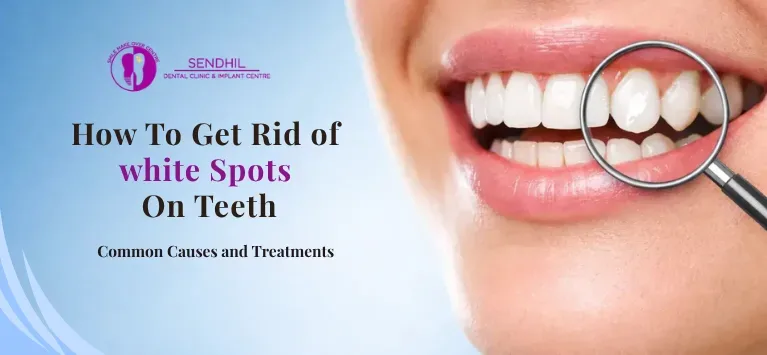
White Spots on Teeth: Causes, Prevention & Treatment
White spots on teeth are chalky or milky-white patches that develop when enamel loses minerals or forms irregularly. They can indicate early decay, enamel weakness, fluoride exposure, poor oral hygiene, braces, diet, or genetics. Good news: white spots are often treatable and preventable.
What Are White Spots on Teeth?
White spots are opaque areas on enamel appearing lighter than the surrounding tooth structure:
- Small white dots or streaks
- Cloudy white patches on front teeth
- Chalky or dull areas on enamel
- White marks around braces
- Caused by enamel demineralization, where acids remove calcium and phosphate.
Common Causes
1. Dental Fluorosis
Excessive fluoride consumption during tooth development causes white streaks or patches. Not harmful but cosmetic treatments can improve appearance.
2. Poor Oral Hygiene
Inadequate brushing/flossing allows plaque buildup. Plaque bacteria produce acids weakening enamel, creating white spot lesions (early decay signs), especially around braces or gumline.
3. Acidic & Sugary Foods
Soft drinks, citrus fruits, sports drinks, sugary snacks increase acid exposure, leading to enamel demineralization, white spots, and cavities.
4. White Spots After Braces
Plaque accumulation around brackets from improper cleaning causes demineralization visible after braces removal.
5. Enamel Hypoplasia
Developmental condition where enamel forms thinner/weaker, causing white spots, grooves, pits, sensitivity, uneven texture. Related to genetics, childhood illness, nutritional deficiencies, medications.
6. Medical Conditions & Medications
Acid reflux, celiac disease, prolonged antibiotic use interfere with enamel development.
7. Dry Mouth & Mouth Breathing
Reduced saliva dehydrates enamel making white spots visible; increases erosion and decay risk.
Prevention Tips
Brush twice daily with fluoride toothpaste
- Floss daily to remove plaque between teeth
- Rinse mouth after acidic foods/beverages
- Limit sugary snacks and soft drinks
- Drink plenty of water throughout day
- Eat calcium-rich foods (milk, cheese, curd)
- Visit a dentist regularly for professional cleaning and check-ups
Can White Spots Be Reversed?
Early white spot lesions from demineralization can sometimes be reversed through proper oral care and remineralization treatments. Deeper enamel defects may require cosmetic procedures. Dental evaluation determines cause and best treatment.
Professional Treatment Options
Remineralization Therapy: Fluoride gels, calcium-based pastes, special mouth rinses strengthen weakened enamel and reduce mild white spots.
Microabrasion: Minimally invasive polishing removes thin superficial enamel layer to reduce visible white patches.
Composite Bonding: Tooth-colored resin applied to cover white spots and blend naturally with surrounding enamel.
Teeth Whitening: Professional whitening may improve color consistency between affected and unaffected enamel.
Veneers or Crowns: For severe enamel defects or deep discoloration, porcelain veneers or dental crowns provide long-lasting cosmetic improvement.
When to See a Dentist
Consult if:
- White spots become more noticeable
- You experience tooth sensitivity
- Spots appeared after braces
- Your child develops white patches on teeth
- Spots associated with pain or decay
Early diagnosis prevents further enamel damage and improves treatment outcomes.
Want to Learn More? Read the Full Article
For detailed information, expert tips, and personalized treatment guidance, read the complete article on our website.
👉 Read the Full Blog Here:
https://www.sendhildental.com/white-spots-on-teeth-causes-prevention-and-treatment-options/