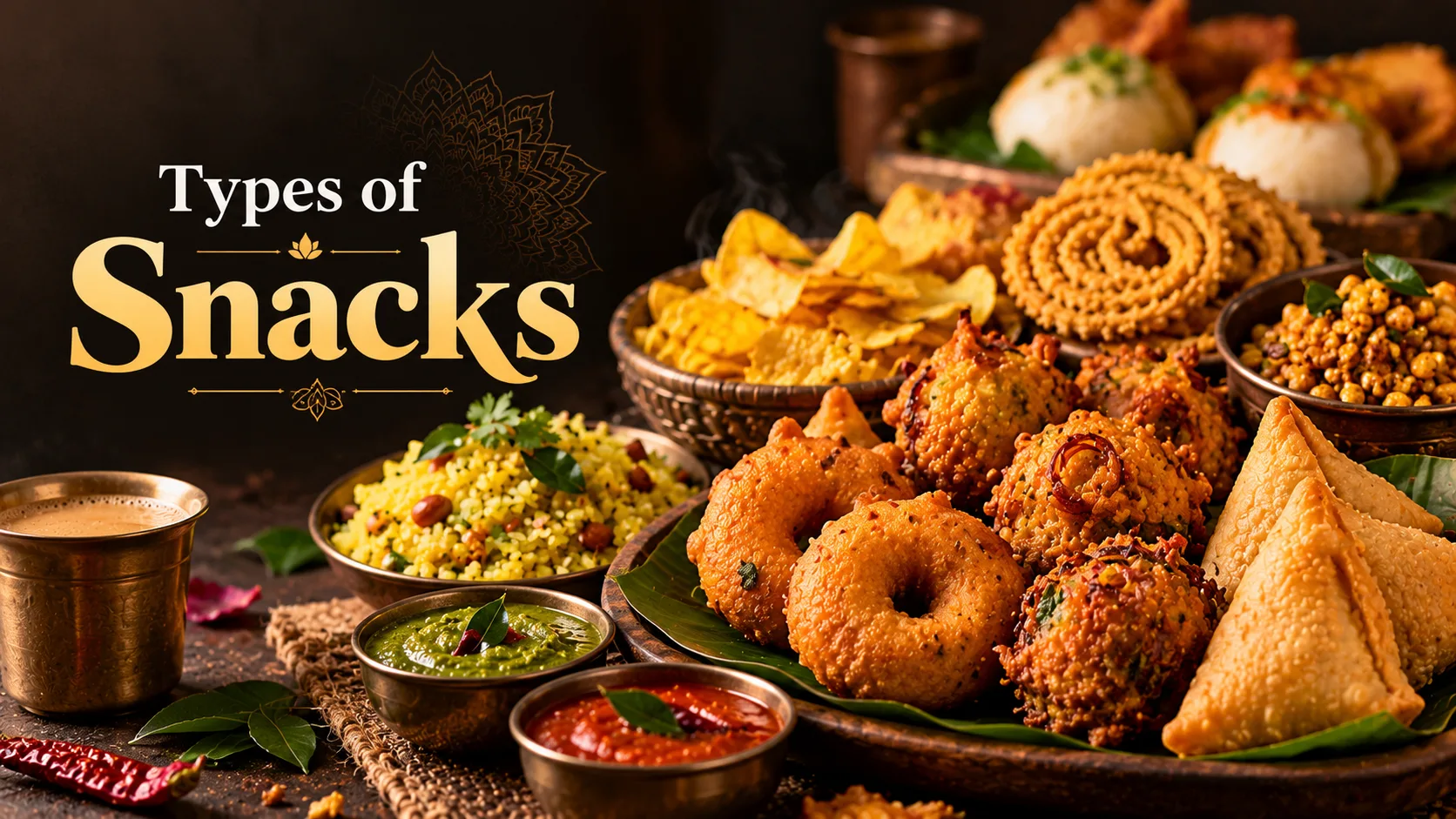
The different types of snacks include traditional Indian snacks, crispy fried snacks, healthy snacks, baked treats, savoury mixtures, and quick homemade bites. From South Indian bajji and bonda to North Indian samosas and pakoras, snacks are enjoyed between meals, during tea time, while travelling, and at festive gatherings. The right snack depends on your taste preferences, ingredients, preparation time, and occasion.
Indian snacks are especially varied because every region has its own ingredients, cooking methods, and traditional recipes. Whether you prefer spicy, crunchy, sweet, or light options, there are plenty of varieties to include in your everyday menu.
1. Traditional South Indian Snacks
South Indian snacks are known for their distinctive spices, crisp textures, and use of ingredients such as rice flour, gram flour, lentils, and curry leaves.
Popular varieties include:
- Bajji: Vegetables such as onion, raw banana, and chilli are coated in spiced gram flour batter and fried until golden.
- Bonda: Round savoury snacks made using potato filling or a prepared flour batter, depending on the variety.
- Murukku: A crunchy, spiral-shaped snack generally prepared with rice flour and urad dal flour.
- Medu vada: A savoury lentil fritter with a crisp exterior and soft centre.
- Sundal: A snack made with cooked legumes, tempered with mustard seeds, curry leaves, and other seasonings.
These snacks are commonly served with tea or coffee and are popular during festivals and family gatherings. Bajji and bonda are particularly suitable for rainy evenings when freshly prepared, hot snacks are appealing.
2. Popular North Indian Snacks
North Indian snacks feature a combination of wheat flour, potatoes, legumes, spices, and aromatic fillings. Many are served with chutneys or accompanied by hot beverages.
- Samosa: A pastry filled with spiced potatoes, peas, or other savoury ingredients.
- Pakora: Vegetables such as onion, spinach, and potato coated in seasoned gram flour batter and fried.
- Kachori: A round, flaky pastry filled with spiced lentils, peas, or other regional fillings.
- Aloo tikki: A shallow-fried potato patty seasoned with herbs and spices.
- Dhokla: A soft, savoury steamed snack commonly made using fermented or prepared gram flour batter.
These varieties are popular as street food, party appetisers, and evening snacks. Their flavours can range from mild and tangy to spicy, depending on the recipe and accompanying chutneys.
3. Crispy Fried Snacks
Crispy snacks are a familiar part of Indian tea-time traditions. Their crunchy texture makes them suitable for serving to guests or enjoying as an occasional treat.
Common examples include pakoda, banana chips, murukku, ribbon pakoda, thattai, and savoury mixtures. Ingredients and preparation methods differ by region, but many recipes rely on flour, spices, and careful frying.
To prepare these snacks successfully, maintain a suitable frying temperature and avoid overcrowding the pan. Allow fried snacks to cool before storing them in an airtight container to help preserve their crispness.
For convenient home preparation, 777 Bajji Bonda Mix and other instant snack mixes can help simplify the process of making familiar savoury favourites.
4. Healthy Snack Options
Healthy snacks can include fresh fruit, roasted legumes, nuts, seeds, vegetable sticks, steamed sundal, and homemade snacks prepared with suitable ingredients. These options can provide fibre, protein, vitamins, or healthy fats, depending on the ingredients and portion size.
Some practical choices include:
- Roasted chickpeas: A crunchy option that provides plant-based protein and fibre.
- Fruit with nuts: A simple combination of fruit and a small serving of nuts.
- Steamed sundal: Cooked chickpeas or other legumes seasoned with curry leaves and spices.
- Vegetable snacks: Fresh vegetables served with a suitable dip or incorporated into homemade preparations.
- Homemade poha: A light savoury preparation that can be customised with vegetables and peanuts.
The nutritional value of a snack depends on its ingredients, cooking method, and portion size. Fried snacks can also be enjoyed occasionally as part of a varied eating pattern.
For more ideas, visit this collection of healthy snack options and easy preparations.
5. Sweet Snacks for Everyday Treats
Not all snacks are savoury. Sweet snacks are enjoyed during tea breaks, family visits, festivals, and celebrations. Popular choices include laddu, gulab jamun, adhirasam, sweet paniyaram, coconut sweets, and homemade biscuits.
Regional ingredients influence the flavour of Indian sweet snacks. Jaggery, coconut, cardamom, rice flour, gram flour, and nuts are commonly used in different recipes.
For festive occasions, small portions of traditional sweets can be served alongside savoury snacks to create a varied menu. Homemade preparations also allow you to adjust sweetness and portion sizes according to preference.
6. Quick Snacks for Busy Days
Quick snacks are useful when there is limited time for preparation. Options include sandwiches, poha, roasted nuts, fruit, vegetable wraps, and simple homemade savoury dishes.
Ready-to-cook mixes can also reduce the number of preparation steps for traditional recipes. For example, a suitable bajji bonda mix can be combined with water according to the package instructions before adding vegetables and frying. Preparing ingredients in advance can make tea-time cooking easier, especially when serving several people.
When choosing packaged mixes, check the ingredient list, cooking directions, storage instructions, and allergen information. These details help you select products that suit your household's preferences and requirements.
Choosing the Right Snacks for Different Occasions
The best snack depends on when and how you plan to serve it. Crispy bajji and pakora are popular for evening tea, while sundal and roasted legumes can be practical choices for everyday snacking. Samosas, kachoris, and assorted savoury bites are suitable for gatherings, while traditional sweets add variety to festive menus.
For rainy days, freshly cooked fritters and hot beverages make a familiar combination. During festivals, a selection of sweet and savoury snacks can help accommodate different tastes. For busy mornings or evenings, simple recipes and suitable instant mixes can reduce preparation time.
Exploring different types of snacks makes it easier to plan a varied menu for everyday meals, family gatherings, and special occasions. By combining regional favourites with convenient homemade options, you can enjoy a wide range of Indian snack flavours throughout the year.