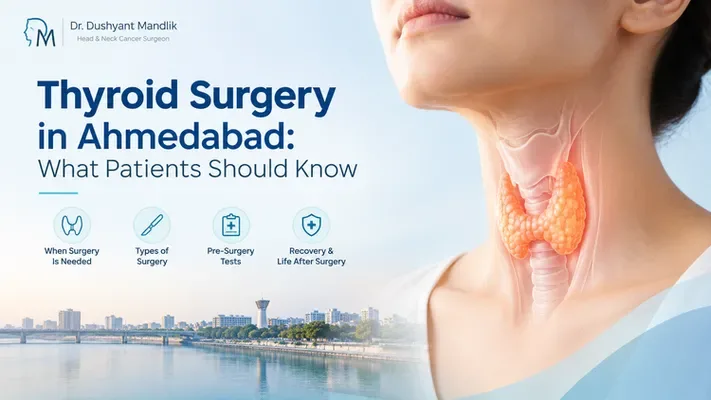
The thyroid is a small, butterfly-shaped gland at the base of your neck, yet it controls metabolism, heart rate, body temperature, and energy levels. When a lump, nodule, or swelling is found in this gland, the first reaction is usually worry. The good news is that most thyroid problems are treatable, and thyroid cancer in particular has some of the best outcomes among all cancers when it is diagnosed early and managed by an experienced team.
If you are researching thyroid surgery in Ahmedabad, this guide explains when surgery is needed, how it is performed, what recovery looks like, and how to choose the right specialist for your care.
Understanding Thyroid Problems That May Need Surgery
Not every thyroid issue requires an operation. Surgery is commonly advised in these situations:
- Suspicious or cancerous nodules: A nodule that shows worrying features on ultrasound or biopsy
- Confirmed thyroid cancer: Papillary, follicular, medullary, or anaplastic types
- Large goitre: An enlarged thyroid that presses on the windpipe or food pipe, causing breathing or swallowing difficulty
How Thyroid Conditions Are Diagnosed
Before any decision is made, a proper diagnosis is essential. The usual steps include:
- Physical examination of the neck and lymph nodes
- Blood tests for thyroid hormones (TSH, T3, T4) and, in some cases, calcitonin or thyroglobulin
- Ultrasound of the neck, which shows the size, shape, and features of nodules
- Fine needle aspiration cytology (FNAC), where a thin needle collects cells from a nodule for examination
Types of Thyroid Surgery
The type of surgery depends on what is being treated.
Hemithyroidectomy (lobectomy): Removal of one half of the thyroid. It is often used for small, low-risk cancers or benign nodules. Many patients do not need lifelong hormone tablets afterwards.
Total thyroidectomy: Removal of the entire gland. This is typically recommended for larger cancers, cancers affecting both lobes, or high-risk features. Lifelong thyroid hormone replacement is needed.
Thyroid Cancer Treatment: The Complete Picture
Surgery is the cornerstone of thyroid cancer treatment, but it is often part of a broader plan. Depending on the type and stage, treatment may include:
- Surgery: Removing the tumour and, if needed, affected lymph nodes
- Radioactive iodine therapy: Used after total thyroidectomy in many papillary and follicular cancers to destroy any remaining thyroid cells
- Thyroid hormone therapy: Replaces the hormone your body no longer makes and may also help suppress cancer recurrence
Most thyroid cancers, especially papillary and follicular types, respond very well to treatment, and long-term survival rates are high. Rarer types such as medullary and anaplastic cancers need more specialised and urgent care.
Why You Need the Right Thyroid Cancer Surgeon in Ahmedabad
The thyroid sits right next to two delicate structures: the recurrent laryngeal nerves, which control your voice, and the parathyroid glands, which regulate calcium. Careless handling can lead to hoarseness or low calcium levels. That is why the experience of the surgeon makes a real difference.
When looking for a thyroid cancer surgeon in Ahmedabad, consider:
- Training: Look for a surgical oncologist or head and neck oncologist with specialised training
- Case volume: Surgeons who perform thyroid operations regularly generally have lower complication rates
The Day of Surgery
Thyroid surgery is performed under general anaesthesia and typically takes one to three hours, depending on complexity. The surgeon makes a small horizontal incision in the lower neck, often along a natural skin crease so that the scar fades well over time. Some centres also offer minimally invasive or endoscopic approaches in selected patients, which may reduce visible scarring.
Recovery After Thyroid Surgery
Most patients stay in the hospital for one to two days. Here is what recovery commonly looks like:
- Pain: Mild to moderate soreness in the neck, usually well controlled with medicines
- Voice: Slight hoarseness or a weak voice for a few days to weeks is common and usually improves
- Swallowing: A scratchy throat or mild difficulty swallowing is temporary
Life After Thyroid Cancer Surgery
Follow-up is a vital part of thyroid cancer surgery in Ahmedabad and everywhere else. Regular checkups include physical examination, neck ultrasound, and blood tests such as TSH and thyroglobulin. Visits are more frequent in the first couple of years and then become less frequent if all is well.
Final Thoughts
A thyroid diagnosis can feel unsettling, but modern medicine offers excellent options. With accurate diagnosis, a skilled surgeon, and a coordinated care team, most patients recover well and go on to live full, healthy lives. Whether you are facing a benign nodule or need comprehensive thyroid cancer treatment, take the time to understand your choices, ask questions, and seek an experienced thyroid cancer surgeon in Ahmedabad who makes you feel informed and supported.
Early evaluation is your best ally. If you notice a lump in your neck, a persistent change in your voice, or difficulty swallowing, do not wait. Consult a specialist and take the first step toward clarity and confidence in your care.
Original Source: https://www.bookyellowpages.com/articles/thyroid-surgery-in-ahmedabad-what-patients-should-know-3228