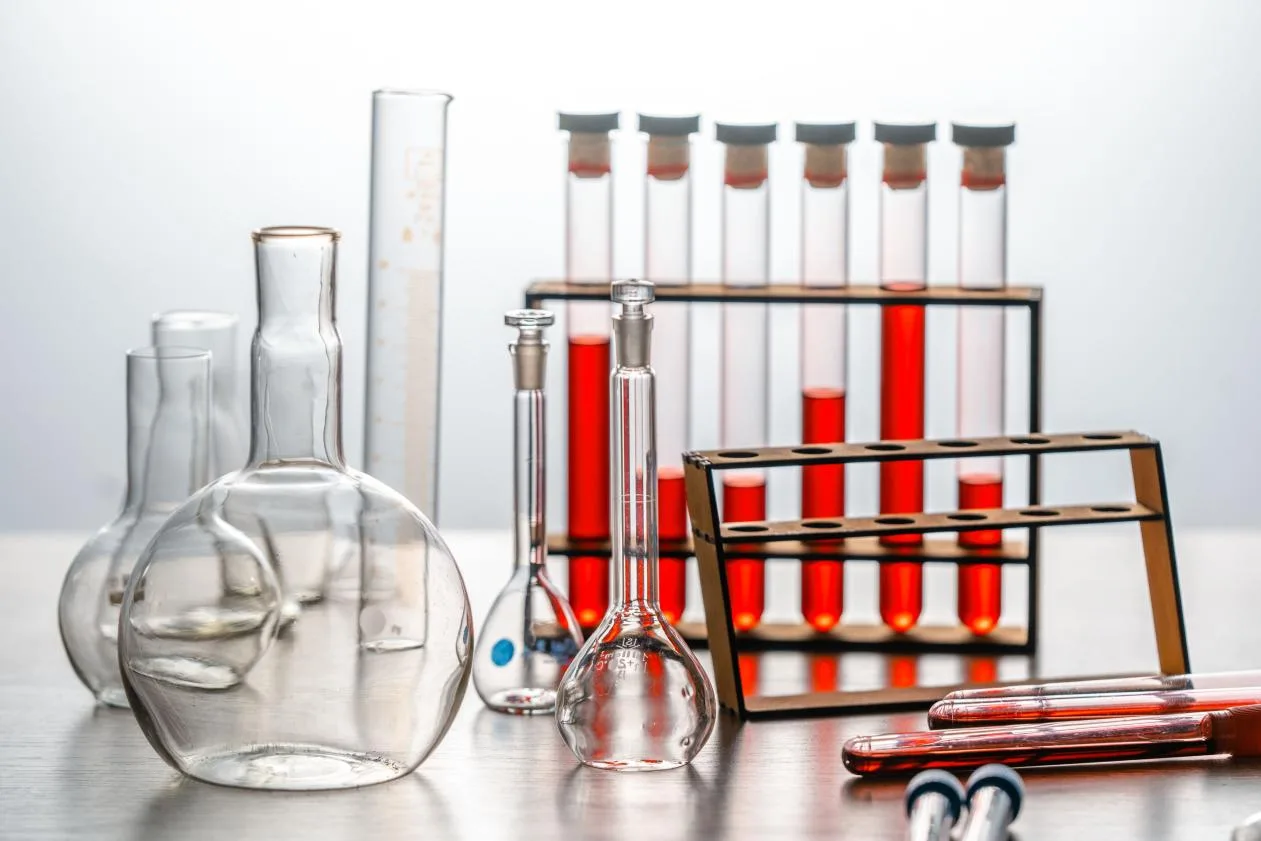
Flavor and fragrance development runs through several distinct stages before a formulation ever reaches commercial production, and the glassware supporting each stage rarely looks the same. Early bench work favors small, precise vessels built for rapid comparison between formulas, while later production-scale testing calls for containers that can hold up to repeated handling without introducing a single variable the original formula did not have. Building custom scientific glassware around each of these stages, rather than one generic vessel stretched across every step, is increasingly what separates a smooth scale-up from a project that stalls somewhere between the lab bench and full production.
Early-Stage Testing Depends on Precision, Not Volume
At the bench, flavor and fragrance chemists are usually working with small sample volumes and comparing several formulas side by side, which puts a premium on consistency between vessels rather than raw capacity. Shaping custom laboratory glassware around this kind of rapid, side-by-side evaluation helps a formulator trust that a difference they notice between samples reflects the formula itself and not a mismatch in container geometry. Even small inconsistencies in neck width or wall thickness can shift how quickly a volatile compound escapes between comparisons, which is exactly the kind of variable this stage of development cannot afford.
Fragrance Work Has Its Own Equipment Demands
Fragrance development in particular depends on a fragrance testing apparatus built to limit evaporation between samples while still letting a perfumer compare mixtures quickly during an evaluation session. Formulators working within IFRA's usage standards also need vessels precise enough to hold concentrations steady, since even a small measurement drift can push a finished formula outside an allowable limit before testing is finished.
Flavor Testing Brings Its Own Regulatory Context
Flavor ingredients intended for food applications are generally evaluated under the FEMA GRAS program, and labs supporting that evaluation need scientific laboratory glassware precise enough to support the documentation that accompanies a safety assessment. Reviewing FDA guidance on food contact substances is also useful background for labs selecting storage and testing containers that will not interact with the compounds held inside them.
Where Standard Equipment Starts to Fall Short
As a formulation moves from bench testing toward pilot and commercial-scale production, the equipment gaps that did not matter at small volumes tend to surface quickly. A vessel geometry that worked fine for a ten-milliliter comparison may behave very differently once a batch scales up, and a laboratory glassware manufacturer familiar with both stages can flag that kind of mismatch before it becomes a production problem rather than after. Teams that keep reworking the same scale-up step are usually running into an equipment limitation rather than a formulation one.
Heat transfer is one of the clearest examples of this kind of gap. A small bench vessel heats and cools almost uniformly, but a larger production container can develop uneven temperature zones that change how a volatile compound behaves across a batch. Catching that difference during a pilot run, rather than after a full production batch has already moved forward, is far less costly to correct.
Why Proximity to a Fabricator Matters During Scale-Up
Programs sourcing custom lab glassware in New Jersey during an active scale-up benefit from a shop close enough to review a prototype vessel in person before committing to a full production run, catching fit issues a shipped sample alone might miss. That proximity matters just as much for flavor houses and fragrance labs relying on laboratory glassware in New Jersey for routine replacements, since a broken vessel mid-project can stall testing until a replacement arrives.
Bringing Design and Fabrication Under One Roof
Flavor and fragrance programs that work with a scientific glass manufacturer in New Jersey offering both design consultation and in-house fabrication tend to move through scale-up with fewer surprises, since the same team that built the original bench apparatus can adapt it for a larger run rather than starting over with an unfamiliar supplier. That continuity, from a rough sketch at the bench through a finished production-scale vessel, is often what keeps a formulation's integrity intact across every stage of development.
This kind of continuity also simplifies documentation, since a single fabricator can track how a vessel design evolved from the first bench prototype through each production revision. That history becomes useful later when a formulation team needs to explain why a particular container geometry was chosen, whether for an internal review or as part of a broader quality record supporting the finished product.
Partner With a Precision Glassware Fabricator
North Jersey Custom Glass has spent nearly 25 years building glassware for flavor and fragrance programs moving between bench testing and commercial production, backed by an in-house shop that keeps both routine and custom orders moving without outsourced delays.
Contact them today to discuss glassware for a formulation project moving toward its next stage of development.