The sweepstakes industry is entering a period where compliance, player verification, and location-based controls are becoming essential parts of platform development. As sweepstakes platforms expand their digital features and reach more users, operators need better ways to verify participant identities, prevent unauthorized access, and apply state-specific restrictions.
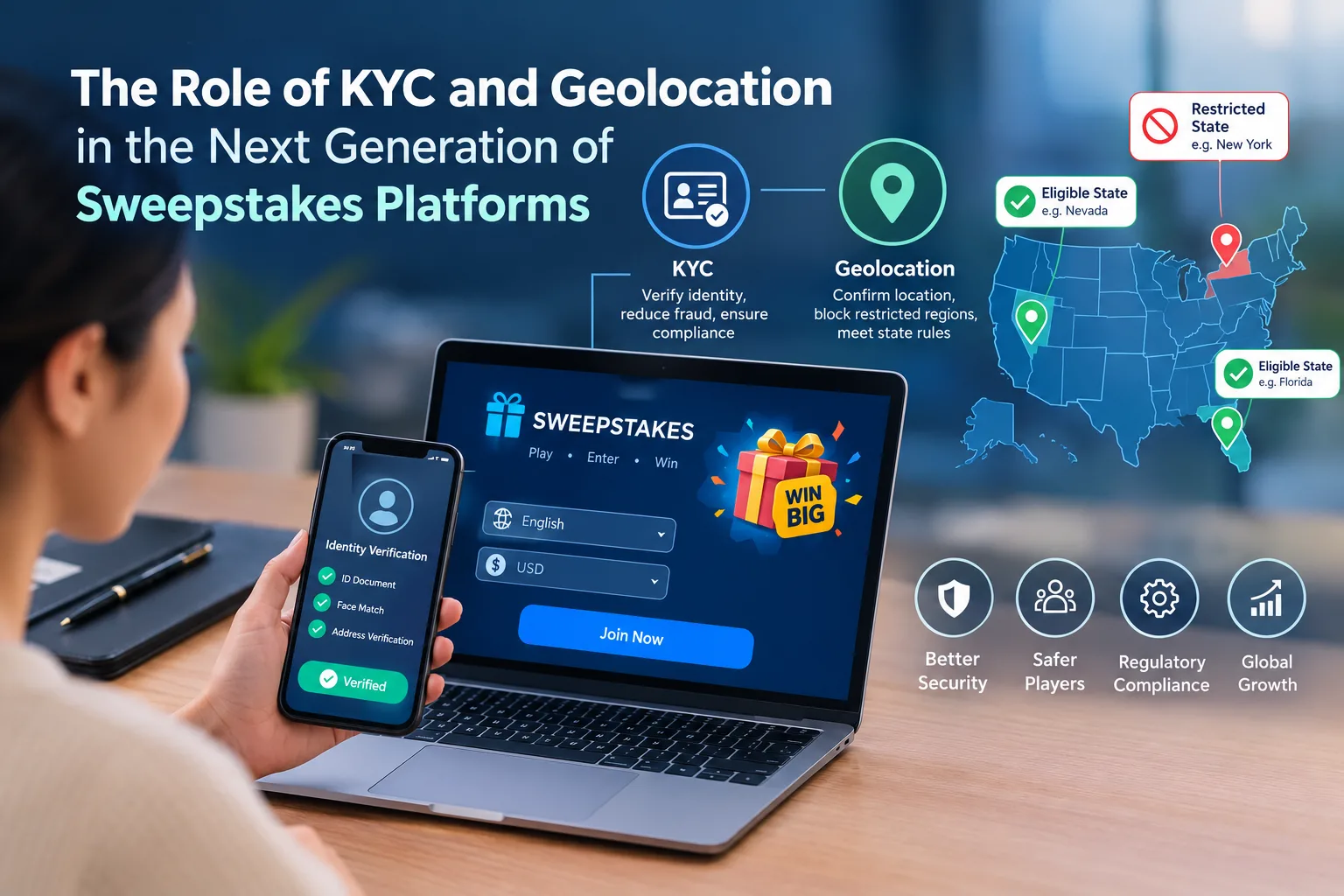
Know Your Customer (KYC) verification and geolocation technology play an important role in this process. Together, they help platforms understand who is accessing their services and where that access is taking place. For operators planning to build or upgrade a sweepstakes platform, these technologies are no longer just technical add-ons. They are important components of a responsible platform strategy.
What Is KYC in Sweepstakes Platforms?
KYC refers to the process of verifying a user's identity before allowing certain activities, such as account verification or prize redemption. Depending on the platform's model, legal obligations, and risk profile, verification may involve checking a person's name, date of birth, residential address, and government-issued identification.
KYC can also help identify duplicate accounts, suspicious registration patterns, and attempts to claim prizes using false information. For example, if several accounts use similar identity details or a prize claimant's information does not match the submitted documents, the platform can flag the activity for further review.
However, verification should be proportionate to the risk and the applicable legal requirements. Collecting excessive personal information can create unnecessary friction for users and increase data-security responsibilities.
Why Geolocation Matters for Sweepstakes Operators
Geolocation technology estimates or verifies a user's physical location through methods such as IP address analysis, device location services, and other technical signals. Its main purpose in sweepstakes platforms is to help determine whether a participant is accessing the service from an eligible jurisdiction.
This matters because sweepstakes rules and gaming laws differ across the United States. A platform that is accessible in one state may face restrictions or prohibitions in another. A user's registered address alone may not be sufficient because people travel, use VPNs, or access services from different devices.
A robust geolocation system can check location during registration, login, gameplay, or prize redemption, depending on the platform's risk controls. If a location check fails or produces conflicting results, the system can request another verification step or restrict access until the issue is resolved.
State Regulations Make Location Controls More Important
The U.S. sweepstakes landscape demonstrates why operators need to treat state-level compliance seriously. The legal status of a promotion depends on its structure, prize mechanics, entry method, and other facts—not simply on whether the operator calls it a sweepstakes.
For example:
- Washington: The Washington State Gambling Commission states that casino-style online sweepstakes combining gambling elements are not authorized under the state's gambling framework. Its guidance distinguishes these products from permitted promotional contests that meet the relevant rules.
- New York: Section 912 of New York's Racing, Pari-Mutuel Wagering and Breeding Law prohibits specified online sweepstakes games involving casino-style gaming and a dual-currency system. The provision also addresses entities supporting those operations, including platform providers and geolocation providers.
- Florida: Florida Statutes Section 849.094 establishes requirements for certain game promotions. Promotions offering prizes with a total announced value exceeding $5,000 generally require advance filing and a trust account or qualifying surety bond, subject to statutory exceptions.
These examples illustrate that operators cannot rely on one nationwide rule or assume every state treats sweepstakes products the same way. Before entering a market, businesses should review current laws, regulations, and enforcement guidance with qualified legal counsel. State requirements can change, so platform restriction lists must be updated accordingly.
How KYC and Geolocation Work Together
KYC and geolocation address different questions, but their combined use can strengthen a platform's compliance controls.
KYC helps establish a participant's identity and, where required, verify age and other eligibility criteria. Geolocation helps determine where that participant is physically accessing the platform. Comparing these signals can identify inconsistencies that require additional checks.
For example, a user may register with a residential address in an eligible state but attempt to access a restricted product while physically located elsewhere. Geolocation can flag the access attempt, while identity and account records provide additional context for a review.
The two systems can also support prize-redemption checks. Before releasing a high-value prize, a platform may need to confirm identity, eligibility, and compliance with the applicable promotion rules. The exact checks should reflect the product design and legal obligations.
Importantly, neither technology guarantees compliance on its own. Operators need clear policies, reliable vendors, documented review procedures, and appropriate human oversight for disputed or inconclusive cases.
Key Features of a Modern Sweepstakes Platform
Next-generation platforms should integrate verification and location controls into the wider technology architecture rather than treating them as separate tools.
1. Layered location verification: IP checks can provide an initial signal, while additional device or location methods may help resolve higher-risk cases. VPN and proxy detection can support these checks, although no single method is completely reliable.
2. Configurable state restrictions: Operators need a central system to manage eligible and restricted jurisdictions. Rules should be easy to update when legislation or legal advice changes.
3. Risk-based identity checks: A platform can apply different verification steps at registration, account changes, or prize redemption according to risk and applicable requirements.
4. Privacy and data security: Identity documents and location information are sensitive data. Encryption, access controls, limited retention, and clear privacy notices help reduce unnecessary exposure.
5. Audit trails and monitoring: Records of verification results, location decisions, rule changes, and manual reviews help compliance teams investigate incidents and demonstrate how controls were applied.
The Role of Platform Technology Partners
Building these capabilities requires coordination between account management, payment systems, verification providers, location services, and compliance workflows. Poor integration can create inconsistent decisions, delay legitimate prize claims, or allow restricted access attempts to go unnoticed.
Technology partners such as Tecpinion, Kodedice can be part of the platform development process by helping operators assess their technical requirements and plan scalable platform capabilities. The specific KYC and geolocation features needed will depend on the product model, vendor integrations, and the jurisdictions where the platform intends to operate.
Operators should evaluate technology partners on integration flexibility, security practices, system reliability, reporting capabilities, and their ability to accommodate changing requirements. Legal review remains essential; software alone cannot determine whether a sweepstakes model is lawful in a particular state.
Conclusion
KYC and geolocation are becoming central to the design of modern sweepstakes platforms because identity verification and location eligibility directly affect access, prize claims, and risk management. The differing approaches taken by states such as Washington, New York, and Florida show why operators need more than a basic registration system.
By combining risk-based verification, reliable location checks, configurable jurisdiction rules, and strong data protection, operators can build platforms that are better prepared for changing requirements. The most effective approach brings compliance into the platform architecture from the beginning rather than treating it as a last-minute addition.