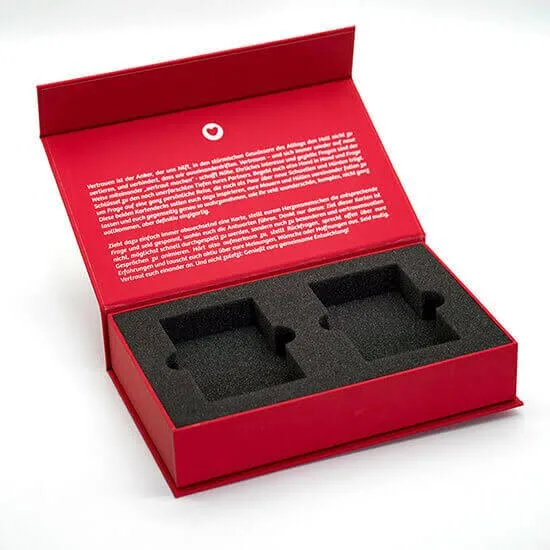
Foam insert boxes are designed to provide secure protection and a polished presentation for delicate and valuable products. Precision-cut foam insert boxes create individual spaces that hold items firmly in place, reducing movement, scratches, impact, and damage during shipping, handling, and storage.
Beyond protection, these boxes add a premium touch to the unboxing experience by presenting each product in an organized and visually appealing layout. Custom boxes with foam inserts make them especially useful for brands that want their packaging to reflect quality and attention to detail. Foam insert boxes are widely used for electronics, medical devices, jewelry, cosmetics, glassware, and other fragile products that require dependable support. With custom-cut inserts available in different shapes, sizes, and thicknesses, foam insert packaging fits products securely while providing customers with a professional and memorable first impression
Essential Benefits of Foam Insert Packaging:
Protective packaging solution designed to keep products safe during shipping, handling, and storage. Its main advantage is its ability to absorb shocks, vibrations, and impacts that could

otherwise damage delicate or valuable items. Foam insert packaging acts as a cushion between the product and the outer box, reducing the force caused by drops or rough handling.
Another important benefit is the secure fit. Custom-cut foam creates specific cavities for each product, preventing items from moving, shifting, or colliding inside the package. Foam insert boxes are especially useful for fragile electronics, glassware, medical equipment, cosmetics, jewelry, and precision components.
Protection Through the Right Foam Material:
Its cushioning helps absorb impacts, vibrations, and sudden drops, reducing the risk of damage during shipping and handling. Custom-cut cavities hold each item firmly in place, limiting internal movement and preventing scratches or breakage. Different custom boxes with foam insert materials can also be selected based on product weight, sensitivity, and presentation needs. Polyethylene (PE) foam offers firm, dense support for heavier products, sharp components, and equipment that needs stronger cushioning. Polyurethane (PU) foam provides softer, flexible protection for lightweight and delicate items. EVA foam delivers a dense, smooth surface that works particularly well for premium products and luxury foam insert packaging. Together, these options make foam inserts a practical packaging solution for protecting valuable products while maintaining a neat, professional presentation throughout transportation, storage, and delivery.
Customization Options for Custom Boxes with Foam Inserts:
Custom boxes with foam inserts offer businesses plenty of ways to create secure and visually appealing packaging.
Precision Cutting and Box Material Selection:
Precision cutting technologies allow foam cavities to match product shapes accurately, with laser cutting providing detailed designs and die-cutting offering efficient production for repeated shapes. The outer box can also be selected according to the product and brand requirements, including rigid boxes for luxury items, corrugated boxes for shipping protection, or folding cartons for lightweight products. Visual customization adds another layer of brand appeal through colored foam, printed or branded top layers, velvet coatings, and custom debossing. Custom boxes with foam inserts coordinate the inside and outside of the package for a consistent brand experience.
By combining accurate foam fitting with suitable box materials and decorative finishes, companies can create packaging that protects products while giving customers a polished and memorable presentation.
 Design Considerations & Best Practices:
Designing foam insert boxes requires careful attention to the product’s dimensions, weight, shape, and vulnerable areas because these factors determine how well the foam insert packaging can protect the item. Accurate dimensions are important for creating foam cavities that fit the product closely without being too tight or too loose. The product’s weight also affects the type, density, and thickness of foam required. Heavier items may need firmer and denser foam to prevent movement, while lightweight or delicate products often require softer cushioning.
The product’s shape should also be considered when designing the insert. Unusual shapes, corners, handles, or protruding parts may require specially shaped cavities for proper support. Identifying vulnerable areas, such as glass surfaces, screens, corners, or sensitive components, helps designers add extra cushioning where impact protection is most important. By considering all these factors during the design stage, businesses can create foam insert boxes that keep products secure, reduce damage, and provide a better overall packaging experience.
Accurate Sizing and User-Friendly Design:Accurate measurements help create cavities that hold each item securely without applying excessive pressure. It is also important to identify critical impact points so the foam can provide extra cushioning where protection is most needed. Choosing the right foam density and thickness depends on the product’s weight and fragility. Heavier items generally require firmer support, while delicate products may benefit from softer cushioning. Proper weight distribution also helps prevent unnecessary movement inside the custom boxes during handling and transportation. For better usability, designers can add finger notches or pull tabs that allow customers to remove products easily without damaging them or struggling with tight-fitting cavities. Combining precise measurements, suitable foam selection, and user-friendly features results in packaging that offers dependable protection and a smooth product-handling experience.
Sourcing And Production Guidelines:Effective foam insert boxes sourcing starts with prototyping and testing. Businesses should request prototypes to verify fit, cavity accuracy, product positioning, and box performance. Drop and handling tests identify weak points and confirm protection during transport. Testing allows adjustments to foam thickness, density, and cavity size before full production, reducing errors. Once approved, bulk orders lower costs and improve efficiency, ensuring consistent quality and better inventory planning. Partner with an experienced supplier to ensure prototypes, testing, and production meet specifications.

Conclusion:
Custom foam packaging protects and presents products effectively. Precision-cut foam inserts secure items and absorb shocks during shipping and handling. Custom boxes with foam inserts: materials and densities suit different product needs. Well-designed inserts improve organization and create professional unboxing experiences, especially when combined with boxes. Features like branding, colors, and finishes boost brand appeal. For delicate, valuable, or premium items, custom foam insert packaging offers reliable protection and conveys quality and care.
Frequently Asked Questions About Foam Insert Packaging:What are foam insert boxes?Foam insert boxes are packaging boxes fitted with custom-cut foam cavities that hold products securely. They help protect delicate, valuable, and fragile items from movement, impact, scratches, and damage during shipping and storage.
What products can be packed in foam insert boxes?They are suitable for electronics, medical devices, jewelry, cosmetics, glassware, tools, precision equipment, and other products that require extra protection.
What are the main benefits of foam insert packaging?Foam insert packaging provides shock absorption, a secure product fit, reduced internal movement, and a professional presentation. It can also improve the unboxing experience for customers.
Which foam material is best for packaging?The best material depends on the product. PE foam provides firm support for heavier items, PU foam offers softer cushioning for delicate products, while EVA foam is a dense option suited to premium packaging and luxury presentation.
Can foam inserts be customized for different product shapes?Yes. Foam inserts can be precision-cut to match specific product dimensions, shapes, corners, and sensitive areas. This creates a snug fit that helps prevent movement inside the box.
What types of boxes can be used with foam inserts?Foam inserts can be paired with rigid boxes, corrugated boxes, and folding cartons. The appropriate box style depends on the product, shipping requirements, budget, and desired presentation.
Can custom boxes with foam inserts be branded?Yes. Businesses can customize the outer box with logos, colors, printing, finishes, and other branding elements. Colored foam, branded top layers, velvet surfaces, and debossing can also add a premium appearance.
How do I choose the right foam density and thickness?Foam density and thickness should be selected according to the product’s weight, fragility, shape, and expected handling conditions. Testing samples before production can help determine the most suitable configuration.
Are foam insert boxes suitable for shipping?Yes. When properly designed and paired with an appropriate outer box, foam inserts can help protect products against shocks, vibrations, drops, and movement during transportation.
Should I test foam insert packaging before bulk production?Yes. Prototyping and sample testing can help verify cavity accuracy, product fit, cushioning, and overall packaging performance before placing a large production order.