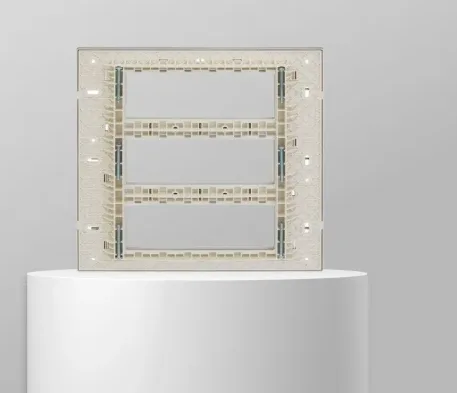
Switch plate covers and fuse holders are small accessories, yet each has a distinct role in a safe, maintainable installation. A plate provides a finished cover around compatible switch modules, while a fuse holder secures a correctly specified fuse in its intended assembly. Appearance matters for plates, but fit and protection matter more. Lauritz Knudsen Smartshop can help users explore electrical accessories, with final choices based on the installed series and electrical requirements.
Plan the Installation Before Comparing Products
For a switch plate, record the module series, number of positions, mounting-box dimensions, finish, and location. For a fuse holder, identify the fuse type, current and voltage ratings, breaking requirements, mounting method, and intended circuit. If replacing an existing part, use the original model number or technical drawing where possible. This prevents a visually similar but incompatible component from being ordered.
Write down the relevant ratings, physical constraints, and operating conditions before comparing model numbers. This makes product comparisons more meaningful and helps prevent a mismatch between the accessory and the equipment it is intended to serve.
Priorities for Covers and Fuse Holders
For accessory replacement, verify the plate series and the fuse-holder specification separately. Visual similarity is not enough when module fit, fuse format, or electrical ratings differ.

Why the Plate and Enclosure Matter
Switch plate covers provide a finished surface around switch modules and help protect the installation from casual contact with internal components. Their fit, material, dimensions, and suitability for the location should be checked before purchase.
A plate is not a substitute for a correctly installed electrical box or suitable enclosure. The mounting arrangement should be secure and compatible with the modules and wiring behind it.
Fit and Replacement Checks
- Match the plate to the exact module series.
- Use only the fuse type and rating specified.
- Investigate heat marks, cracking, and repeated fuse failure.
Choosing a Compatible Switch Plate
Switch plates come in different module layouts, finishes, and sizes. Confirm the number and type of modules, the mounting-box dimensions, and whether the plate is intended for the specific product series.
Appearance matters for interior consistency, but compatibility and safe fit come first. Do not force a plate into place or use it to conceal loose wiring or damaged accessories.
Switching and Rating Checks
- Match the plate to the exact module series.
- Use only the fuse type and rating specified.
- Investigate heat marks, cracking, and repeated fuse failure.
What a Fuse Holder Does
A fuse holder secures a compatible fuse and provides the intended electrical connection within an approved assembly. The holder must match the fuse type, current and voltage ratings, dimensions, and the equipment's design.
A fuse protects against specified overcurrent conditions, but it is not interchangeable with every other protective device. Use only the fuse type and rating required by the manufacturer or qualified designer.
Fit and Replacement Checks
- Match the plate to the exact module series.
- Use only the fuse type and rating specified.
- Investigate heat marks, cracking, and repeated fuse failure.
Selection and Replacement Checks
Before buying a replacement, identify the product series, dimensions, ratings, and installation conditions. If the original part is damaged, determine why it failed rather than simply replacing it with a similar-looking item.
Never bypass a fuse, fit a higher-rated fuse to stop repeated operation, or work on an energised circuit. Isolate the supply and have repairs completed by a qualified professional.
Installation Suitability Checks
- Match the plate to the exact module series.
- Use only the fuse type and rating specified.
- Investigate heat marks, cracking, and repeated fuse failure.
Buying and Installation Safety
Product documentation should confirm compatibility and relevant ratings. For commercial or industrial uses, the holder or enclosure may need to meet additional environmental or equipment requirements.
Lauritz Knudsen Smartshop can be used to explore electrical accessories, but verify the precise part specifications and follow manufacturer instructions. Have fixed wiring or repairs handled by a qualified electrician.
Purchase Comparison Checks
- Match the plate to the exact module series.
- Use only the fuse type and rating specified.
- Investigate heat marks, cracking, and repeated fuse failure.

Mistakes That Can Lead to Poor Performance or Unsafe Selection
Do not force a plate into place when the module layout or mounting centres differ. A cracked or discoloured cover can also indicate heat or mechanical damage beneath it. For fuse holder, never fit a higher-rated fuse simply to stop repeated operation, and never bridge the fuse with wire or foil. A fuse that repeatedly opens signals a fault that needs investigation.
If a device trips repeatedly, overheats, makes unusual noise, or shows visible damage, stop relying on it until the cause has been checked. Never bypass protection or work on energised fixed wiring.
Final Checks Before Purchase and Installation
Compare the plate's dimensions, module compatibility, material, finish, and mounting method. For the holder, check the fuse format, terminal arrangement, current rating, voltage rating, and enclosure requirements. Confirm the exact replacement part and package contents. If wiring is damaged or the accessory shows signs of overheating, isolate the supply and arrange inspection by a qualified electrician.
Fit, replacement and maintenance
When replacing a plate, confirm the mounting centres, module series, and box depth before ordering. A plate that does not fit correctly can leave gaps or put pressure on modules and wiring, so it should never be forced into place.
If a cover is cracked, discoloured, loose, or shows signs of heat, inspect the underlying accessory as well. Replacing only the visible cover may leave the original electrical fault unresolved.
Quick checklist
- Match the plate to the module series
- Inspect for heat or mechanical damage
- Use a qualified electrician if wiring is affected
Conclusion
Switch plates and fuse holders may be small components, but correct fit and ratings matter. Confirm compatibility with the existing installation and address the cause of any electrical fault before replacing a part.