Two neighbors buy new cars in the same month. One picks a fully electric crossover, the other a plain hybrid sedan. A year later, both are convinced they made the smarter choice, and both are right. The difference is not which technology is better. It is how each of them drives, where they park at night and how far they go on a typical day.
Car buyers now have more powertrain choices than ever: conventional gas, hybrid, plug-in hybrid and fully electric, often all offered on the same model. Advertising tends to frame this as a ladder, with electric at the top. In practice, the right choice depends far more on your daily routine than on the technology itself.
The four options in plain terms
A conventional gas car runs only on gasoline. It is usually the cheapest to buy, simple to refuel anywhere and well understood by every mechanic.
A hybrid pairs a gas engine with an electric motor and a small battery that charges itself through braking and the engine. You never plug it in. Its advantage is efficiency in stop-and-go traffic, where the electric motor does much of the work at low speed.
A plug-in hybrid has a larger battery you charge from an outlet, giving it a short electric-only range, typically somewhere around 20 to 50 miles, before it switches to working like a normal hybrid. It can run most daily errands on electricity and still take a long trip without stopping to charge.
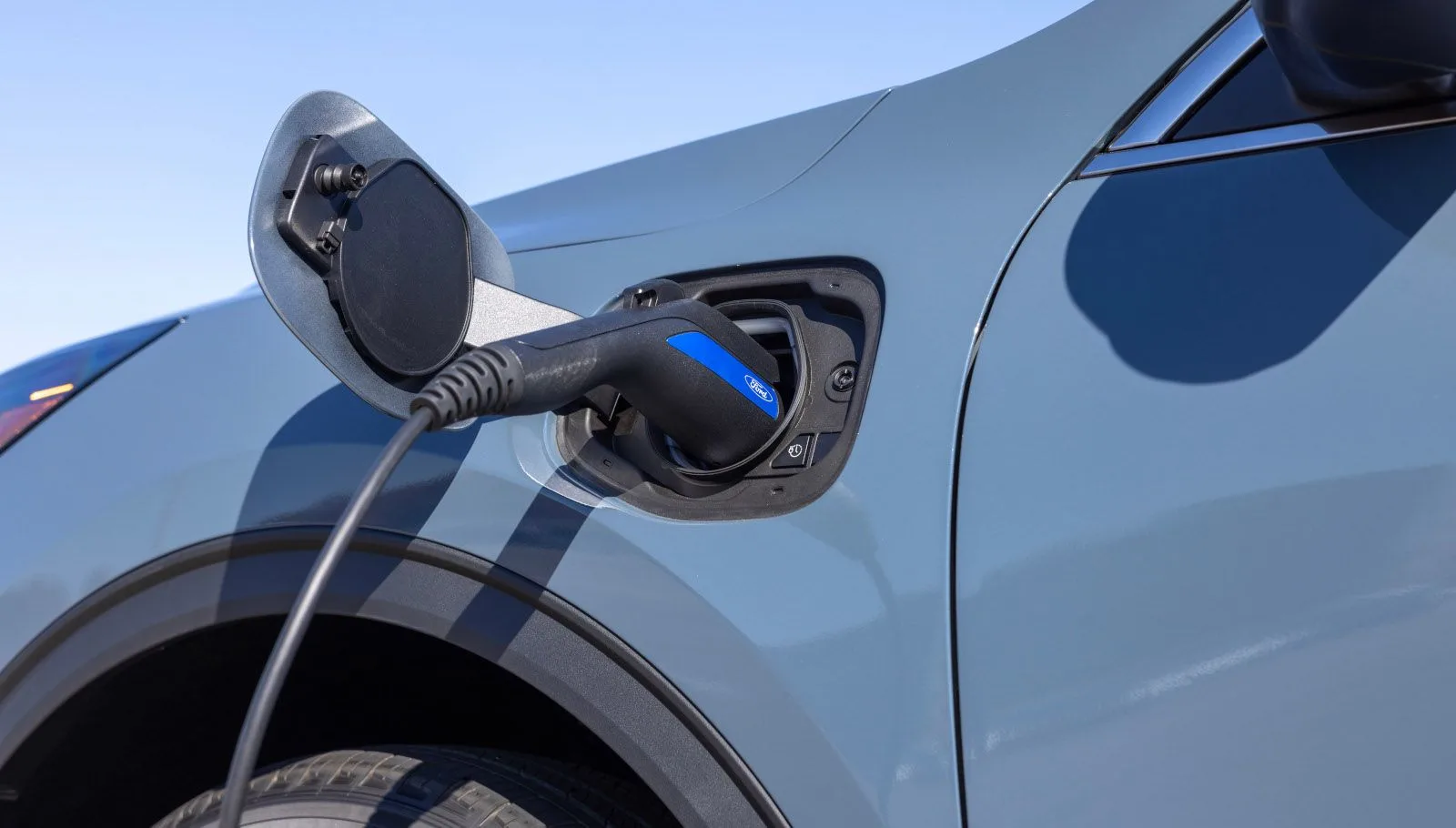
A fully electric vehicle runs only on its battery. It has no tailpipe, very low running costs when charged at home and the fewest moving parts to maintain, but it depends on access to charging.
Start with where the car sleeps
The single most important question is whether you can charge where you park overnight. If you have a garage or driveway with an outlet, or a workplace with charging, a plug-in hybrid or an EV becomes very easy to live with. You leave home every morning with a full battery, and charging at home usually costs far less per mile than gasoline.
If you park on the street or in a shared lot without chargers, the picture changes. Relying entirely on public fast charging is possible, but it costs more and takes planning. For many drivers in that situation, a regular hybrid delivers most of the efficiency benefit with none of the charging logistics. Before deciding, it is worth checking charging options near your home and work on the U.S. Department of Energy's Alternative Fuels Data Center, which maps public stations nationwide.
Then look at a normal week of driving
Think about an ordinary week, not your once-a-year vacation.
- Mostly short trips in town: hybrids shine here, and many are as efficient in the city as on the highway, or more so. If you can charge at home, a plug-in hybrid may cover almost all of this driving on electricity.
- A steady commute of 30 to 60 miles a day: an EV handles this comfortably with overnight charging, and a plug-in hybrid with a longer electric range can cover much of it.
- Long highway stretches most days: the advantage of a hybrid narrows, because engines are already efficient at steady speeds. An EV still saves on fuel, but you will want to know where the fast chargers are on your routes.
- Frequent long trips to rural areas: a hybrid or efficient gas car is the simplest choice where chargers are scarce.
Range anxiety is often less of a problem than people expect. Most daily driving is well within the range of current electric models, and the gap between the longest-range and shortest-range models is large, so it pays to look at how far the most efficient EVs go on a charge before ruling one out.
Weather, towing and other details that matter
Cold weather reduces the range of every electric vehicle, because batteries are less efficient in the cold and heating the cabin uses energy. If you live somewhere with harsh winters, plan around winter range rather than the summer figure. Heat pumps and preconditioning the cabin while the car is still plugged in help a lot.
Towing also changes the equation. Pulling a trailer can cut an EV's range sharply, so if you tow often and over long distances, a hybrid or a conventional truck may still be the practical choice.
Finally, consider how long you keep cars. Electric and hybrid drivetrains have fewer wear items such as brakes, which last longer thanks to regenerative braking, and EVs need no oil changes. Over eight or ten years, those savings add up alongside the lower running costs.
Compare real models, not categories
The categories overlap more than marketing suggests. An efficient gas compact can use less fuel than a heavy hybrid SUV, and two EVs of similar size can differ widely in efficiency. Once you have narrowed down the type, it helps to compare two models side by side on official ratings rather than relying on brochures. Look at fuel economy or MPGe, range for plug-ins, the type of fuel required and the estimated yearly running cost.
A simple way to decide
- Can charge at home, drive mostly locally or commute moderately: a fully electric vehicle is likely the best fit.
- Can charge at home, but take frequent long trips: a plug-in hybrid gives you electric commuting and gas for the long haul.
- Cannot charge at home, lots of city driving: a regular hybrid is hard to beat.
- Cannot charge at home, mostly highway or rural driving, or regular heavy towing: an efficient gas vehicle or hybrid remains a sensible choice.
The bottom line
There is no single best powertrain in 2026, only the best one for a particular driver. Start with where the car will park at night, look honestly at a normal week of driving, factor in your climate and what you tow, and then compare specific models on their official ratings. Do that, and like the two neighbors, you will end up with the car that suits your life rather than the one that sounded best in an ad.