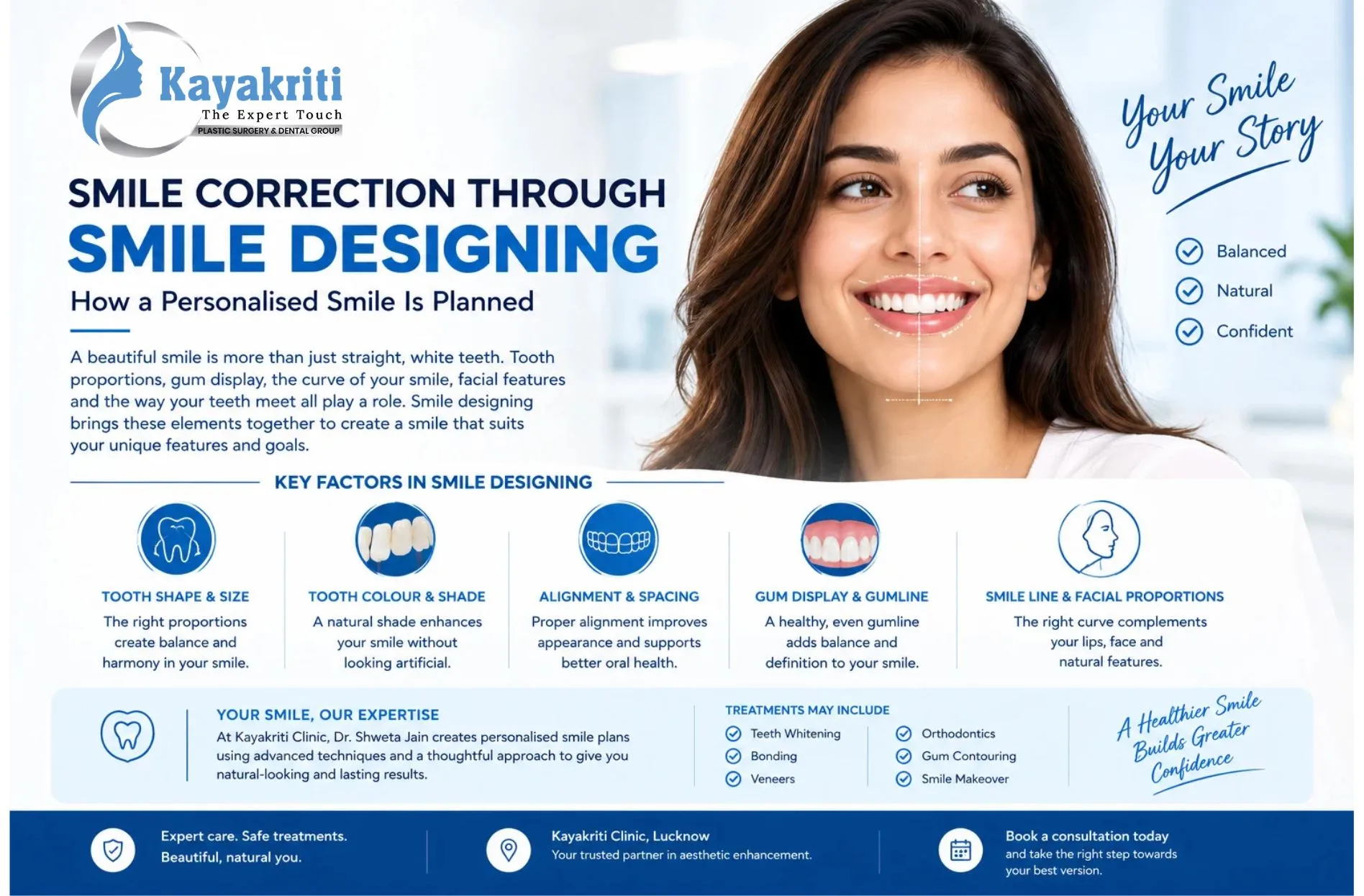
A balanced smile is influenced by more than straight, white teeth. Tooth proportions, gum display, the curve of the smile, facial features and the way the teeth meet all contribute to its overall appearance. Smile Correction through personalised planning considers these elements together, helping patients understand which changes may improve their smile without unnecessarily altering healthy teeth.
Unlike a single cosmetic procedure, smile designing involves evaluating the relationship between the teeth, gums, lips and face before selecting suitable treatments. For people exploring smile designing in Lucknow, this approach can make the decision-making process clearer by connecting individual concerns with a coordinated treatment plan.
Depending on the clinical assessment, cosmetic dentistry may involve teeth whitening, bonding, veneers, orthodontics or gum contouring. The objective is not to create an identical smile for everyone but to develop a result that complements the individual's features and dental health.
How Does Smile Designing Help With Smile Correction?
Smile Correction focuses on improving specific concerns, such as stained teeth, chips, gaps or uneven edges. Smile designing takes a broader view by assessing how these concerns interact with the rest of the smile and facial appearance.
For example, whitening may improve tooth colour, but it will not correct a significant alignment problem. Similarly, veneers may change tooth shape and shade, but they are not automatically the best solution for crowded teeth. A comprehensive assessment helps identify whether one procedure is sufficient or whether several treatments should be coordinated.
The distinction between targeted correction and comprehensive planning matters. A carefully selected smile correction treatment may involve a small adjustment rather than a complete transformation. In other cases, a broader smile makeover may be appropriate when several concerns affect the overall result. At Kayakriti Clinic, Dr. Shweta Jain approaches smile designing by considering tooth appearance, facial proportions, gum relationships and individual aesthetic goals.
What Factors Are Considered When Designing a Smile?
A personalised smile plan typically evaluates several interconnected features. Their relative importance depends on the patient's anatomy, oral health and desired outcome.
1. Tooth Shape and Size
Tooth shape influences how a smile appears as a whole. Teeth that are worn, chipped, unusually short or irregularly shaped may create visual imbalances.
During smile designing, the dentist evaluates tooth width, length, proportions and the relationship between neighbouring teeth. Any proposed changes should suit the individual's facial characteristics rather than follow a universal template.
Depending on the concern, bonding, reshaping or veneers may be considered. A conservative cosmetic dental treatment is generally preferable when it can achieve the desired result while preserving healthy tooth structure.
2. Tooth Colour and Shade
Discolouration can result from food and drink, tobacco use, ageing, certain medications or changes within a tooth. The cause matters because different types of staining respond differently to treatment.
Professional whitening may be appropriate for certain forms of discolouration, while bonding or veneers may be considered for selected concerns that whitening cannot adequately address.
For effective smile correction, the aim should be a shade that looks appropriate for the individual rather than simply choosing the brightest available option. At Kayakriti, tooth whitening, bonding and veneers can be considered within a broader cosmetic assessment when clinically suitable.
3. Alignment and Spacing
Crowding, rotated teeth and visible gaps can influence the appearance of the smile. However, alignment is not purely an aesthetic consideration; the bite and overall dental health also matter.
Orthodontic treatment, including braces or clear aligners where suitable, may be considered when tooth position is the primary concern. Small chips or minor shape irregularities may require a different approach.
For people seeking smile correction in Lucknow, the dentist should explain whether the concern relates mainly to tooth position, tooth shape or both. This distinction helps determine the most appropriate smile correction treatment and avoid using restorations to compensate unnecessarily for alignment problems.
4. Gum Display and Gumline
The amount of gum visible when smiling can influence facial and dental proportions. An uneven gumline may also make teeth appear to differ in length even when their actual dimensions are similar.
A dentist may assess gum health, gum contours and the relationship between the upper lip and teeth during a full smile. Depending on the cause, treatment might involve periodontal care, selected gum-contouring procedures or other specialist assessment.
Gum contouring is not suitable for every patient, and healthy gum tissue should not be removed simply to achieve a particular appearance. In smile designing in Lucknow, the decision should follow a clinical examination that considers both aesthetics and periodontal health.
5. Smile Line and Facial Proportions
The smile line describes the curve formed by the visible edges of the upper teeth when a person smiles. Its relationship with the lower lip can influence how balanced the smile appears.
Dentists may also consider the dental midline, lip movement, facial symmetry and the way the teeth are displayed during speech and smiling. These features help explain why a change that looks attractive on one person may not suit another.
A personalised smile makeover considers these relationships instead of treating each tooth as an isolated feature. The goal of smile enhancement is to achieve a balanced appearance that feels consistent with the person's natural features.
How Does Digital Smile Planning Work?
Digital smile planning can help patients and dentists visualise a proposed treatment before proceeding with selected procedures. Depending on the available technology and the case, the process may use facial photographs, dental images, digital scans and smile-design software.
A typical planning process involves:
- Recording the existing smile: Photographs and appropriate dental records help document tooth position, proportions, gum display and facial features.
- Analysing the concerns: The dentist identifies which aspects of the smile may benefit from correction and checks for relevant dental or bite problems.
- Developing a proposed design: Digital tools may be used to explore changes in tooth shape, colour, length and overall proportions.
- Discussing alternatives: The patient and dentist review what is achievable, which procedures may be required and what limitations exist.
- Finalising the treatment plan: The proposed design is translated into a clinically appropriate sequence of procedures.
At Kayakriti, digital smile planning can support discussions about tooth colour, shape and length before treatment decisions are finalised. For patients considering smile designing, a visual preview can make the proposed changes easier to understand.
However, a digital simulation is a planning aid, not a guarantee of the final result. Biological factors, the condition of the teeth and gums, restorative materials and the procedures selected can influence the outcome.
Can Multiple Cosmetic Dental Treatments Be Combined Through Smile Designing?
Yes. A personalised plan may combine treatments when several concerns need to be addressed. The important consideration is choosing procedures that complement one another and arranging them in a clinically appropriate sequence.
For example, a patient with crowded and discoloured teeth may benefit from orthodontic treatment followed by whitening. Someone with small chips and uneven edges may be considered for bonding, while selected patients with persistent shape or colour concerns may be suitable for veneers.
Other plans may involve gum contouring, crowns or replacement of missing teeth when these procedures are clinically indicated.
At Kayakriti, treatment options such as whitening, bonding, veneers, orthodontics and other restorative procedures can be considered according to individual needs. The aim of cosmetic dentistry should be to address the underlying concerns rather than automatically combine as many treatments as possible.
For effective smile correction, a conservative-first approach is valuable. Whitening may be sufficient for certain colour concerns, while bonding may correct a minor chip without requiring a veneer. More extensive procedures should be considered only when their benefits justify the additional treatment.
How Is a Personalised Smile Correction Plan Created?
A personalised smile correction treatment begins with a consultation and comprehensive dental assessment. The dentist discusses the patient's concerns, examines the teeth and gums, evaluates the bite and determines whether any underlying problems need to be treated first.
The process generally includes four important considerations.
- Understanding the patient's goals: Some people want subtle changes, while others have several concerns involving alignment, colour and tooth proportions. Clear communication helps define the desired outcome.
- Assessing oral health: Tooth decay, gum disease and other dental problems may need attention before elective cosmetic procedures can proceed.
- Comparing treatment options: The dentist explains suitable procedures, their benefits, limitations, likely maintenance and potential risks.
- Planning the sequence: Where multiple procedures are appropriate, the order of treatment is selected to support oral health and the intended result.
At Kayakriti Clinic, Dr. Shweta Jain provides cosmetic dental care and personalised smile planning in Lucknow. Patients considering smile correction in Lucknow can use a consultation to understand which options are appropriate for their particular dental condition.
A well-developed plan should also explain what cannot be changed easily, whether any procedure is irreversible and what maintenance may be required after treatment.
Choosing a Dental Clinic for Smile Designing
When comparing providers for smile designing in Lucknow, patients should look beyond photographs and promotional claims. Qualifications, experience, diagnostic assessment, treatment explanations and follow-up arrangements all deserve consideration.
A suitable dental clinic in Lucknow should be able to explain why a procedure is recommended, discuss alternatives and identify situations in which treatment should be delayed or modified. Patients should also ask about material choices, tooth preparation, costs and the possibility of future repairs or replacements.
Dr. Shweta Jain, who leads cosmetic dentistry at Kayakriti Clinic, holds an MDS and PGDC in Cosmetic Dentistry, alongside an MBA in Hospital Administration. Her professional background and experience in smile design are relevant considerations for patients evaluating cosmetic dentistry providers.
The clinic offers a range of dental services, allowing different concerns to be assessed within a broader dental-care context. Nevertheless, the suitability of any procedure depends on an individual examination, not the range of treatments a clinic provides.
When discussing smile correction, patients should feel comfortable asking questions and taking time to understand their options before agreeing to treatment.
What Makes a Natural-Looking Smile?
A natural-looking result does not necessarily mean perfectly identical teeth or the whitest possible shade. Instead, it involves proportions, colour, alignment and gum relationships that complement the individual's face.
A carefully planned smile enhancement should respect the patient's existing characteristics while addressing the concerns that matter most to them. Excessive tooth reduction, unnecessarily bright shades or changes that do not suit the facial proportions can undermine this objective.
Maintenance is equally important. Regular dental examinations, good oral hygiene and following the dentist's instructions help preserve oral health and support the longevity of restorations. Whitening may need maintenance, and restorations such as veneers or crowns may eventually require repair or replacement.
Before committing to a smile makeover, patients should understand both the immediate changes and the long-term responsibilities associated with treatment.
Bringing Personalised Smile Correction Together
Smile Correction through personalised smile designing begins with understanding how tooth shape, size, colour, alignment, gum display, smile line and facial proportions work together. The next step is identifying which concerns can be addressed conservatively and whether one procedure or a combination of treatments is appropriate.
For those exploring smile correction in Lucknow, Kayakriti Clinic offers a setting to discuss individual goals and possible treatments with Dr. Shweta Jain. Whether the plan involves whitening, bonding, orthodontics, veneers or another suitable cosmetic dental treatment, the decision should be based on clinical assessment and realistic expectations.
Ultimately, smile designing in Lucknow should not be about reproducing a standard smile. It should be about developing a personalised plan that respects dental health, preserves healthy tooth structure wherever possible and aims for a balanced, natural-looking outcome.
Disclaimer:
This article is intended for general educational purposes only and does not replace professional dental advice, diagnosis or treatment. The suitability of smile correction, smile designing or any cosmetic dental treatment depends on an individual's oral health, dental condition, bite and treatment goals. Procedures may carry risks, and results, maintenance requirements and longevity vary between patients. A qualified dentist should conduct an appropriate examination and explain the available options before treatment begins.