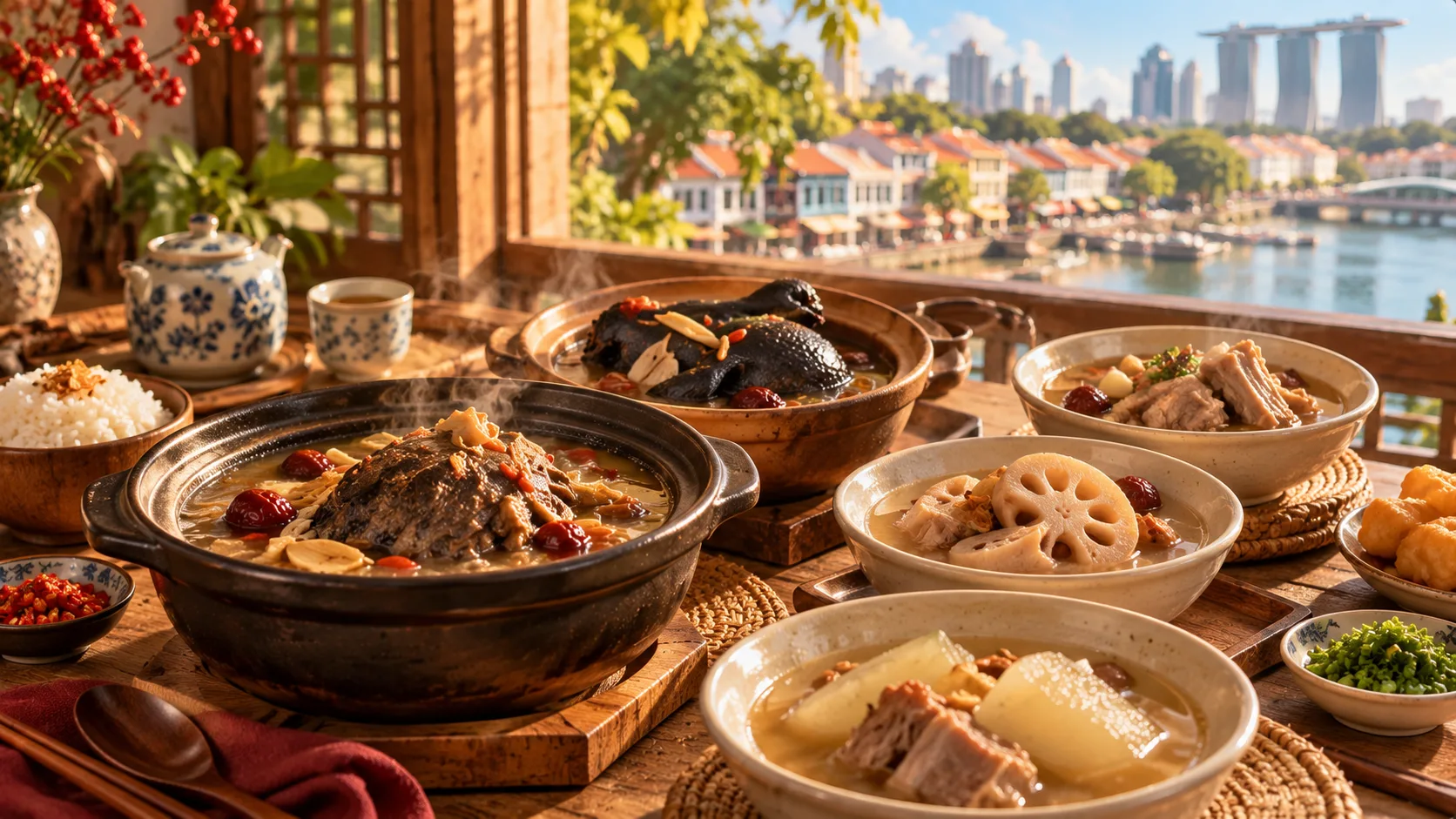
Singapore’s food scene is famous for chicken rice, laksa, chilli crab and char kway teow. But beyond these familiar favourites lies another side of local cuisine: traditional dishes enjoyed across generations yet receiving far less attention from visitors.
From slow-simmered herbal soups to comforting family recipes, these foods offer a glimpse into the cooking traditions that continue to shape Singapore’s dining culture.
1. Claypot Turtle Soup: A Traditional Delicacy
Turtle soup is not necessarily the first dish that comes to mind when planning a Singapore food trail. However, it has a place in the city’s traditional Chinese culinary scene, particularly among diners who appreciate herbal soups and time-honoured cooking methods.
Claypot turtle soup is known for its savoury herbal broth, tender meat and distinctive texture. The combination of ingredients creates a richer, more layered flavour than a simple clear soup.
The claypot also adds to its appeal. It retains heat well, keeping the soup warm at the table while letting diners enjoy its aroma throughout the meal.
For first-time diners, the herbal notes and unfamiliar ingredients may take some getting used to. Pairing the soup with rice or yam rice can make the meal more approachable while keeping the broth the main attraction.
For those curious about this traditional speciality, Ser Seng Herbs (Turtle) Restaurant is a good place to start. Located along Tai Thong Crescent, the restaurant focuses on traditional turtle soup and other herbal dishes.
It's a good option for diners who want to experience a less familiar part of Singapore’s food culture rather than sticking exclusively to its best-known dishes.
2. Black Chicken Soup: An Herbal Comfort Food
Black chicken soup offers another introduction to traditional Chinese cooking. Prepared with silkie chicken and often simmered with Chinese herbs, it has a savoury broth and a flavour profile that differs from ordinary chicken soup.
The chicken’s dark skin gives the dish its distinctive appearance, while slow cooking helps develop the broth’s aroma and depth.
For many people, herbal chicken soup evokes home-cooked meals and family traditions. It is also a practical choice for diners who enjoy herbal flavours but prefer a more familiar protein.
At traditional soup establishments, black chicken soup offers a different experience from turtle soup while still emphasising carefully prepared broth and traditional ingredients.
3. Lotus Root Soup: A Familiar Taste of Home
Not every heritage dish needs premium ingredients or an elaborate presentation. Lotus root soup shows how everyday ingredients can become something memorable through slow cooking.
Often prepared with pork ribs, lotus root and other ingredients, the soup develops an earthy sweetness as it simmers. The lotus root itself has a pleasantly firm texture, giving each spoonful more substance than a typical clear broth.
This soup feels at home on a family dinner table. Its appeal lies in its simplicity and the way its flavours come together over time.
For visitors interested in Singapore’s home-style food traditions, lotus root soup offers a gentler introduction to the role of soups in Chinese-influenced cooking.
4. Old Cucumber Soup: Simple but Satisfying
Old cucumber soup is another traditional favourite that tourists often overlook.
Typically simmered with ingredients such as pork, chicken or dried seafood, the soup has a mild flavour with a subtle sweetness. Its appeal comes from the ingredients, not heavy seasoning.
Unlike richer herbal broths, old cucumber soup is often appreciated for its lighter character. It is the kind of dish that can accompany a larger meal without overpowering the other flavours on the table.
You may find it in local eateries and family kitchens, where familiar recipes continue to be prepared as part of everyday meals.
5. Bak Kut Teh: A Hearty Local Classic
Bak kut teh may be more familiar to visitors than the other dishes on this list, but it deserves its place in any exploration of Singapore’s food heritage.
The dish centres on pork ribs simmered in a broth seasoned with garlic, pepper or herbs, depending on the style. Teochew-style versions are generally peppery, while other preparations can feature more pronounced herbal notes.
Served with rice and often accompanied by side dishes, bak kut teh is a satisfying meal in its own right.
Its popularity also illustrates how food traditions evolve. Different regional influences and individual recipes have shaped the versions diners enjoy today, making the dish an enduring part of Singapore’s culinary landscape.
Why These Heritage Foods Are Worth Discovering
Singapore’s food culture is not defined by famous dishes alone. Its traditional soups and everyday recipes tell another story, one shaped by family habits, regional influences and cooking techniques passed down over time.
Some dishes are rich and distinctive, while others rely on familiar ingredients and gentle flavours.
Exploring them gives diners a broader appreciation of the variety within Singapore’s food scene. It also gives diners a reason to venture beyond the usual food guides and discover dishes that may be less familiar but still meaningful to those who enjoy them.
A Different Way to Experience Singapore’s Food Culture
Trying heritage foods is about more than finding something new to eat. It is a chance to discover the traditions and cooking styles behind the dishes.
If you are looking for something beyond the usual hawker favourites, consider starting with a traditional soup. Black chicken soup and lotus root soup offer approachable options, while claypot turtle soup provides a more distinctive experience for those comfortable trying it.
At Ser Seng Herbs (Turtle) Restaurant, diners can explore traditional turtle soup alongside other herbal dishes in a setting focused on this specialised style of cooking.
Singapore’s food heritage offers plenty beyond its most famous dishes. Sometimes, the most interesting discovery is the one you did not know to look for.