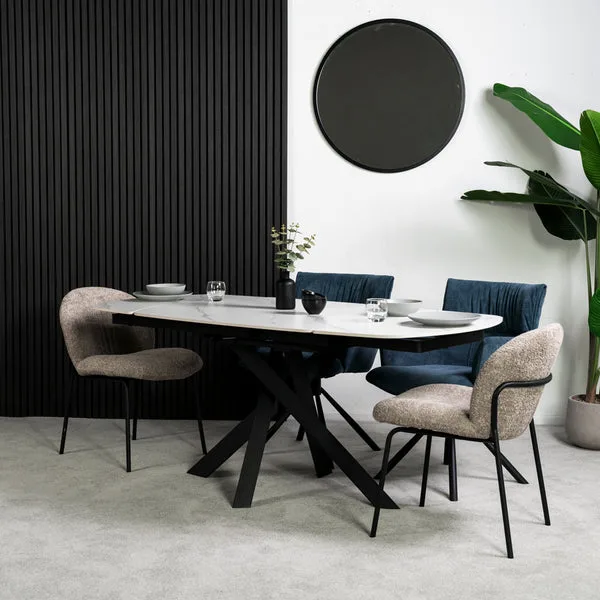
Small dining rooms can present a challenge when homeowners want to accommodate everyday meals, family gatherings and occasional visitors. Limited floor space means that furniture needs to be selected carefully, with particular attention to dimensions, movement and functionality.
However, a compact dining area can still be comfortable and attractive. With a suitable table, well-planned seating and a few practical design choices, even a modest room can become an inviting place to eat, work and socialise.
Begin with Accurate Measurements
The first step towards improving a small dining room is understanding the available space.
Measure the room's width and length, noting the location of doors, windows, radiators and existing storage units. Identify the main routes people use to enter and leave the area.
Next, consider the clearance required around the table. Diners need enough room to sit down, pull out their chairs and move around comfortably.
Create a simple floor plan before shopping. Mark the dimensions of potential furniture and assess how the room would function during everyday meals and larger gatherings.
Choose a Table That Adapts to Your Needs
A fixed dining table can be suitable for households with consistent seating requirements, but it may occupy unnecessary space when fewer people are eating.
An extendable design offers an alternative. It can provide a compact surface for daily use and additional space when guests arrive, provided the room can accommodate its extended dimensions.
When comparing dining tables that extend, check the dimensions in both configurations. Consider the extension mechanism, storage arrangements and the amount of clearance needed around the table.
Some designs use leaves stored within the table, while others require separate extension pieces. The most suitable mechanism depends on how often you plan to change the table's size and how much storage space is available.
Explore Space-Saving Dining Table Designs
Selecting furniture designed for compact interiors can help homeowners make better use of limited floor space. Look for practical proportions, flexible configurations and designs that complement the room without obstructing movement.
Exploring space saving dining tables can provide inspiration for arranging a functional dining area in a smaller home. Depending on the layout, a compact rectangular table, a round design or an extendable model may be appropriate.
Consider how many people use the table regularly and whether you occasionally need additional seating. A smaller everyday configuration can help preserve open floor space, while a flexible design may accommodate guests when required.
Before buying, check the table's dimensions, seating capacity and extension requirements. The objective is to select a table that works comfortably in its everyday configuration without creating unnecessary obstacles when fully extended.
Use Seating Strategically
Seating choices have a considerable influence on how much space a dining area requires.
Large chairs with broad arms may be comfortable, but they can make it harder to fit several seats around a compact table. Slimmer designs may provide a more efficient arrangement.
Consider seat height and depth, too. Chairs should allow diners to sit comfortably with sufficient legroom beneath the tabletop.
Benches may provide flexible seating along one side, depending on the table's dimensions. Some can be positioned underneath the tabletop when not in use, helping preserve walking space.
Make the Room Feel Larger Through Design
Visual choices can influence how spacious a room appears.
Lighter wall colours and a relatively consistent palette can create a calm, open atmosphere. Natural light also helps, so avoid blocking windows unnecessarily with oversized furniture.
Furniture with open bases can sometimes appear lighter than bulky designs that extend close to the floor. Mirrors may reflect light and create a greater sense of depth when positioned appropriately.
Use decoration selectively. A simple centrepiece, coordinated tableware or modest artwork can add personality without overwhelming the room.
Improve Storage Without Creating Clutter
A small dining room often needs to accommodate tableware, serving dishes and everyday household items.
Consider the storage requirements before buying additional furniture. Wall-mounted shelves, compact cabinets and baskets may help organise belongings without occupying excessive floor space.
Avoid storing too many unrelated objects in the dining area. A more organised room can feel larger and make the table easier to use for different activities.
Plan Lighting and Flooring Carefully
Lighting helps establish the dining area as a distinct part of the home. A pendant light above the table can create a focal point, while supplementary lighting may improve visibility during evening meals.
A rug can define the dining area, but it should be large enough to accommodate chairs without creating awkward edges. In particularly compact rooms, leaving more of the floor visible may produce a simpler visual effect.
Choose materials that suit the household's cleaning requirements, particularly if the dining area is used frequently.
Maintain Flexibility for Different Occasions
The most useful small dining rooms can adapt to changing needs.
During the week, a compact table arrangement may provide everything necessary for daily meals. At weekends, the table can be extended and additional chairs introduced.
Keep the surrounding area uncluttered so rearranging the room does not become a major task. Before buying furniture, consider how it will work in each configuration, including when guests are seated.
Conclusion
Making the most of a small dining room requires careful measurement, flexible furniture and a considered layout. Extendable tables can provide additional capacity, while space-conscious designs and efficient seating help preserve valuable floor space.
By prioritising movement, selecting furniture that suits the room and avoiding unnecessary clutter, homeowners can create dining areas that feel comfortable without becoming overcrowded.
The key is to design around everyday needs while allowing enough flexibility for guests and special occasions.