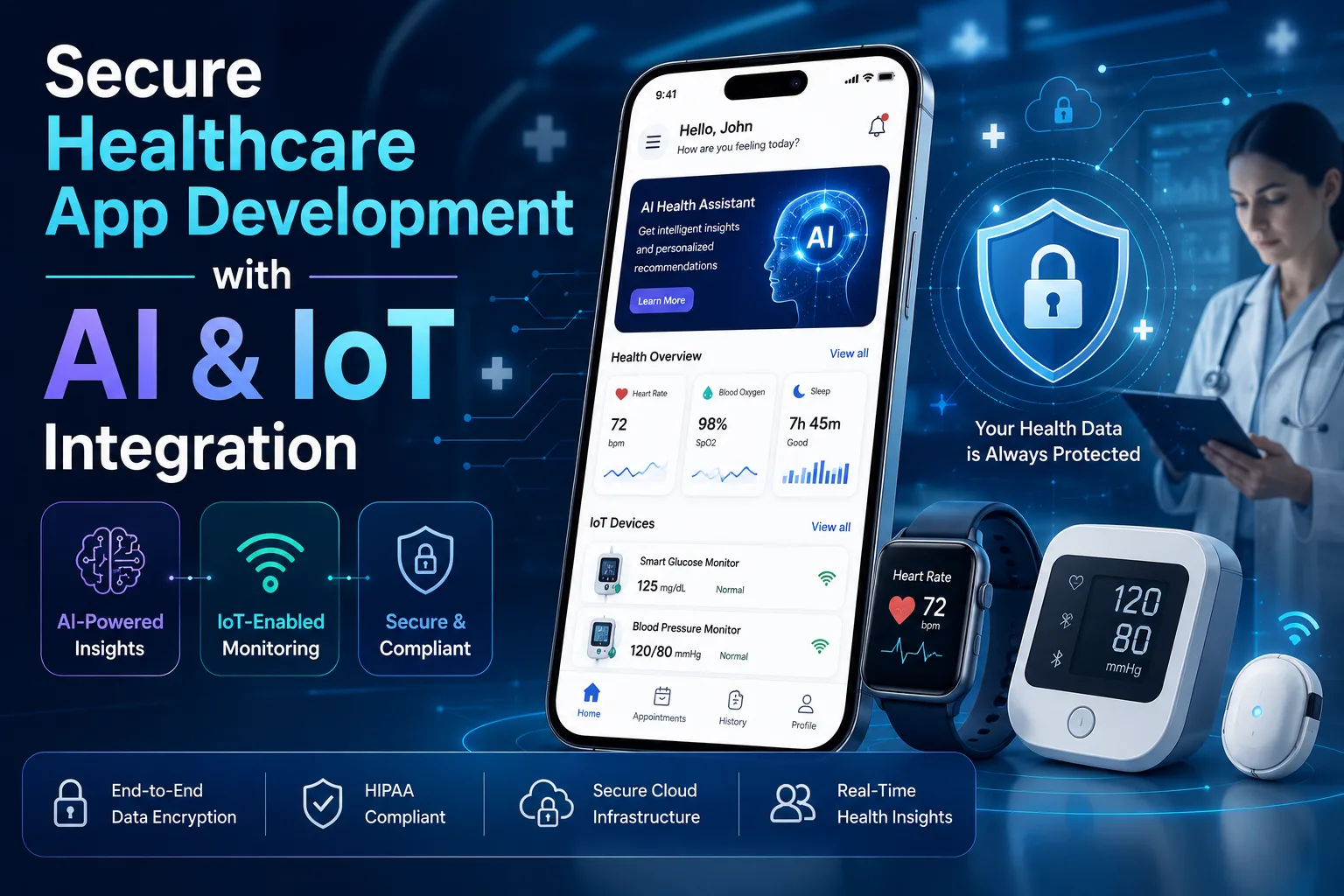
Healthcare technology has moved far beyond simple appointment booking and telemedicine video calls. Today's healthcare apps are expected to monitor patients remotely, predict health risks before they become emergencies, and connect seamlessly with wearable devices, all while protecting some of the most sensitive personal data that exists. This is where Artificial Intelligence (AI) and the Internet of Things (IoT) come in, reshaping what a modern healthcare app can actually do.
But with greater capability comes greater responsibility. An app that tracks a patient's heart rate in real time or predicts medication non-adherence is only useful if it's also secure, compliant, and trustworthy. For any business investing in healthcare app development, understanding how to combine AI, IoT, and airtight security isn't optional anymore — it's the foundation of building something patients and providers can actually rely on.
Why AI and IoT Are Reshaping Healthcare Apps
A decade ago, most healthcare apps were essentially digital versions of paper processes — booking appointments, viewing lab results, or messaging a doctor. AI and IoT have pushed the industry into a completely different category of functionality.
AI Solution
AI enables healthcare apps to analyze massive amounts of patient data and surface insights that would take a human much longer to identify. This includes predicting which patients are at risk of hospital readmission, flagging unusual patterns in vital signs, or personalizing treatment recommendations based on a patient's history.
IoT Solution
IoT, meanwhile, connects physical devices — smartwatches, glucose monitors, connected inhalers, blood pressure cuffs — directly to the app, feeding a continuous stream of real-world health data into the system. Instead of relying on a patient to manually log their symptoms once a week, the app can receive updates automatically, in real time.
Together, these technologies allow healthcare apps to shift from reactive care (treating problems after they happen) to proactive, preventive care (catching issues before they escalate).
Core Use Cases for AI in Healthcare Apps
AI integration in healthcare apps typically shows up in a few key areas:
- Predictive analytics: Identifying patients at higher risk for conditions like diabetes complications or cardiac events based on historical and real-time data.
- Chatbots and virtual health assistants: Handling initial patient queries, symptom checking, and appointment scheduling without requiring staff involvement for routine tasks.
- Medical image analysis: Assisting radiologists and specialists by flagging anomalies in scans and images faster than manual review alone.
- Personalized treatment plans: Adjusting recommendations based on how a specific patient responds to medication or therapy over time.
These features don't replace clinical judgment, but they give healthcare providers a significant head start, helping them make faster, more informed decisions.
Core Use Cases for IoT in Healthcare Apps
IoT integration typically focuses on connecting the app to devices that monitor patients outside of a clinical setting:
- Remote patient monitoring – Wearables and connected devices track vitals like heart rate, oxygen levels, and blood glucose, sending data directly to the app for both the patient and their provider to review.
- Medication adherence tracking – Smart pill dispensers or connected inhalers can log when medication is taken, alerting caregivers or providers if a dose is missed.
- Emergency alert systems – IoT sensors can detect falls or abnormal vital signs and automatically trigger alerts to caregivers or emergency contacts.
- Chronic disease management – Continuous data collection helps providers adjust treatment plans for chronic conditions like hypertension or diabetes without requiring frequent in-person visits.
When AI and IoT work together, the results become even more powerful: IoT devices supply the real-time data, and AI analyzes that data to detect patterns or risks that a human might miss.
Why Security Has to Be Built In From Day One
The more connected and intelligent a healthcare app becomes, the larger its attack surface. Every wearable device, every AI model processing patient data, and every API connection represents a potential vulnerability if security isn't handled properly. A single weak point can expose sensitive patient records, violate compliance regulations, and destroy the trust patients place in the app.
Here are the key security considerations that any secure healthcare app development process needs to address:
1. End-to-End Data Encryption
All patient data, whether it's being transmitted from an IoT device to the app or stored on a server, needs to be encrypted both in transit and at rest. This prevents intercepted data from being readable even if a breach occurs.
2. Strict Regulatory Compliance
Depending on the target market, healthcare apps must comply with regulations like HIPAA in the United States, GDPR in Europe, or similar data protection laws elsewhere. This affects everything from how data is stored to how long it's retained and who has access to it.
3. Secure Device Authentication
With IoT devices constantly sending data into the app, each device needs a secure, verified connection. Without proper device authentication, malicious actors could potentially inject false data or intercept real patient information.
4. Role-Based Access Control
Not everyone who uses the app needs access to the same data. Doctors, nurses, administrative staff, and patients should all have different access levels, ensuring sensitive information is only visible to those who genuinely need it.
5. Responsible AI Model Design
AI models used in healthcare apps need to be trained and tested carefully to avoid bias, ensure accuracy, and maintain transparency in how decisions or recommendations are generated. This is especially important when AI insights influence real clinical decisions.
6. Regular Security Audits and Penetration Testing
Healthcare apps should undergo routine security testing to identify vulnerabilities before they can be exploited, especially as new features, integrations, or third-party devices are added over time.
Challenges to Plan For
Building a secure, AI- and IoT-integrated healthcare app isn't without its challenges. Some of the most common hurdles include:
- Device compatibility: With hundreds of wearable and IoT device manufacturers, ensuring smooth integration across different hardware can be complex.
- Data volume management: Continuous data streams from IoT devices require robust backend infrastructure capable of handling large volumes of real-time data without lag.
- Balancing automation with human oversight: AI can support clinical decisions, but healthcare providers need clear visibility into how those recommendations are generated, rather than treating the AI as a black box.
- Evolving compliance requirements: Regulations around health data and AI use continue to change, requiring ongoing updates to keep the app compliant.
Best Practices for Building These Apps Successfully
- Start with a clear data governance framework before adding AI or IoT features, so security and compliance are built into the foundation rather than added later.
- Choose IoT devices and platforms with strong existing security certifications, rather than building custom hardware integrations from scratch.
- Involve healthcare compliance experts early in the development process, not just at the final review stage.
- Design AI features with explainability in mind, so both patients and providers can understand why a recommendation was made.
- Plan for scalability from the start, since successful healthcare apps often need to handle rapidly growing numbers of connected devices and users.
Final Thoughts
AI and IoT are transforming what's possible in healthcare apps, enabling more proactive, personalized, and data-driven patient care than ever before. But none of these benefits matter if the underlying app isn't secure. Patient trust, regulatory compliance, and long-term business success all depend on getting the security foundation right from the very beginning.
For healthcare organizations and businesses exploring this space, partnering with a team experienced in healthcare app development can make the difference between an app that simply works and one that's genuinely secure, compliant, and built to scale alongside advancing technology. As AI and IoT continue to evolve, the healthcare apps that succeed will be the ones that never treat security as an afterthought.