Accurate weighing is essential across many industries. Businesses use weighing scales and balances to measure raw materials, ingredients, products, packaging, and other materials. When these measurements are not accurate, even a small error can affect production, quality control, inventory, and compliance.
One of the simplest ways to check the accuracy of weighing equipment is by using scale calibration weights. These weights have a known mass and are manufactured to specific accuracy standards. They provide a reliable reference that can be used to determine whether a scale or balance is displaying the correct measurement.
Understanding how calibration weights work, which type is suitable, and how they should be handled can help businesses maintain dependable weighing processes.
What Are Scale Calibration Weights?
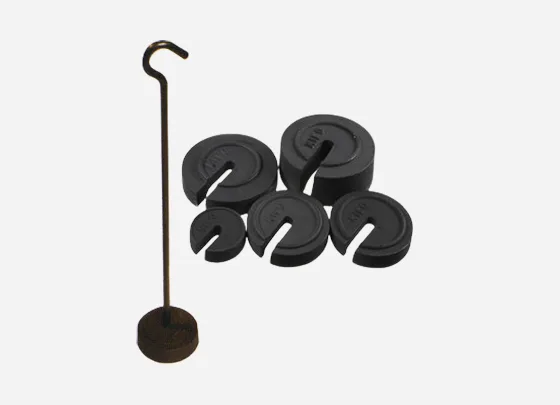
Scale calibration weights are precision masses used to test, verify, or calibrate weighing equipment. They are available in a variety of sizes and accuracy classes to suit different types of scales and balances.
For example, a laboratory balance capable of measuring very small quantities requires more precise calibration weights than a general-purpose industrial platform scale.
Calibration weights are often manufactured according to recognised standards, including OIML classifications. These classifications help users select weights with the appropriate level of accuracy for their particular weighing equipment.
Although commonly referred to as weights, they are technically reference masses. Their purpose is to provide a known measurement against which the reading of a weighing instrument can be compared.
Why Is Scale Calibration Important?
Weighing equipment does not necessarily remain accurate throughout its working life. Regular use, environmental conditions, mechanical wear, vibration, temperature changes, and accidental impacts can all influence measurement performance.
For this reason, checking a scale periodically is an important part of measurement control.
For example, consider a production facility that uses a scale to measure ingredients. If the scale consistently shows a measurement that is slightly higher or lower than the actual quantity, the production process may use incorrect amounts of material. Over time, this could lead to inconsistent products, increased material consumption, or quality issues.
Using suitable scale calibration weights can help identify these discrepancies before they become a larger problem.
Understanding Calibration Weight Classes
Calibration weights are available in different accuracy classes. The correct class depends on the weighing instrument and the level of accuracy required.
Common OIML classes include E2, F1, F2, M1, and M3.
E2 weights are designed for high-precision applications and are commonly associated with analytical and precision balances.
F1 weights are used for high-accuracy weighing applications where precise verification is required.
F2 weights can be suitable for precision and industrial balances with appropriate accuracy requirements.
M1 weights are commonly used for general industrial and commercial weighing equipment.
M3 weights are intended for applications where a lower level of accuracy is acceptable.
The choice should always be based on the requirements of the weighing instrument rather than simply selecting the most precise weight available.
How to Choose the Right Calibration Weights
Choosing the right calibration weights involves considering several factors. The scale's capacity is important, but it is not the only consideration.
Scale Accuracy and Resolution:-
The resolution of a scale indicates the smallest measurement increment it can display. A balance capable of displaying very small increments requires appropriately accurate reference masses.
Using a calibration weight that is not suitable for the instrument can make the verification less meaningful.
Maximum Capacity:-
The maximum capacity of the weighing equipment should also be considered. Different test points may be required to assess performance across the scale's weighing range.
For larger industrial scales, heavier test weights may be necessary, while smaller laboratory balances generally require lightweight precision masses.
Accuracy Class:-
The weight class should correspond with the accuracy requirements of the scale. High-precision balances generally require higher-grade calibration weights.
Certification:-
Some industries and applications require calibration weights with certificates and documented traceability. This can be particularly important where measurement results need to be demonstrated as reliable during audits or quality checks.
Material and Construction:-
Calibration weights can be manufactured from materials such as stainless steel, brass, or cast iron. Stainless steel is frequently used for precision weights because it offers durability and resistance to corrosion when properly maintained.
The design of the weight can also vary depending on its size and intended application.
How Are Scale Calibration Weights Used?
Using calibration weights may appear straightforward, but accurate testing requires care.
The scale should first be placed on a suitable, stable surface. It should be clean, level, and free from unnecessary vibration or movement. Environmental factors may also need to be considered, particularly when working with precision balances.
The appropriate calibration weight is then placed carefully on the weighing platform or pan. The displayed reading is compared with the known mass of the reference weight.
Depending on the equipment and calibration procedure, checks may be performed at different points across the scale's capacity.
Precision weights should be handled carefully. Fingerprints, dirt, moisture, and rough handling can affect their condition. For this reason, suitable handling tools and storage methods are often used with high-accuracy weights.
Calibration Weights and Professional Calibration
It is important to distinguish between routine checking and professional calibration.
A business may use scale calibration weights as part of its regular internal checking process. This can help identify whether a scale has developed an obvious measurement error.
Professional calibration is more comprehensive. It involves comparing the performance of the weighing instrument against recognised standards and documenting the results.
The appropriate calibration frequency depends on factors such as how often the equipment is used, the working environment, the required accuracy, and the consequences of an incorrect measurement.
For equipment used in critical applications, regular professional calibration can form an important part of a wider quality management system.
Applications Across Different Industries
Calibration weights are used in many different working environments.
Food and Beverage
Food manufacturers and processors rely on weighing equipment for ingredients, batches, portion control, and packaging. Accurate scales help maintain consistency throughout production.
Pharmaceutical Industry
Pharmaceutical processes often involve precise quantities of materials. Reliable weighing equipment is therefore important for manufacturing and quality control procedures.
Cosmetics
Cosmetic manufacturers may use balances to measure ingredients and components. Regular weighing checks can help maintain consistency between batches.
Laboratories
Laboratories often use highly sensitive balances. These instruments require suitable precision calibration weights and controlled testing conditions.
Industrial Manufacturing
Industrial facilities may use platform scales, floor scales, bench scales, and other heavy-duty equipment. Appropriate test weights can be used to verify their performance.
Proper Storage and Handling
The condition of a calibration weight can affect its accuracy. Weights should therefore be stored in a clean and suitable environment when they are not being used.
Precision weights should be protected against dust, moisture, corrosion, and physical damage. Direct handling should also be minimised where appropriate.
Calibration records should be maintained where traceability is required. Certified weights may need to be periodically checked or recalibrated to confirm that they remain within their specified tolerances.
How Often Should Scales Be Checked?
There is no single checking frequency that applies to every scale. The appropriate schedule depends on the equipment, application, operating environment, and required level of accuracy.
A scale used several times a day in a demanding industrial environment may require more frequent checks than equipment used occasionally in a controlled environment.
Businesses should consider the importance of the measurements being taken and the potential consequences of inaccurate results when developing their calibration and checking procedures.
Conclusion
Scale calibration weights are an important part of maintaining accurate and dependable weighing equipment. By providing a known reference mass, they allow businesses to check whether their scales and balances are producing measurements within acceptable limits.
Selecting the correct weight class, capacity, material, and certification is essential for meaningful results. Proper storage and handling are equally important, particularly for high-precision calibration weights.
Routine checks using suitable reference weights, combined with appropriate professional calibration, can help businesses maintain reliable weighing processes across industries such as food production, pharmaceuticals, cosmetics, laboratories, and manufacturing.
For businesses looking for calibration weights for different weighing applications, Blake and Boughton provides calibration and test weights alongside services covering the sales, servicing, repair, and calibration of industrial weighing equipment.