Ready-mix concrete (RMC) plants handle multiple activities every day, including raw material management, mix design, batching, quality control, and delivery scheduling. Managing these operations manually can lead to production delays, material wastage, inaccurate records, and difficulties maintaining consistent concrete quality.
RMC batch management software helps concrete manufacturers organize production activities, monitor material consumption, and maintain better control over daily plant operations. By connecting batching processes with inventory, dispatch, and reporting systems, businesses can improve operational efficiency and make informed decisions.
As the construction industry continues to adopt digital solutions, batch management technology is becoming an important part of modern RMC plant operations.
What Is RMC Batch Management Software?
RMC batch management software is a digital solution designed to manage and monitor the production of ready-mix concrete. It helps plant operators coordinate mix designs, production schedules, raw material consumption, and batch records.
Instead of maintaining separate registers and spreadsheets, businesses can manage important production information through a centralized system.
Depending on its features and integrations, the software can help RMC businesses:
- Manage concrete mix designs and production requirements.
- Monitor batch-wise material consumption.
- Maintain production records and reports.
- Coordinate production with customer orders.
- Track inventory levels and material availability.
- Connect production activities with dispatch operations.
- Maintain records for quality control and analysis.
These capabilities help plant managers maintain better visibility into production and identify operational issues more efficiently.
Key Benefits of RMC Batch Management Software
1. Improved Production Planning
Production planning is essential for meeting customer requirements without unnecessary delays or overproduction. Poor coordination between order booking, plant capacity, and delivery schedules can disrupt daily operations.
RMC batch management software helps businesses organize production according to customer orders, concrete grades, and delivery requirements. Plant managers can review production schedules and coordinate activities more effectively.
Better planning can help reduce waiting time, improve resource utilization, and support timely concrete deliveries.
2. Accurate Raw Material Tracking
Cement, sand, aggregates, water, and admixtures are essential components of ready-mix concrete. Inaccurate material records can create inventory mismatches and increase production costs.
With integrated batching and inventory management, businesses can monitor material consumption and compare usage with available stock. These records help identify unusual consumption patterns and improve purchasing decisions.
Accurate material tracking also supports better control over wastage and inventory availability.
3. Better Control Over Concrete Mix Designs
Different construction projects require different concrete grades and mix proportions. Maintaining accurate mix design information is important for meeting project specifications and production requirements.
Batch management software helps maintain organized mix design records and connect them with production activities. When supported by the appropriate plant integration, the system can also help compare planned material quantities with actual batch consumption.
This improves production traceability and helps teams investigate discrepancies when they occur.
4. Reduced Manual Errors
Manual data entry across production registers, inventory sheets, and dispatch documents can result in incorrect quantities, duplicate records, and reporting inconsistencies.
Digital batch management reduces dependence on repetitive manual entries by centralizing production information and automating supported workflows.
Accurate records help plant managers coordinate with production operators, inventory teams, and dispatch personnel. This can also reduce the time spent preparing daily production reports.
5. Improved Production and Quality Monitoring
Maintaining consistent concrete quality requires proper control over mix designs, material usage, and testing procedures.
An integrated RMC management system can connect batch records with quality control information, including laboratory reports, slump test records, and cube test results.
These records help quality teams review production history and investigate potential variations. However, software supports quality monitoring rather than replacing physical testing, approved mix designs, or established quality assurance procedures.
6. More Efficient Dispatch Coordination
Concrete production and transportation must be coordinated carefully because ready-mix concrete has a limited working time after mixing.
Production delays, vehicle shortages, and poor communication can affect delivery schedules and customer satisfaction.
When batching software is connected with dispatch management, teams can coordinate production with vehicle assignments, delivery challans, and delivery schedules.
This integration improves communication between plant operators and dispatch teams while providing better visibility into the movement of orders.
Important Features to Look for in RMC Batch Management Software
Before selecting a solution, RMC plant owners should evaluate whether it supports their production processes and existing equipment.
The following features are particularly useful:
Batch Processing and Production Records: Maintain batch-wise production information and review completed production activities.
Mix Design Management: Store approved mix designs and organize production requirements for different concrete grades.
Batching Plant Integration: Where supported, connect the software with batching plant controllers to exchange production data and improve monitoring.
Inventory Management: Track cement, aggregates, sand, admixtures, and other materials to maintain accurate stock records.
Production Reporting: Review daily production volumes, material consumption, and plant performance.
Quality Control: Maintain relevant testing records and connect quality information with production batches.
Dispatch Management: Coordinate production with vehicle allocation, delivery scheduling, and dispatch documentation.
Multi-Plant Management: Help businesses operating multiple facilities monitor plant-wise production and access centralized reports.
Choosing software with these capabilities can help businesses manage interconnected operations rather than relying on separate systems for each department.
How RMC ERP Software Supports Batch Management
Batch management becomes more useful when it is connected with other business functions. A standalone batching system may focus primarily on production, while an integrated enterprise resource planning (ERP) solution can connect batching with inventory, procurement, fleet management, billing, and financial reporting.
For example, production data can help businesses understand material consumption, while dispatch records can provide visibility into completed deliveries. Inventory information can support purchasing decisions, and financial reports can help management evaluate operating costs.
An integrated approach reduces information gaps between departments and provides a more complete picture of plant performance.
Businesses should evaluate the available integration options carefully, particularly when connecting existing batching equipment, weighing systems, or third-party applications.
Choosing the Right Software for Your RMC Plant
Every ready-mix concrete business has different operational requirements. A small plant may prioritize accurate production records and inventory tracking, while a business operating several plants may require centralized monitoring and consolidated reporting.
Before making a decision, consider the following factors:
- Plant compatibility: Check whether the software can integrate with your existing batching equipment.
- Operational coverage: Evaluate whether it supports production, inventory, dispatch, quality control, and billing.
- Reporting capabilities: Ensure that managers can access the reports needed for daily operations.
- Scalability: Consider whether the solution can support additional plants and growing production volumes.
- Ease of use: Choose a system that employees can learn and use efficiently.
- Data access: Evaluate cloud access, user permissions, backups, and data security.
- Implementation support: Understand the onboarding process, staff training, and ongoing technical support.
A suitable solution should address current operational challenges while supporting the business as it grows.
Manage RMC Operations with REMICON by Shadow Infosystem
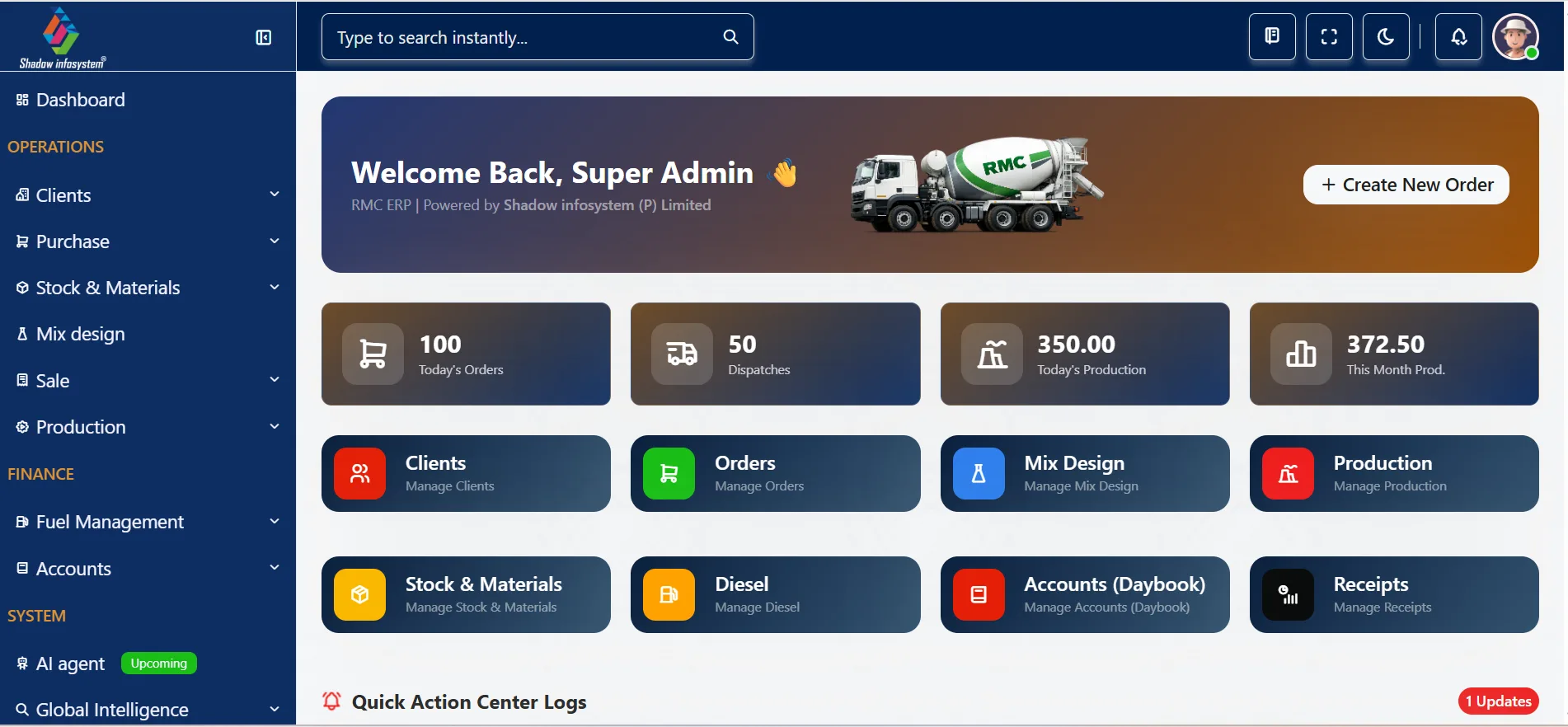
For ready-mix concrete businesses looking to improve operational visibility, REMICON by Shadow Infosystem offers an integrated RMC ERP solution designed to manage important plant activities through a centralized platform.
The solution includes production management, batch processing, mix design management, inventory tracking, dispatch planning, fleet management, quality control, and financial reporting. It also supports multi-plant management and offers integration options for connecting business processes with supported third-party systems.
By bringing these functions together, REMICON helps businesses organize production information, reduce manual errors, monitor material usage, and coordinate activities across departments.
RMC plant owners can explore the available features and integration options to determine how the solution fits their operational requirements.
Learn more about the platform: https://www.shadowinfosystem.com/rmc-erp/
Conclusion
RMC batch management software helps ready-mix concrete manufacturers improve production planning, maintain organized batch records, monitor material consumption, and coordinate deliveries more efficiently.
When combined with inventory management, quality control, and dispatch systems, it provides better visibility across plant operations and supports informed business decisions.
For RMC businesses planning to modernize their operations, an integrated solution such as REMICON can help connect production activities with other essential business processes.
Evaluating the right software based on plant requirements, equipment compatibility, and future growth plans is an important step toward building more efficient and well-managed concrete production operations.