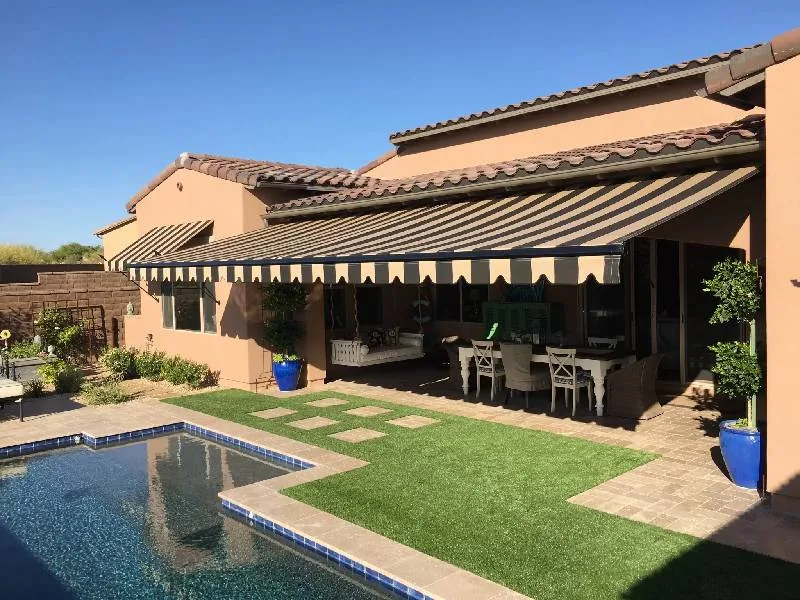
Adding a shading system to your home or commercial property is one of the most effective ways to lower cooling bills, protect outdoor furniture, and create a comfortable outdoor living space. Among the various shading solutions available today, retractable awnings remain a top choice for property owners who want complete flexibility. They allow you to extend full shade during the hottest hours of the day and retract the canopy when you want open skies or natural indoor lighting.
If you are currently searching online for trusted retractable awnings near me, understanding price breakdowns, key features, and installation requirements helps you plan your investment wisely.
At Phoenix Tent and Awning Company, we have designed, manufactured, and installed high-grade shade systems across the Valley since 1910. This comprehensive guide breaks down real-world costs, installation standards, and the main factors that influence the overall price of custom retractable awnings Arizona homeowners and businesses rely on.
Average Cost of Retractable Awnings
The overall cost of a retractable shade system varies based on whether you choose a basic manual unit or a custom motorized system engineered for severe weather.
Awning CategoryTypical Price Range (Installed)Key CharacteristicsEntry-Level Manual Systems$1,500 – $3,000Hand-crank operation, standard width, basic mountingMid-Range Motorized Systems$3,000 – $6,000Remote control, high-grade acrylic fabric, standard widthCustom High-End Motorized Systems$6,000 – $12,000+Large projections, smart sensors, integrated LED lights, custom powder coatingWhile pre-fabricated store kits may appear budget-friendly up front, they often lack the structural frame strength and fabric quality required to endure intense desert heat and seasonal high winds. Investing in commercial-grade systems from established retractable awnings companies ensures long-term performance and reliable warranty coverage.
What Affects the Price of Retractable Awnings?
Several key variables dictate the final price of a custom shade project. Understanding these factors allows you to customize a shading system that matches both your performance requirements and your budget.
1. Overall Dimensions and Projection
Size is the primary cost driver. A wider system requires a longer structural roller tube, additional support arms, and more square footage of fabric. Projection distance (how far the canopy extends outward from the wall) also impacts pricing. Standard projections range from 8 to 12 feet, but custom engineered systems can extend up to 14 feet or more, requiring heavy-duty arm springs and thicker structural frames.
2. Fabric Quality and Grade
The fabric canopy accounts for a significant portion of the total cost. Lower-grade polyester or vinyl fabrics fade, crack, and stretch within two to three years under heavy UV exposure.
High-performance, solution-dyed acrylic fabrics such as Sunbrella represent the gold standard. Because liquid color pigment is infused into the acrylic fibers during raw production, solution-dyed acrylics resist UV fading, dry rot, and moisture damage for a decade or longer.
3. Manual vs. Motorized Operation
- Manual Crank Systems: These rely on a detachable hand crank and gear mechanism. Manual units cost less initially and do not require electrical wiring, but extending or retracting large systems requires physical effort.
- Motorized Systems: Controlled via wall switches, handheld remotes, or smartphone apps, motorized units offer effortless operation. High-end tubular motors housed inside the roller tube add to the initial cost but provide maximum convenience.
4. Smart Sensors and Automated Accessories
Modern shade systems can be upgraded with automated smart sensors that protect your investment:
- Wind Sensors: An inline motion sensor detects violent wind movement during sudden storms and automatically retracts the arms to prevent frame damage.
- Sun Sensors: Light sensors automatically extend the canopy when direct solar heat hits your wall, keeping indoor rooms cool even when you are away from home.
- Integrated LED Lighting: Ambient LED light strips mounted along the folding arms provide clean illumination for evening entertaining.
5. Frame Materials and Finishes
Heavy-duty extruded aluminum frames paired with stainless steel assembly hardware prevent rust and maintain structural integrity. Multi-stage powder-coated finishes protect metal components against chipping, flaking, and oxidation caused by extreme temperature swings.
The Professional Installation Process
Proper mounting is essential to ensure your shade structure operates safely without damaging your building envelope.
Structural Assessment and Brackets
Retractable arms operate under immense mechanical leverage when fully extended. Installers evaluate wall construction to determine the proper mounting method. Systems are mounted into solid wood wall studs, concrete block walls, or roof rafters using specialized structural brackets and heavy-duty lag bolts.
Electrical Connections
Motorized units require proper power routing. While standard plug-in power cords work for simple patio setups, hardwired connections linked to home automation systems require professional electrical routing to keep power cords hidden and compliant with building codes.
System Calibration
After physical mounting, installers calibrate arm tension, set precise motor limit stops for full extension and closure, and pair remote controls and weather sensors.
Why Professional Installation Outperforms DIY
Attempting a self-installation on a heavy motorized shade system carries real risks:
- Wall Damage and Leaks: Mounting into surface stucco or brick without anchoring into structural framing can cause the unit to pull away from the wall. Unsealed bolt holes can also let rainwater inside exterior walls.
- Arm Misalignment: If mounting brackets are even slightly out of level, the canopy fabric will roll unevenly, causing binding, accelerated fabric wear, and motor strain.
- Voided Warranties: Leading fabric and hardware manufacturers often void warranties if the product is not installed by licensed contractors.
Frequently Asked Questions
How long do custom retractable awnings typically last?
A high-quality system built with a powder-coated aluminum frame and solution-dyed acrylic fabric generally lasts 12 to 15 years or more. Routine rinsing and retracting the canopy during severe storms help maximize its total lifespan.
Can retractable awnings stay open during rain and wind?
Light rain is generally fine if the canopy has enough angle pitch for water runoff. However, retractable systems are designed primarily for sun protection, not heavy rainfall or high winds. You should retract the system during severe rain or wind gusts exceeding 20 mph.
Will installing a retractable awning help lower summer cooling bills?
Yes. Exterior shade products block direct solar heat before it reaches window glass or sliding patio doors. Blocking thermal heat gain can lower indoor room temperatures significantly and reduce air conditioning energy usage by up to 15 to 25 percent.
Can I replace the fabric on my retractable frame in the future?
Yes. If your structural frame and motor remain in good working condition, you can order a custom replacement fabric cover to update your home's exterior color scheme without replacing the entire system.
How long does the physical installation take on site?
Once your custom system is manufactured, physical on-site installation by a professional crew typically takes between two to four hours for standard residential patio setups.
Partner with Phoenix Tent and Awning Company
Investing in custom outdoor shade adds value, comfort, and energy efficiency to your property. Phoenix Tent and Awning Company provides complete end-to-end service, including on-site design, local custom manufacturing, and expert installation tailored to your specific needs.
Contact Phoenix Tent and Awning Company today to schedule your consultation and receive an accurate quote for your project.
Know more https://www.phoenixtent.com/blog/retractable-awnings-cost-installation/