Setting the Scene: A World at the Crossroads of Sustainability
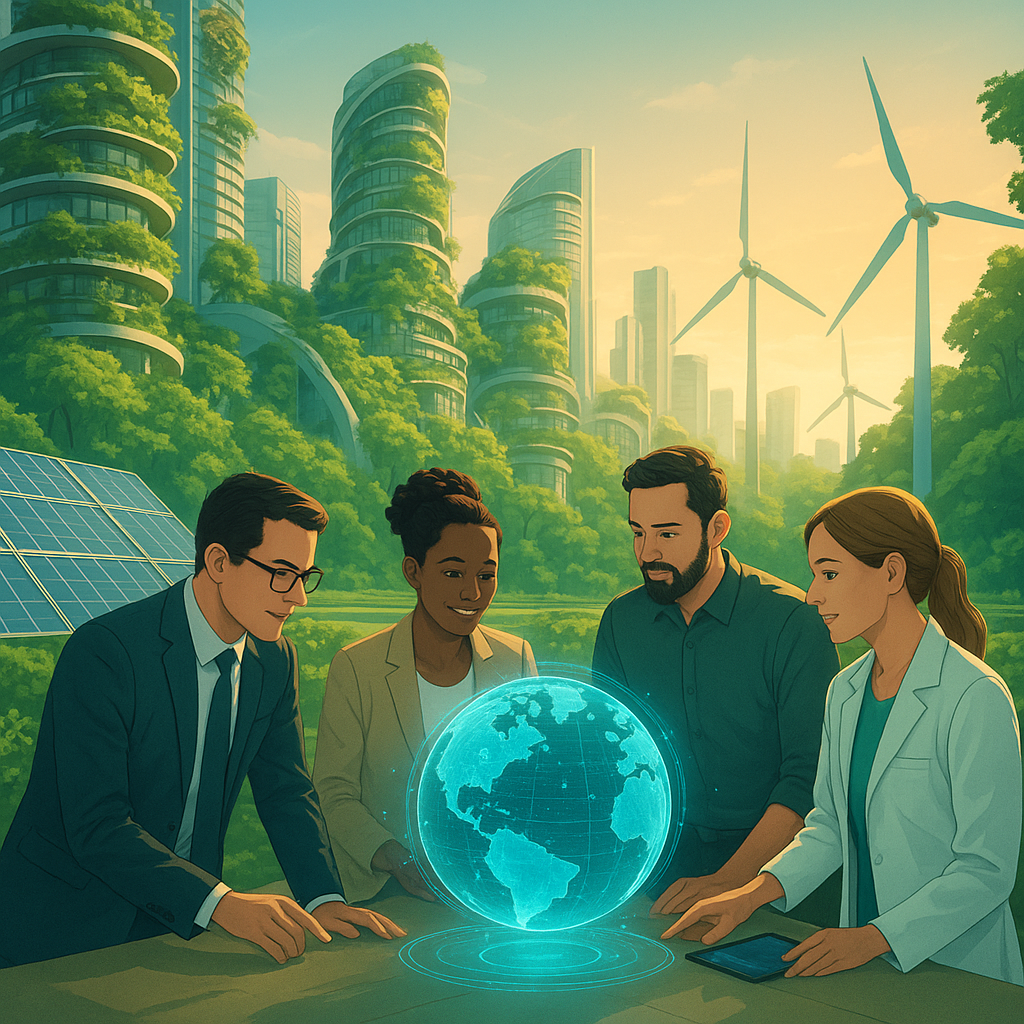
On a late spring morning in April 2026, the skyline of Copenhagen gleamed not only with architectural innovation but with a testament to sustainable urban planning. Vertical gardens climbed skyscrapers, while electric ferries silently navigated the harbor. This vivid scene is emblematic of a global shift where sustainability is no longer just a buzzword but a defining force in economic, social, and environmental policies worldwide. According to the UN Environment Programme’s 2026 Global Environmental Outlook, over 60% of the world’s GDP now integrates sustainability criteria. This marks an unprecedented scale of commitment compared to just a decade ago.
Yet, the journey toward sustainability is complex and multifaceted. The challenges of climate change, resource depletion, and social inequities have pressed governments, corporations, and citizens to rethink growth, innovation, and consumption patterns. This article unpacks the current status of sustainability, explores its historical roots, analyzes recent developments, and projects the road ahead.
"Sustainability is not a constraint on growth — it is the framework to redefine prosperity in the 21st century," said Dr. Amina El-Hassan, a leading climate economist, at the 2026 Global Sustainability Summit.
Historical Context: From Environmental Awareness to Systemic Transformation
The sustainability movement traces back to the 1972 United Nations Conference on the Human Environment in Stockholm, where environmental concerns entered global political discourse. However, the watershed moment was the 1987 Brundtland Report, which defined sustainable development as meeting present needs without compromising future generations. That report framed the three pillars of sustainability: environmental protection, social equity, and economic viability.
Throughout the 1990s and early 2000s, sustainability was predominantly environmental, focused on pollution control and conservation. The Kyoto Protocol (1997) and the Paris Agreement (2015) anchored climate mitigation efforts. Yet, these early frameworks often treated sustainability as a set of add-on policies or corporate social responsibility (CSR) exercises rather than systemic economic transformation.
In the 2010s, the United Nations’ Sustainable Development Goals (SDGs) broadened the agenda to include poverty alleviation, education, gender equality, and decent work. This holistic approach gained traction across sectors. By the early 2020s, investors and companies increasingly adopted Environmental, Social, and Governance (ESG) criteria, recognizing that long-term value creation depends on sustainability.
Still, critics argued progress was too slow and fragmented. The 2024 IPCC report highlighted that despite pledges, global emissions remained insufficiently curtailed. It became clear that incremental changes wouldn’t meet the scale of the crisis.
Core Analysis: Sustainability’s Economic and Environmental Metrics in 2026
Today, sustainability is quantified through increasingly sophisticated data and technology. The World Economic Forum’s 2026 Sustainable Competitiveness Report ranks countries using metrics including carbon intensity, circular economy adoption, social inclusion, and innovation capacity. Nordic countries, Germany, Japan, and Singapore lead, while emerging economies like India and Brazil show rapid improvement.
Key data points reveal the depth of transformation:
- Global carbon emissions dropped by 18% from 2020 to 2025, a significant decline driven by renewables, electrification, and efficiency.
- The share of renewable energy in global power generation surpassed 45%, with solar and wind accounting for 70% of new capacity additions.
- Corporate ESG investments hit $35 trillion in assets under management, representing nearly 40% of global AUM, with AI-enabled analytics optimizing impact reporting.
- Waste recycling rates improved globally from 30% in 2020 to 48% in 2026, propelled by circular economy policies and technological advances in material recovery.
- Social equity measures such as living wage adoption and gender parity in leadership increased across industries, though gaps remain in many regions.
Despite progress, sustainability challenges persist. Agriculture remains a major emitter, responsible for 24% of greenhouse gases, and biodiversity loss continues at an alarming rate. Water scarcity affects over 3 billion people. The economic cost of climate-related disasters rose to $450 billion annually, underscoring vulnerability.
“Sustainability metrics are no longer optional; they are fundamental to strategic decision-making in business and governance,” noted Maria Chen, Chief Sustainability Officer at GreenFuture Capital.
These figures illustrate a transition from awareness to integration—where sustainability drives innovation, risk management, and long-term planning.
2026 Developments: Sustainability’s Technological and Policy Frontiers
The year 2026 has witnessed a surge in technological and policy advances accelerating sustainability goals. Artificial Intelligence and Big Data analytics have become indispensable in optimizing resource use, forecasting climate impacts, and enhancing transparency in supply chains. AI-powered platforms now monitor carbon footprints in real time, enabling dynamic adjustments by companies and governments.
On the policy front, carbon pricing schemes have expanded significantly. The International Carbon Markets Alliance reported that carbon pricing now covers 25 gigatons of CO2 emissions globally, representing roughly 55% of emissions—up from 15 gigatons in 2020. The average carbon price has stabilized around $60 per ton, incentivizing cleaner production methods.
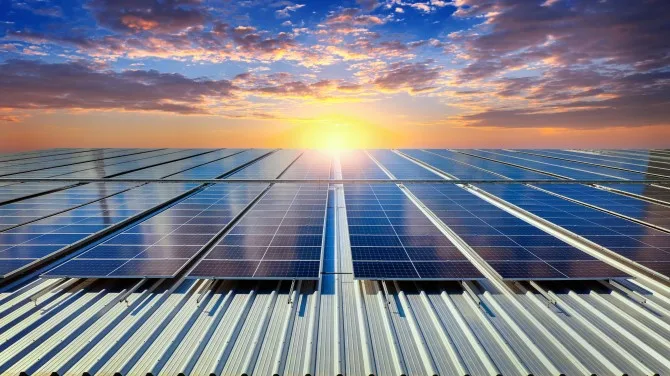
Renewable energy innovations have continued apace. Perovskite solar cell efficiency reached a new high of 28%, and floating offshore wind farms have tripled capacity. Energy storage breakthroughs using solid-state batteries extend electric vehicle (EV) ranges and grid stability. These advances are crucial as electric cars dominate new vehicle sales, highlighted in reports such as TheOmniBuzz’s 2026 automotive analysis.
Moreover, circular economy models are mainstream. Companies increasingly design products for longevity, repairability, and recyclability. The fashion industry, traditionally criticized for waste, is undergoing transformation with biofabricated materials and AI-driven demand forecasting, as detailed in TheOmniBuzz’s coverage on fashion and sustainability.
Governments have also strengthened commitments through international cooperation. The 2026 Global Climate Pact, ratified by over 190 countries, mandates accelerated decarbonization targets and promotes technology transfer to developing economies. Financial institutions now require sustainability risk disclosures aligned with the Task Force on Climate-related Financial Disclosures (TCFD) standards.
Expert Perspectives: Industry Impact and Strategic Shifts
Leading voices in sustainability emphasize a paradigm shift. Companies that embed sustainability into core strategy outperform peers in resilience and profitability. According to a 2026 McKinsey report, firms with advanced sustainability integration reported 15% higher returns on invested capital over five years.
Experts also highlight the role of technology as an enabler, rather than a panacea. Dr. Luis Ramirez, a sustainability consultant, stresses that “technology must be paired with systemic policy reforms and cultural change to realize its full potential.”
The financial sector is pivotal. ESG investing, once niche, now influences capital allocation globally. Institutional investors demand transparent impact metrics, driving innovation in green bonds and sustainability-linked loans. However, concerns about greenwashing persist, prompting calls for stronger regulatory oversight.
The labor market is also evolving. Green jobs have expanded rapidly, with the International Labour Organization estimating over 150 million people employed in renewable energy, energy efficiency, and sustainable agriculture sectors worldwide. Reskilling and education are critical to ensure workforce inclusivity.
“Sustainability is reshaping supply chains, business models, and consumer expectations — it’s the defining axis of competitive advantage,” commented Helena Foster, CEO of EcoInnovate Solutions.
Looking Ahead: What to Watch in Sustainability’s Next Phase
As we move beyond 2026, several trends will determine sustainability’s trajectory. First, the integration of AI and sustainability is deepening. From precision agriculture to climate risk modeling, AI technologies provide tools for more adaptive and efficient resource management. Our previous analysis in Why AI and Sustainability Will Redefine Investing Horizons explores how these forces converge to reshape capital flows.
Second, the circular economy will expand into new domains, including electronics and construction, reducing raw material extraction and waste. Legislative pressures and consumer demand for transparency will drive companies to innovate in product lifecycle management.
Third, social dimensions of sustainability will gain prominence. Equity, diversity, and inclusion are increasingly recognized as essential for long-term stability and innovation. Policies addressing just transition for workers affected by decarbonization will become a critical focus.
Fourth, climate adaptation will rise in priority alongside mitigation. Infrastructure resilience, water management, and ecosystem restoration will require large-scale investments and community engagement.
Finally, geopolitical dynamics will influence sustainability cooperation. The balance between competition and collaboration among major powers will shape global climate governance and technology dissemination.
- Increased adoption of AI-driven sustainability metrics and decision-making tools.
- Expansion of carbon markets and pricing mechanisms globally.
- Growth of green finance instruments with enhanced transparency standards.
- Acceleration of circular economy practices across manufacturing sectors.
- Greater emphasis on social justice within sustainability frameworks.
These developments suggest that sustainability will continue evolving from a set of isolated initiatives into a foundational principle guiding economic and societal progress.
Case Studies: Real-World Sustainability Transformations
Leading corporations and cities exemplify sustainability’s tangible impact. For example, Ørsted, the Danish energy giant, achieved carbon neutrality in its operations by 2025, pivoting from fossil fuels to offshore wind power. Their portfolio now includes over 20 GW of renewable capacity, serving millions of households.
In urban planning, Singapore’s Smart Green District integrates IoT sensors to optimize energy usage, water recycling, and waste management, significantly reducing its carbon footprint. This initiative is part of a national strategy to become a zero-waste city by 2030.
In the fashion industry, StellaVerde, a startup based in Milan, developed a closed-loop supply chain leveraging AI to predict demand, minimize overproduction, and utilize bioengineered textiles made from algae. Their success underscores how technology and sustainability can disrupt traditional sectors, as explored in Unraveling 2026’s Fashion Revolution.
Similarly, in agriculture, AgroNext employs vertical farming and AI-controlled environments to reduce land use and water consumption by over 70%, while increasing yields and reducing pesticide use.
“These examples illustrate that sustainability is not just an ethical imperative but a driver of innovation and competitiveness,” said Elena Martinez, sustainability director at the World Business Council for Sustainable Development.
Such case studies demonstrate the practical pathways through which sustainability reshapes industries and urban life, offering scalable blueprints for others to follow.