
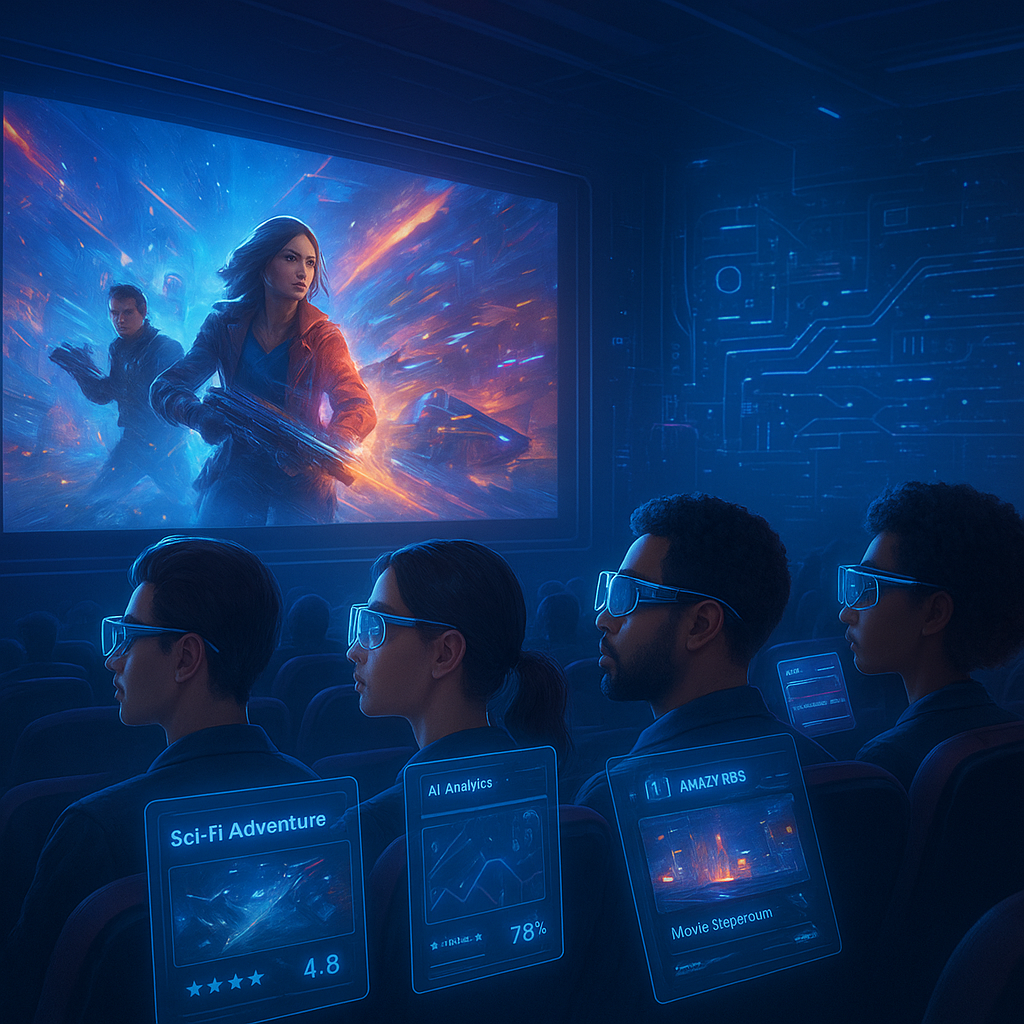
Opening Scene: The Streaming Surge and AI’s Silent Revolution
Imagine sitting in a living room in mid-2026, selecting a film to watch. The choice is staggering: thousands of titles spanning decades, genres, and languages, all accessible within seconds. The cinema, once a temple of the big screen, has evolved into a personalized experience governed by algorithms and streaming platforms. Meanwhile, behind the scenes, artificial intelligence quietly influences scriptwriting, casting, and editing, reshaping the very DNA of filmmaking.
Recent data from industry sources reveal that global streaming revenue surpassed $90 billion in 2025, marking a 15% increase from the previous year. This growth reflects a shift not just in distribution, but in production and consumption patterns. The blockbuster model, long dominated by Hollywood studios, is adapting to a fragmented yet deeply engaged audience. This transformation raises questions: How is AI impacting creative decisions? What does this mean for traditional theaters? And, importantly, how are audiences responding to this new cinematic paradigm?
From Silver Screens to Screens Everywhere: A Historical Context
The movie industry’s trajectory over the last century is a testament to adaptation and innovation. The early 20th century saw the rise of Hollywood’s studio system, creating an oligopoly that defined global cinema culture. The mid-century golden age was characterized by theatrical releases that drew millions to cinemas weekly. However, the advent of television, followed by home video and DVDs, began to decentralize viewing habits.
The early 2000s introduced streaming giants like Netflix and Amazon Prime Video, initially as DVD rental services and later as dominant online content hubs. By the early 2020s, streaming had become the primary mode of film consumption for many demographics. This shift was accelerated by the Covid-19 pandemic, which shuttered theaters worldwide and forced studios to reconsider release strategies.
Parallel to distribution changes, technological advances in CGI, digital projection, and camera equipment democratized filmmaking. Independent filmmakers gained tools once exclusive to big studios. Today, AI-driven technologies are the latest chapter, influencing script analysis, casting predictions, and even visual effects generation.
Decoding the Data: Streaming, Box Office, and AI Integration
According to the Motion Picture Association’s 2025 annual report, global box office revenues have stabilized at around $40 billion, roughly half of their pre-pandemic peak. Streaming, conversely, has eclipsed theatrical earnings, driven by subscription growth and global accessibility. Key figures highlight the industry’s dual nature:
- Over 60% of new films in 2025 premiered on streaming platforms exclusively.
- AI tools contributed to script development in approximately 30% of major studio projects.
- Global theatrical attendance remains strong in key markets like China and India, showing resilience despite streaming’s dominance.
AI’s role extends beyond production. Studios utilize machine learning algorithms to predict audience preferences, optimize marketing campaigns, and tailor content recommendations. This data-driven approach enhances engagement but also sparks debate about creative authenticity versus algorithmic conformity.
“The integration of AI has the potential to streamline creativity, but it also challenges traditional notions of authorship and unpredictability in storytelling,” notes film historian Dr. Karen Liu.
Comparisons with the past reveal a clear pattern: each technological innovation—from sound to color to digital effects—has disrupted and enriched cinema. AI’s current impact is similarly profound, though it raises ethical and artistic questions not previously encountered.
2026 Cinema Landscape: Emerging Trends and Industry Responses
This year, the industry witnesses a confluence of trends molding movie-making and viewing:
- Hybrid Release Models: Studios increasingly opt for simultaneous theatrical and streaming launches, balancing traditional box office revenue with digital reach.
- AI-Driven Pre-Production: Screenwriters and producers harness AI to analyze successful story structures and character arcs, refining scripts before filming.
- Immersive Technologies: Virtual reality (VR) and augmented reality (AR) experiences complement films, offering interactive narratives and multi-sensory engagement.
- Diversity and Inclusion: Data analytics identify underrepresented audience segments, prompting studios to greenlight projects with broader cultural representation.
- Environmental Sustainability: AI optimizes production logistics to reduce carbon footprints, reflecting growing industry commitment to sustainability.
The response from theaters is notable. Many cinemas have reinvented themselves as experience centers, offering premium formats, live events, and community screenings to compete with home convenience. According to industry analyst Raj Patel, “The cinema’s survival hinges on creating value that streaming alone cannot replicate.”
“We are witnessing a renaissance of cinema as a social event, not just a screen experience,” says Patel.
TheOmniBuzz’s recent coverage of April Movies 2026: Emerging Trends and Box Office Surprises Unveiled highlights how certain mid-budget films have succeeded by leveraging niche streaming audiences and theatrical releases tailored to fan communities.
Industry Voices: Perspectives on AI and Streaming’s Impact
Leading figures from studios, tech firms, and creative guilds offer varied insights on the evolving landscape. Veteran director Sofia Marquez remarks on AI’s double-edged potential: “It can accelerate the mundane, freeing artists to focus on vision, but overreliance risks homogenizing storytelling.”
Streaming executives emphasize data’s role in expanding global reach. A senior executive at StreamFlix explains, “Our AI-driven platform helps connect diverse stories with audiences worldwide, breaking down barriers traditional distribution could not.”
Conversely, theater owners advocate for preserving the communal aspect of film. Jessica Huang, CEO of Landmark Cinemas, states, “Movies are meant to be shared experiences. While streaming is convenient, it cannot replace the emotional resonance of a packed theater.”
The ongoing dialogue underscores a critical tension: balancing innovation with tradition, efficiency with artistry, accessibility with exclusivity.
These perspectives align with findings in our feature How Movies Shape Culture and Commerce: What You Need to Know, which explores cinema’s role beyond entertainment—as a cultural touchstone and economic driver.
Looking Ahead: What the Future Holds for Movies
Forecasting cinema’s path involves anticipating technological advances, audience evolution, and economic shifts. Key trends to watch include:
- Greater AI Collaboration: AI will increasingly co-create content, from screenplay suggestions to virtual actors, raising new artistic and legal questions.
- Expanded Immersive Storytelling: Mixed reality formats may become mainstream, blurring lines between film, gaming, and live performance.
- Personalized Cinematic Experiences: Viewers could customize narratives or perspectives, enabled by AI-driven interactive storytelling.
- Globalization of Content: Non-Western films will gain broader international audiences, facilitated by streaming and subtitling AI.
- Sustainability Standards: Industry-wide protocols may be enforced, encouraging eco-friendly production and distribution practices.
These developments suggest a future in which movies remain vital but continuously adapt. TheOmniBuzz’s analysis in Movies in 2026: Evolution, Trends, and the Future of Cinema stresses the importance of embracing change while preserving cinema’s core emotional power.
“Cinema will not disappear; it will transform. The challenge is to harness technology to enrich human storytelling, not replace it,” advises industry analyst Dr. Ethan Cole.
Ultimately, the story of movies is one of perpetual reinvention. As streaming and AI reshape production and consumption, filmmakers and audiences alike navigate a landscape that honors tradition while pioneering new frontiers.
This ongoing evolution ensures that movies, in all their forms, remain a compelling reflection of human creativity and cultural dialogue.