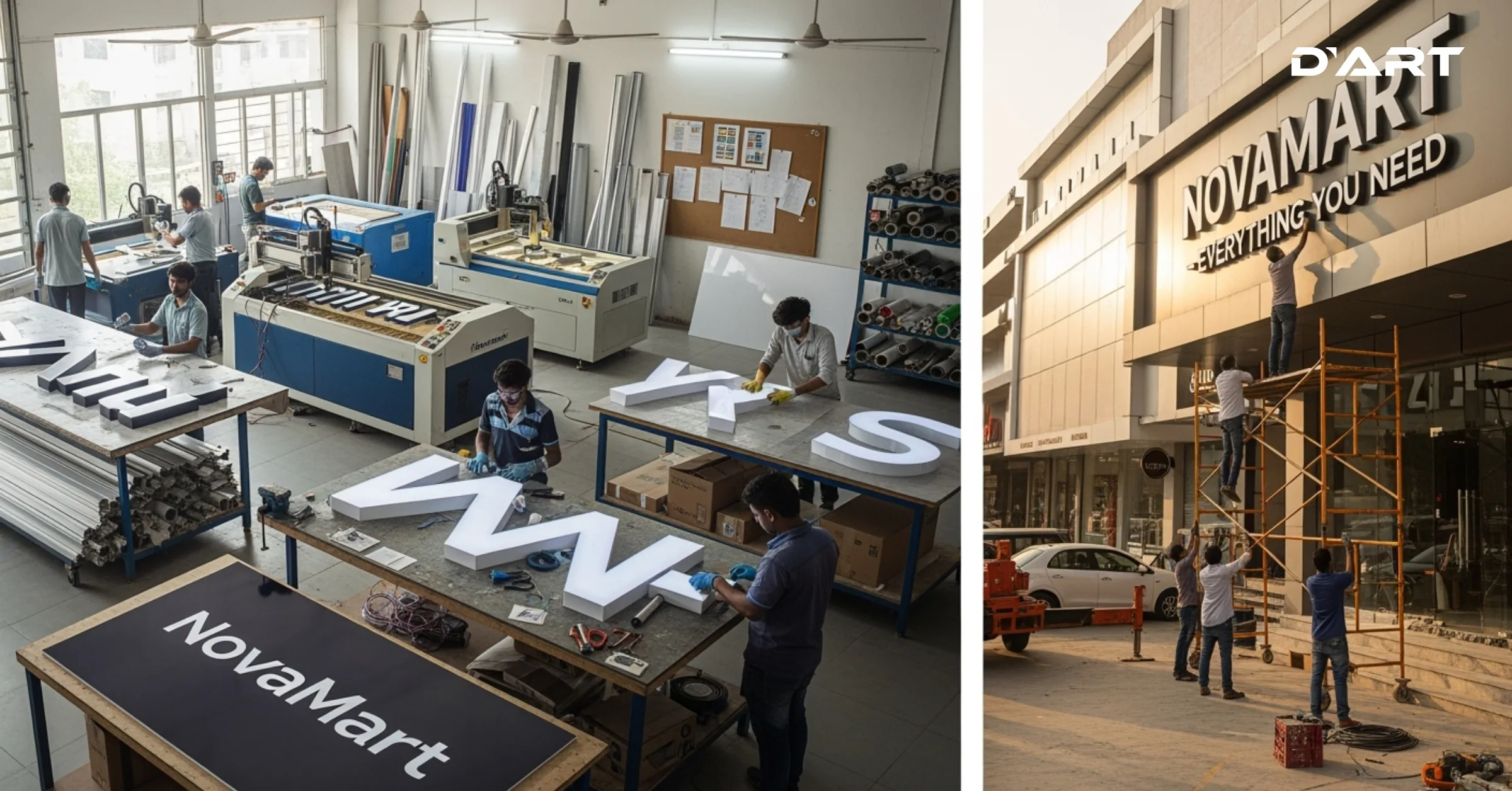
When a customer comes into the store, most shopkeepers think the sale has been made. In fact, the conversation is started on the pavement before anyone has said anything. By the time a prospective consumer's going to slow down, look up and decide if this is a business worth their time, signage is up and in the air. Nearly everything they see on the front of your store affects that decision, which is made in a matter of seconds.
Approximately 76% of customers have visited a store that they had never been in before just because of the signage they saw. That is a significant amount. It implies that the first actual negotiation on retail occurs entirely before any human interaction and discreetly (and visibly too).
What Is Signage Negotiating About?
The majority of the retail executives consider visibility when they are considering signage, such as whether customers will be able to see it, will it have the logo, and will it be lit at night. As those things are important, but are the floor rather than the ceiling. In reality, the signage is responding to a more complicated issue that includes emotional permission to enter, credibility and expectancy.
Nearly 79% of consumers base their opinions about the quality of a product on the appearance of the signage in a store. An unmaintained, fading, or confusing sign visually fails to attract attention to it. It is a good indicator of the standards of the brand. Before someone touches a product or hears a price, they have an opinion of the product based on the quality of your signage, which conveys the quality of what's inside.
At this point then, retail signage starts to behave less like a street marker and more like a salesperson. A good-looking sign trades for trust. Before it even begins, the conversation, a poor person gives in.
The Moment Before Entry
If a store has signs that are unclear or unreadable, more than 60% of customers will not enter a store. That's foot traffic lost because of presentation and not price or competition. Whether someone enters voluntarily, approaches warily or just keeps going depends on the tone of the invitation that your signage establishes.
Here, static signage remains quite important, particularly for boutique stores and well-known businesses where it is as important for clarity of branding as it is for messaging. Some historic shops make a big investment in the manufacture of the quality, materials, finish and dimensions of lettering for a reason. Relative to less expensive formats, a sign's physical presence has a sense of permanence and confidence.
Solutions for digital signs have gone a long way to increase that negotiation. Dynamic content may react to the amount of stock, alter messaging based on the time of day or immediately provide a reflective window of a promotion. Compared to static formats, the ability to communicate contextually, moving content radically enhances recall and research proves that in the right environments, the use of digital retail signage can boost sales by up to 30%. Instead of being fixed the negotiation becomes flexible.
How the Conversation Develops
A shopper is taken through a simple and sequential process using signage. Driven by contrast, movements and visual hierarchy come to attention first. The next stage is expectation formation, which is when the messaging begins to suggest to the customer what they should expect in terms of experience, cost and ambience. The emotional layer takes over then: color, font, and lighting are doing things that no consumer would attribute to a sign, but they have a real and quantifiable impact on mood and perceived brand personality.
In this sequence navigation is often overlooked. In the case of a shop environment, easy navigation is psychological comfort. Customers are more comfortable in exploration when they know where they are and where to go. Friction is caused by confusion, while early exits are caused by friction.
This interaction has become more intimate due to interactive and intelligent signage with use of QR connections, augmented reality capabilities and contextually aware screens. Passive infrastructure has become devoid of things such as signage that reacts to customer behavior or traffic patterns. It is an active constituent of the purchasing process.
The Longer Consequence
Once the customer enters the building, the signage still performs its function. Cognitive familiarity is something that is built to develop over time when a retail network's visual language is coherently influenced from both static and digital modes. One of the largest influences consumers have on developing a mental map of the companies they trust is signage. Again, because the physical and spatial memory of a retail setting is more memorable than a banner ad, repeated, consistent exposure reinforces memory in ways that internet advertising often lacks.
Brands that consider their signage as strategic infrastructure rather than a production line item usually enjoy steady foot traffic and long-lasting customer loyalty. Those who underinvest are often felt in different effects that they can attribute to other things.
Budget allocation and format selection is not the starting point when you go through your retail strategy. What your signage is negotiating for you now and whether or not it is in line with what your brand wants to circulate is the question. Answers that have been too close to internal teams to get a clear picture will most often be revealed when consulting with an experienced signage fabrication and installation company.