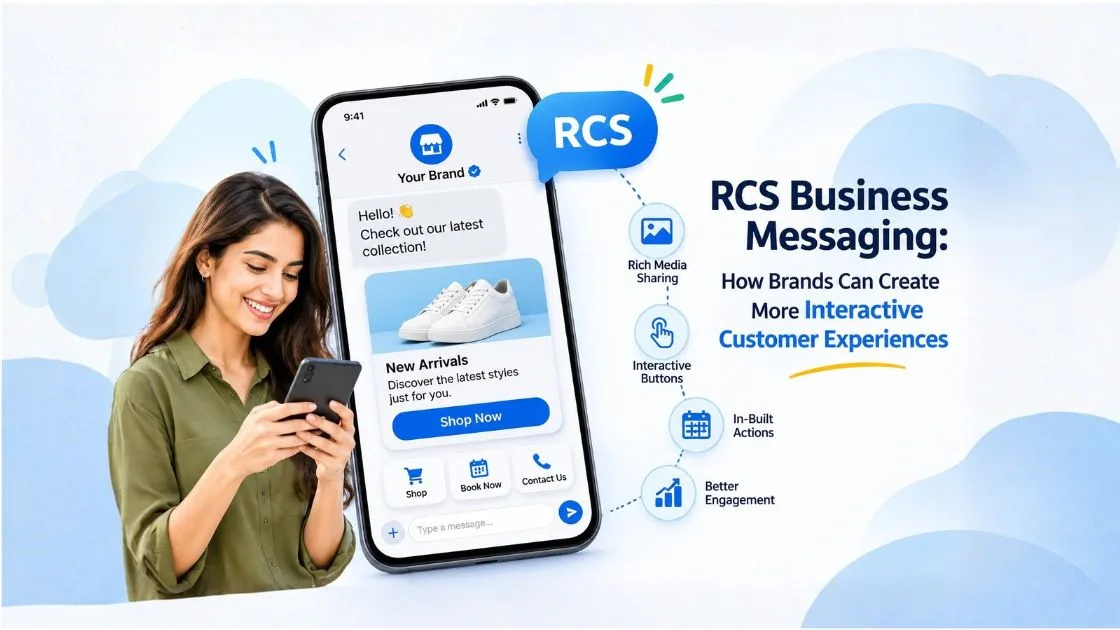
Summary - RCS Business Messaging helps businesses create more engaging customer experiences by combining the simplicity of SMS with interactive features such as images, videos, product carousels, clickable buttons, and verified business profiles. It allows brands to share personalized offers, send important updates, answer customer queries, and guide users towards taking action within a messaging conversation. For businesses across India, working with a reliable RCS Service Provider can help improve customer engagement, build brand trust, and make business communication more interactive across supported devices and networks.
Customers expect more than simple text messages from brands. They want clear information, quick responses, and convenient ways to explore products or services. Traditional SMS is useful for sending alerts and updates, but it offers limited options for creating interactive conversations.
This is where RCS Business Messaging makes a difference. It allows businesses to communicate through rich messages featuring images, videos, product cards, suggested replies, and action buttons. Customers can explore offers, check product details, confirm appointments, or connect with a business directly from their messaging app.
For brands looking to improve customer communication, choosing the right RCS Service Provider is an important step. With the right messaging strategy, businesses across India can make their customer interactions more personal, useful, and engaging while creating better opportunities for conversions and long-term customer relationships.
What Is RCS Business Messaging and How Does It Work?
RCS Business Messaging, also known as Rich Communication Services for Business, is an advanced mobile messaging solution that allows brands to communicate with customers through interactive and multimedia-rich messages.
Traditional SMS mainly supports text-based communication, whereas RCS can include images, videos, branded sender profiles, suggested replies, clickable buttons, and product carousels.
For example, instead of sending a simple SMS saying that an order has been shipped, an e-commerce brand can send an RCS message with its business identity, product image, delivery information, and an interactive tracking button.
Customers can view information and take action directly from their messaging application, where supported.
Understanding what RCS Business Messaging means helps businesses identify how this technology can improve their existing customer communication strategies.
How Does RCS Business Messaging Create More Interactive Customer Experiences?
RCS makes business communication more engaging by allowing customers to interact with messages rather than simply reading text.
Some important features include:
- Rich media messaging: Share product images, promotional banners, videos, and visual information.
- Verified business profiles: Display a recognizable business identity, including brand details and logos where supported.
- Interactive buttons: Allow customers to visit websites, make enquiries, check orders, or explore services.
- Product carousels: Showcase multiple products or services within a single message.
- Suggested replies: Help customers respond quickly without typing lengthy messages.
- Two-way communication: Support conversations between customers and businesses through compatible messaging applications.
Consider a retail brand promoting a festive collection. Instead of sending a basic promotional SMS, it can display multiple product images with options such as "View Collection" or "Shop Now".
This creates a more convenient shopping experience and helps customers explore products directly from their messaging inbox.
What Are the Main Benefits of RCS Business Messaging for Brands?
RCS Business Messaging offers several advantages for businesses looking to improve customer engagement and communication quality.
1. Better customer engagement: Interactive buttons, rich cards, and multimedia content encourage customers to explore messages and respond to relevant offers.
2. Stronger brand recognition: Verified business profiles help customers identify the sender and recognize legitimate brand communication.
3. Personalized communication: Businesses can create messages based on customer interests, previous interactions, and relevant purchase information, subject to applicable consent requirements.
4. Improved marketing experiences: Product images, promotional content, and clickable actions make campaigns more informative and engaging.
5. Convenient customer support: Brands can provide order updates, appointment reminders, service information, and interactive support options.
6. Better campaign insights: Supported RCS platforms can provide delivery, read, and interaction information to help businesses evaluate messaging performance.
Brands exploring these opportunities can learn more about the benefits of RCS messaging for customer engagement and business communication.
How Can Businesses Use RCS Messaging for Marketing and Sales?
RCS Business Messaging can support different stages of the customer buying journey, from product discovery to purchase and post-sales communication.
Here are some practical applications:
- Product promotions: Share product images, discounts, and interactive shopping options.
- Abandoned cart reminders: Remind interested shoppers about products left in their carts, where suitable consent and messaging rules permit.
- Personalized recommendations: Present relevant products based on customer preferences.
- Lead generation: Encourage customers to request quotations, book consultations, or submit enquiries through interactive buttons.
- Order notifications: Share purchase confirmations, shipping updates, and delivery information.
- Customer feedback: Invite customers to provide feedback through interactive response options.
For example, an online fashion retailer can send a customer a visual collection of seasonal products. The customer can browse different options, select a preferred category, and visit the retailer's website to complete a purchase.
This makes promotional communication more useful than sending repeated text-based advertisements.
How Can Different Industries Benefit from RCS Business Messaging?
RCS is suitable for businesses across multiple industries because its interactive features can support different communication requirements.
E-commerce and retail: Online stores can share product catalogues, promotional offers, order confirmations, delivery updates, and shopping links.
Banking and financial services: Banks and financial institutions can use suitable messaging workflows for transaction alerts, service notifications, card updates, and customer assistance, subject to security and regulatory requirements.
Healthcare: Hospitals and clinics can send appointment reminders, booking confirmations, and healthcare service information while protecting sensitive patient information.
Education: Colleges and educational institutions can share admission notifications, application updates, examination schedules, and course information.
Travel and hospitality: Airlines, hotels, and travel companies can communicate booking confirmations, reservation updates, travel notifications, and relevant service information.
For example, a college can send prospective students an interactive message containing course information, admission details, and an enquiry button. This gives students a convenient way to explore available options and contact the institution.
RCS Business Messaging vs Traditional SMS: Which Is Better?
Both SMS and RCS have important roles in business communication, but they serve different messaging requirements.
FeatureTraditional SMSRCS Business MessagingMessage formatPlain textRich media and textBrand identitySender IDBranded profile where supportedImages and videosNot natively supportedSupportedInteractive buttonsLimitedSupportedProduct carouselsNot supportedSupportedCustomer interactionBasicRich interactive conversationsRead informationGenerally unavailableSupported where availableDelivery reachBroad mobile reachDepends on compatible devices and networksSMS remains useful for short alerts, OTPs, and essential notifications. RCS is particularly useful when brands want to create visual, interactive, and engaging customer experiences.
Businesses do not necessarily need to replace SMS completely. They can use RCS for compatible customers and configure SMS fallback for situations where RCS delivery is unavailable.
Why Are Indian Businesses Exploring RCS Business Messaging?
India has a large mobile-first customer base, and businesses increasingly use digital messaging to communicate with customers across different cities and regions.
Brands operating in Mumbai, Pune, Delhi, Bengaluru, Hyderabad, Chennai, Ahmedabad, and other commercial markets can explore RCS for product promotions, customer notifications, and interactive service communication.
However, RCS availability depends on device compatibility, supported messaging applications, carrier infrastructure, and regional availability. Businesses should evaluate their target audience before planning large-scale campaigns.
The ability to combine rich media, branded communication, and SMS fallback makes RCS an interesting option for Indian businesses looking to improve their messaging strategies.
Businesses can also understand why brands need RCS when evaluating newer business messaging channels.
How to Choose the Right RCS Service Provider in India?
Choosing the right RCS Service provider is an important step for businesses planning to implement Rich Communication Services for customer communication and marketing campaigns.
A suitable provider should offer the technical capabilities, onboarding support, and messaging infrastructure required for business-specific communication needs.
Before selecting an RCS messaging provider in India, consider these factors:
- RCS platform access: Check whether the provider offers access to supported RCS for Business infrastructure.
- Brand verification: Understand tFhe process for business identity verification and RCS agent registration.
- API integration: Check compatibility with existing CRM systems, websites, and business applications.
- Interactive messaging: Look for support for rich cards, product carousels, suggested replies, and action buttons.
- SMS fallback: Ensure the solution supports suitable fallback options when RCS cannot reach a customer.
- Analytics and reporting: Evaluate delivery reports, read information, and available engagement metrics.
- Pricing transparency: Understand message charges, onboarding costs, and additional integration expenses.
- Technical assistance: Choose a provider that can help with configuration, testing, campaign setup, and ongoing support.
Businesses should also compare RCS campaign costs with their expected engagement goals. This RCS messaging cost in India resource can help businesses understand the pricing factors involved.
How Can Businesses Get Started with RCS Business Messaging?
Implementing RCS Business Messaging involves planning, platform onboarding, integration, and campaign testing.
A practical starting process includes:
- Identify whether your business needs RCS for promotions, notifications, customer support, or sales.
- Select a suitable RCS Service provider based on your technical and communication requirements.
- Complete the required business verification and RCS agent registration process.
- Create branded messaging content, including rich cards, images, and interactive buttons.
- Integrate the RCS API with your CRM or business applications where required.
- Test message delivery, customer interactions, and fallback workflows.
- Monitor campaign performance and improve messaging based on customer responses.
Create Better Customer Experiences with RCS Business Messaging
RCS Business Messaging gives brands an opportunity to move beyond plain-text communication and create more interactive customer experiences. With rich media, verified business profiles, product carousels, and conversational features, businesses can make their messages more useful and engaging.
Whether you operate an e-commerce store, educational institution, healthcare organization, financial service, or retail business, RCS can support better customer communication when implemented with the right strategy.
Ready to explore RCS for your business? Evaluate your messaging requirements, identify the customer interactions you want to improve, and connect with an experienced RCS Service provider to plan your business messaging strategy. Start with a focused campaign, measure customer engagement, and scale the communication workflows that deliver meaningful results.
Frequently Asked Questions
1. What is RCS Business Messaging, and how does it help businesses improve customer engagement?
RCS Business Messaging is an advanced messaging solution that allows businesses to send interactive messages with images, videos, product carousels, clickable buttons, and verified brand profiles. Unlike traditional SMS, it helps customers explore offers, get information, and interact with businesses directly through supported messaging apps. This makes customer communication more engaging and convenient.
2. How is RCS Business Messaging different from traditional SMS?
Traditional SMS mainly supports text-based messages and standard links, whereas RCS Business Messaging offers rich media, interactive buttons, suggested replies, and branded conversations. Businesses can use RCS to share product details, promotional offers, appointment reminders, and service updates in a more engaging format. SMS remains useful for reaching customers on devices or networks where RCS is unavailable.
3. How can businesses choose the right RCS Service Provider in India?
Businesses should look for an RCS Service Provider that offers reliable message delivery, verified sender profiles, RCS Business Messaging API integration, campaign management, reporting, and technical support. It is also important to check network and device compatibility, pricing, scalability, and SMS fallback options to ensure communication continues when RCS is not supported.
4. Can RCS Business Messaging help businesses increase sales and generate more leads?
Yes. RCS Business Messaging can support lead generation and sales by allowing brands to share product images, promotional campaigns, service information, and clickable call-to-action buttons. Customers can browse offers, request information, book appointments, or visit product pages directly from a message. When combined with CRM integration and personalized messaging, it can help businesses create smoother customer journeys and improve conversion opportunities.
5. Is RCS Business Messaging available for businesses across India?
RCS Business Messaging is available in India, but the customer experience depends on device compatibility, messaging app support, mobile network availability, and business onboarding requirements. Businesses should work with an experienced RCS Service Provider to understand supported networks, sender verification, API integration, and SMS fallback options before launching campaigns at scale.