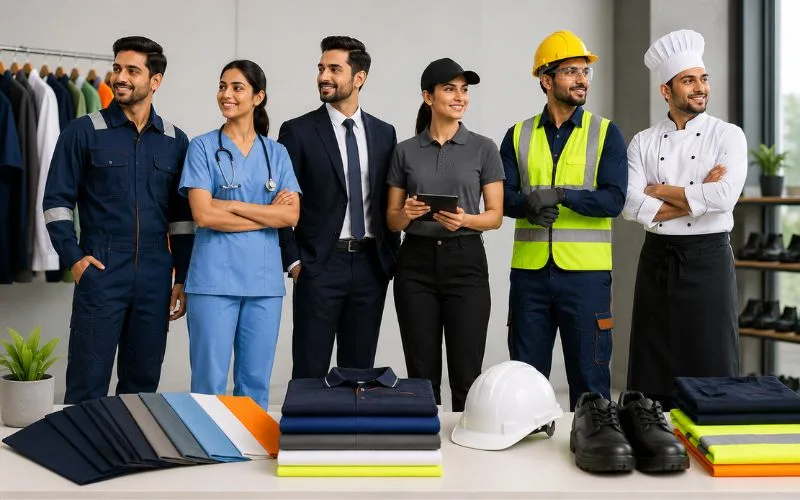
Uniform trends change every year, but most businesses honestly do not care about “fashion trends” the way social media does.
Hotel managers care about durability. HR teams care about employee acceptance. Healthcare buyers care about hygiene and comfort. Operations managers care about replacement costs and maintenance problems.
That is the real world of uniforms.
And this year, businesses across the UAE are becoming much more practical with how they approach workwear. Companies are moving away from flashy designs and focusing more on comfort, long-term value, climate suitability, and employee functionality.
Some of these changes are overdue.
After working with hospitality groups, clinics, restaurants, logistics firms, retail brands, and corporate offices, a few clear uniform trends are standing out this year — and most of them are driven by real workplace frustrations, not marketing ideas.
Comfort Is Finally Becoming a Priority
For years, many businesses chose uniforms based mostly on appearance.
If the uniform looked “smart,” management approved it. Employees simply had to deal with the discomfort.
That approach is slowly disappearing.
Businesses are realizing uncomfortable uniforms directly affect employee performance. Staff who spend 8–12 hours moving around in heavy fabric become tired faster, sweat more, and complain more frequently.
In the UAE, this matters even more because of the climate.
This year, lightweight breathable fabrics are becoming standard across hospitality, retail, facility management, healthcare, and logistics industries.
Employees now expect uniforms that:
- Allow easier movement
- Stay breathable during long shifts
- Handle indoor and outdoor temperature changes
- Feel lighter during summer months
- Do not trap excessive heat
Honestly, this trend should have started years ago.
Many older uniforms were designed to look formal but completely ignored employee comfort. Businesses paid the price later through low staff satisfaction and constant replacement requests.
Minimal Branding Is Replacing Loud Logos
Large oversized logos everywhere are becoming less popular.
Businesses are starting to prefer cleaner, more professional uniform designs. Small embroidery logos, subtle brand colors, and modern fits are replacing uniforms that look overly promotional.
This is especially noticeable in:
- Hotels
- Healthcare groups
- Premium restaurants
- Corporate offices
- Luxury retail stores
Customers usually trust understated professionalism more than aggressive branding.
A simple clean uniform often creates a stronger impression than uniforms overloaded with bright colors and massive logos.
The goal now is consistency, not advertisement.
Stretch Fabrics Are Becoming Common
This is one of the most practical changes happening right now.
Stretch fabric blends are becoming increasingly popular because employees move constantly during shifts. Receptionists sit and stand repeatedly. Warehouse workers lift products. Hotel staff walk for hours. Healthcare professionals barely stop moving.
Rigid fabric simply does not perform well anymore.
Modern stretch-blend uniforms improve:
- Mobility
- Comfort during long shifts
- Fit consistency
- Overall employee satisfaction
However, businesses should be careful here.
Not all stretch fabrics are durable.
Some cheaper materials lose shape after repeated industrial washing. Others become rough or faded very quickly under UAE conditions.
This is why experienced suppliers usually test fabric performance before recommending large-scale orders.
Gender-Neutral and Inclusive Fits Are Growing
Many businesses are simplifying uniform designs by choosing more flexible fitting styles instead of heavily gender-specific cuts.
This trend is becoming more common because managing sizing across large teams is already difficult enough.
Practical businesses are moving toward:
- Relaxed fits
- Adjustable sizing
- More universal designs
- Comfortable tailoring options
This reduces fitting issues during onboarding and makes replacements easier later.
Overly tight or fashion-focused uniforms are slowly disappearing in operational industries because they create more complaints than benefits.
Employees want to feel professional, not restricted.
Easy-Maintenance Uniforms Matter More Than Ever
One of the biggest uniform trends this year is not visual at all.
Businesses are prioritizing low-maintenance fabrics.
Why?
Because maintenance costs quietly become expensive over time.
Uniforms that wrinkle easily, fade quickly, shrink after washing, or require special cleaning create operational headaches for HR and housekeeping teams.
This is especially true in healthcare and hospitality where uniforms are washed constantly.
The most practical businesses now look for:
- Wrinkle-resistant materials
- Colorfast fabrics
- Faster drying times
- Easy stain removal
- Industrial laundry compatibility
Honestly, some of the most expensive-looking uniforms fail completely after six months of real use.
Meanwhile, simpler uniforms with better fabric performance often last much longer.
Long-term practicality is finally becoming more important than showroom appearance.
Sustainable Fabrics Are Getting Attention — But Carefully
Sustainability is becoming part of uniform discussions now, especially with larger corporate groups and international hotel brands.
But businesses are approaching this trend cautiously.
Eco-friendly fabrics sound great in presentations, but companies still need uniforms that survive daily operational use.
Some recycled materials perform very well. Others simply do not last in demanding work environments.
This is where businesses need to avoid blindly following trends.
A sustainable uniform that needs replacement every few months is not actually sustainable in practice.
The smarter approach is balancing:
- Fabric durability
- Employee comfort
- Maintenance efficiency
- Environmental responsibility
Businesses looking for long-term professional workwear solutions are paying closer attention to this balance now instead of chasing “green” marketing terms alone.
Layered Uniform Systems Are Becoming Popular
UAE workplaces constantly switch between extreme outdoor heat and freezing indoor air conditioning.
Because of this, layered uniforms are becoming more practical.
Many companies now provide:
- Lightweight base uniforms
- Optional jackets
- Softshell outerwear
- Breathable overshirts
- Flexible layering pieces
This gives employees better temperature control throughout the day.
It also improves uniform lifespan because outer layers absorb more wear instead of the core uniform itself.
Hotels, airports, logistics companies, and facility management teams are adopting this approach more frequently now.
Smart Fabric Technology Is Slowly Entering the Market
This trend is still growing, but it is becoming noticeable.
Businesses are showing interest in uniforms with:
- Moisture-wicking technology
- Anti-bacterial treatments
- Odor resistance
- UV protection
- Faster drying performance
Healthcare and hospitality sectors especially appreciate these features because employees work long hours under pressure.
That said, businesses should avoid getting distracted by fancy technical terms.
Some “high-tech” fabrics sound impressive during presentations but offer very little real-world difference.
Performance matters more than marketing language.
Customization Is Becoming More Practical
Businesses still want branded uniforms, but customization is becoming more functional instead of decorative.
This includes:
- Department color coding
- Embroidered employee names
- Position identification
- Functional pockets
- Industry-specific design adjustments
Healthcare facilities especially benefit from this because patients identify staff roles more easily.
Practical customization improves operations. Decorative customization often just increases cost.
Long-Term Value Is Becoming the Main Focus
This may actually be the biggest shift happening this year.
Businesses are finally thinking long term.
Instead of asking only:
“How cheap can we buy uniforms?”
They are asking:
“How long will these uniforms actually perform properly?”
That is a much smarter question.
Professional uniforms affect employee morale, company image, maintenance budgets, and operational consistency every single day.
Cheap uniforms usually create expensive problems later.
The businesses getting the best results now are the ones investing in balanced, durable, comfortable professional workwear solutions rather than chasing short-term savings.
Final Thoughts
The biggest uniform trend this year is practicality.
Businesses across the UAE are moving toward uniforms that genuinely support employees instead of simply looking formal during meetings or presentations.
Comfort matters more now. Durability matters more. Maintenance matters more.
And honestly, employees notice the difference immediately when businesses choose uniforms thoughtfully.
Good uniforms reduce complaints, improve consistency, strengthen branding quietly, and perform better under real working conditions.
The smartest businesses are not following trends blindly.
They are choosing uniforms that actually work.
FAQs
1. What uniform fabric works best for UAE weather?
Lightweight cotton blends and breathable stretch fabrics usually perform best in UAE conditions because they balance comfort, durability, and airflow during long shifts.
2. Are expensive uniforms always better?
Not necessarily. Some expensive uniforms focus too much on appearance and fail quickly during daily use. Fabric performance and maintenance matter more than price alone.
3. Why are businesses moving toward minimal branding?
Cleaner uniforms often look more professional and age better over time. Excessive logos can make uniforms feel outdated very quickly.
4. How often should companies replace professional uniforms?
Most businesses replace uniforms every 12–24 months depending on fabric quality, washing frequency, and work conditions.
5. Are stretch fabrics durable enough for operational staff?
Good-quality stretch blends are usually very durable. However, low-cost stretch fabrics may lose shape after repeated industrial washing.
6. What are the biggest mistakes businesses make when choosing uniforms?
Focusing only on appearance or price. Many businesses ignore employee comfort, UAE climate conditions, and long-term maintenance requirements.
7. Why are layered uniform systems becoming popular in the UAE?
Employees constantly move between outdoor heat and strong indoor air conditioning. Layered systems help staff stay comfortable throughout the day while improving flexibility and durability.