The best pole barn insulation options for agricultural properties in Walpole, MA, depend on the building’s purpose, framing, moisture conditions, and desired indoor temperature. Spray foam, fiberglass, and blown-in insulation can help control heat transfer when properly selected and installed.
This guide covers the best pole barn insulation options for agricultural properties, including spray foam, fiberglass, and blown-in insulation. It explains their benefits and limitations, how R-value affects thermal performance, and how Walpole, MA’s cold winters, warm summers, and seasonal moisture can influence insulation choices. It also discusses condensation, air leakage, proper installation, and how Coleman Spray Foam can help property owners choose a suitable insulation solution for their building.
Why Agricultural Pole Barns Need Proper Insulation
Agricultural pole barns may be used for equipment storage, workshops, livestock areas, or general farm operations. Suitable insulation helps manage temperature changes, reduce drafts, and address condensation risks.
Key benefits include:
- Temperature control: Helps reduce heat loss during cold Massachusetts winters and limit unwanted heat gain in summer.
- Moisture management: A properly designed insulation system can help control condensation on metal surfaces.
- Equipment protection: More stable indoor conditions can benefit stored equipment and supplies, depending on the building's use.
- Improved comfort: Insulation and air sealing can make regularly used workspaces more comfortable.

Best Pole Barn Insulation Options
Different insulation materials suit different agricultural buildings. The right choice depends on the structure, budget, moisture exposure, and whether the barn will be heated or cooled.

The U.S. Department of Energy explains that insulation materials should be selected according to the building assembly and required thermal performance. See its guide to insulation types.
Pros and Cons of Spray Foam Insulation
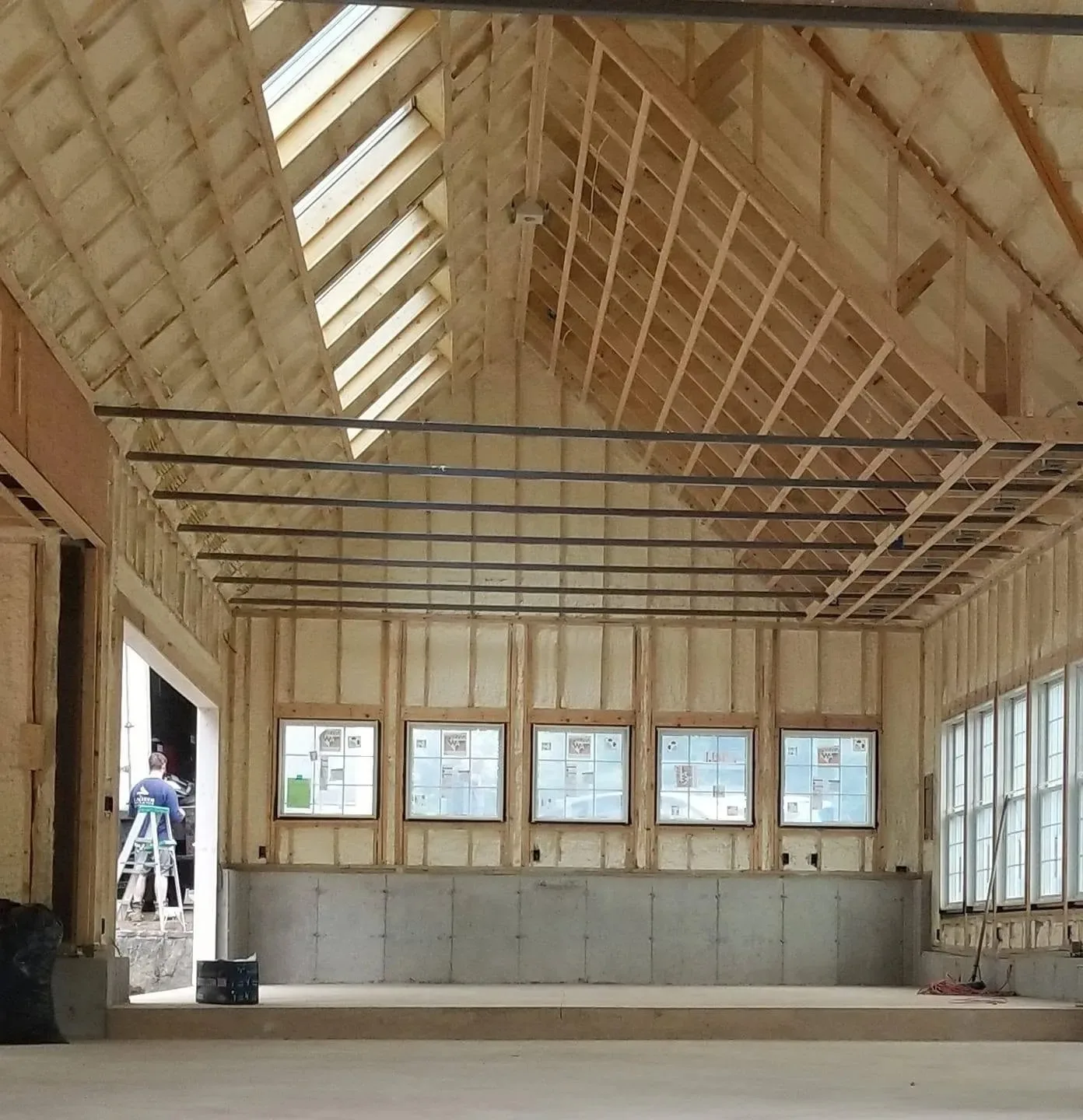
Spray foam insulation is a practical option for many agricultural pole barns because it slows heat transfer and helps reduce air leakage. However, the results depend on the building’s condition, the type of foam selected, and the quality of installation.
Pros of Spray Foam Insulation
- Reduces Air Leakage: Spray foam expands into suitable gaps around framing and joints, helping limit drafts and unwanted airflow.
- High R-Value: Closed-cell spray foam provides strong thermal resistance per inch, making it useful where wall or roof cavity space is limited.
- Suitable for New and Existing Barns: It can be installed in new construction or added to suitable existing structures during an insulation upgrade.
- Improves Indoor Comfort: When properly installed with suitable moisture control, spray foam can help maintain more stable temperatures in workshops and agricultural storage buildings.
Cons of Spray Foam Insulation
- Higher Initial Cost: Spray foam often costs more upfront than fiberglass or some blown-in insulation options, depending on the project size and installation requirements.
- Moisture Concerns: Poorly designed insulation systems can trap moisture and contribute to damage. Roof leaks and damp surfaces should be addressed before installation.
- Professional Installation Required: The foam must be applied at the correct thickness and under suitable conditions to achieve the intended performance.
- Additional Safety Requirements: Some applications require protective coverings, fire-safety measures, or ventilation planning based on the building’s use and local code requirements.
Common Insulation Problems on Agricultural Properties
Pole barns can develop condensation on metal roofs, drafts around doors, and uneven temperatures in work areas. These issues often occur when insulation, air sealing, and moisture control are not planned together.
For example, a barn used to repair farm equipment may feel cold despite having insulation if gaps around the roof and wall framing remain open. A professional assessment can identify these gaps and determine whether additional air sealing or insulation is needed.
The U.S. Department of Energy's guidance on cold-weather condensation explains why controlling air leakage and moisture is important for protecting building materials.
How Walpole Weather Affects Insulation Choices
Walpole experiences cold winters, warm summers, and seasonal rain. These conditions make moisture control an important part of agricultural pole barn insulation.
- Winter: Insulation should help limit heat loss, while the building assembly must manage condensation.
- Spring and Fall: Roof leaks and damp framing should be addressed before insulation is installed.
- Summer: High temperatures inside metal barns can affect comfort and installation working conditions.
Installation timing depends on the building's condition and the chosen product's temperature and moisture requirements.
Understanding R-Value
R-value measures how well insulation resists heat flow. A higher R-value generally means greater resistance to heat transfer.
The appropriate R-value depends on the barn's use, construction, and applicable code requirements. A contractor should explain the planned insulation type, thickness, and expected thermal performance rather than recommending a material based on R-value alone.
Why Consider Coleman Spray Foam?
Coleman Spray Foam offers residential and commercial insulation services, including spray foam, blown-in insulation, retrofit insulation, and air sealing. These services can help property owners evaluate suitable options for agricultural buildings based on their construction and intended use.

Conclusion
Choosing the right pole barn insulation requires careful consideration of the building’s structure, intended use, moisture conditions, and insulation needs. Professional insulation services in Walpole, MA can help determine the right combination of insulation and air sealing to reduce drafts, manage temperature changes, and make agricultural buildings more practical throughout the year.
Request Pole Barn Insulation Services in Walpole, MA
Coleman Spray Foam helps property owners explore suitable insulation options for agricultural pole barns, workshops, and storage buildings. Their services include spray foam insulation, blown-in insulation, retrofit insulation, and air sealing. Contact the team to discuss the building’s needs and request a project estimate.
- Phone: (781) 730-6537
- Email: [email protected]
Frequently Asked Questions
1. Can Pole Barn Insulation Help Protect Farm Equipment From Temperature Changes?
Yes. Proper insulation can moderate indoor temperature swings, but sensitive equipment may also require humidity control or dedicated climate control.
2. Is Spray Foam Suitable for Metal Pole Barns?
Yes, spray foam can be suitable for certain metal buildings. The installer must assess condensation risks, surface conditions, and the complete wall or roof assembly first.
3. Can Insulation Be Added to an Older Agricultural Barn?
Yes. Existing barns can often be retrofitted, depending on the framing, roof condition, existing materials, and access to the areas requiring insulation.
4. Should a Pole Barn Be Insulated if It Is Used Only for Storage?
It depends on what is stored inside. Insulation may help moderate temperature changes, but the need for humidity control and ventilation depends on the stored items and building conditions.
Author & Reviewer
Author: I’m John Coleman. I moved here from Ireland in 2016 to work for an insulation company. In 2019, I purchased my own spray foam trailer and began building my career in the industry. I trained under a PCP-certified Project Manager and Installer, who taught me the chemical process, building science, equipment operation, and repair. His guidance encouraged me to pursue a career in insulation while maintaining the highest standards possible. I established my company on April 19, 2019, reflecting my continued commitment to quality work.
Reviewer: With 6+ years in real estate, Fenwick Thorne builds trust through clear communication and expert guidance, helping clients make confident home-buying and selling decisions.