Upgrading an existing warehouse to LED lighting is very different from designing lighting for a new building. The structure, racking, electrical system, and daily operations are already in place, and the work must often be completed without stopping the business. A well-planned retrofit delivers immediate savings and better visibility, while a rushed one can lead to disruption, dark areas, and disappointing results.
Planning a Warehouse LED Retrofit: A Step-by-Step Guide from KML, a Reliable LED Highbay Light Supplier
Retrofits succeed when they follow a clear process, from assessing the current situation to verifying the final results. Working with a reliable led highbay light supplier such as KML helps warehouse managers move through each stage with confidence, supported by lighting simulations, quality products, and technical advice. This guide sets out the key steps involved in planning and carrying out a successful warehouse LED retrofit.
Step One: Audit the Existing Lighting
The first step is understanding what is already installed. This includes the number and type of fixtures, their wattage, mounting heights, operating hours, and current light levels. Measuring existing illumination with a light meter highlights dark areas and over-lit zones. This audit provides a baseline for calculating savings and helps identify where improvements are most needed.
Step Two: Define Goals for the Upgrade
Every retrofit should have clear objectives. Some businesses focus mainly on cutting energy costs, while others want better visibility for picking accuracy, improved safety, or support for sustainability targets. Defining these goals early guides fixture selection and design decisions. Clear goals also make it easier to measure success once the project is complete.
Step Three: Assess the Space and Layout
Racking height, aisle width, ceiling structure, skylights, and work zones all influence the lighting design. Changes made since the original lighting was installed, such as new racking or reorganized storage, may mean the old layout no longer fits. Mapping the current layout ensures the new lighting suits how the warehouse actually operates today rather than how it was originally designed.
Step Four: Choose the Right Fixtures
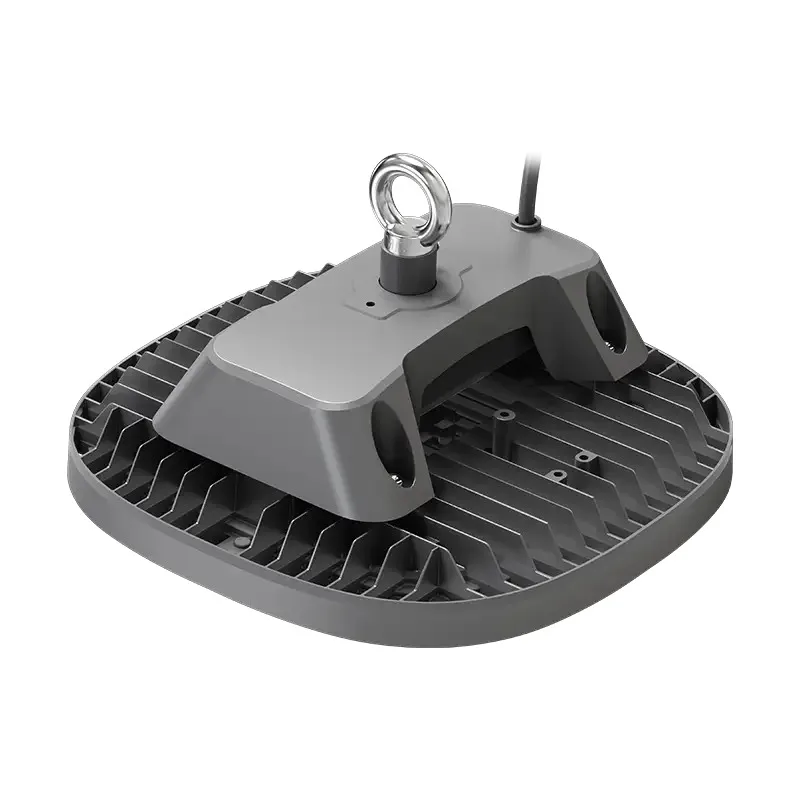
With goals and layout defined, suitable fixtures can be selected. Factors include lumen output, efficiency, beam angle, glare control, color temperature, and protection rating. KML’s HB30, with efficacy up to 210 lumens per watt, a Unified Glare Rating below 19, and beam options of 30° × 70°, 60°, and 120°, illustrates the kind of flexibility modern high bays offer for different warehouse zones.
Step Five: Run a Lighting Simulation
Before ordering, a lighting simulation confirms that the chosen fixtures and layout will achieve the desired results. Simulations show light levels and uniformity across aisles, racks, and open areas, revealing potential issues before installation. KML provides DIALux simulations, often within a couple of hours, allowing managers to compare options and finalize the design with confidence.
Step Six: Plan Smart Controls
A retrofit is an ideal opportunity to add smart controls. Motion sensors in aisles, daylight sensors near skylights, and scheduling systems can significantly increase savings. KML’s UFO high bay series supports motion sensing, 0-10V dimming, and centralized management with energy monitoring and fault alerts. Planning controls at this stage avoids costly changes later.
Step Seven: Check Electrical Compatibility
Existing wiring and circuits must be compatible with the new fixtures. Voltage, circuit capacity, and any existing control systems should be reviewed. In many cases, LED retrofits reduce the load on circuits, but surge protection may still be needed, especially in facilities with heavy equipment. Sharing electrical details with the supplier helps ensure the right driver configuration.
Step Eight: Schedule Installation to Minimize Disruption
Installation should be planned around warehouse operations. Working zone by zone, during quieter shifts, or over weekends helps keep the business running. Coordinating with operations teams ensures access equipment does not block busy aisles. Fast delivery also helps keep projects on schedule, and KML typically completes bulk orders within about thirty days.
Step Nine: Verify Results and Plan Ongoing Care
After installation, measuring light levels confirms the design targets have been met and highlights any adjustments needed. Energy monitoring shows actual savings against the original baseline. A simple maintenance plan keeps the system performing well. With ISO9001-controlled products and 24-hour after-sales support, KML helps warehouse managers enjoy the full benefits of their LED retrofit for years to come.