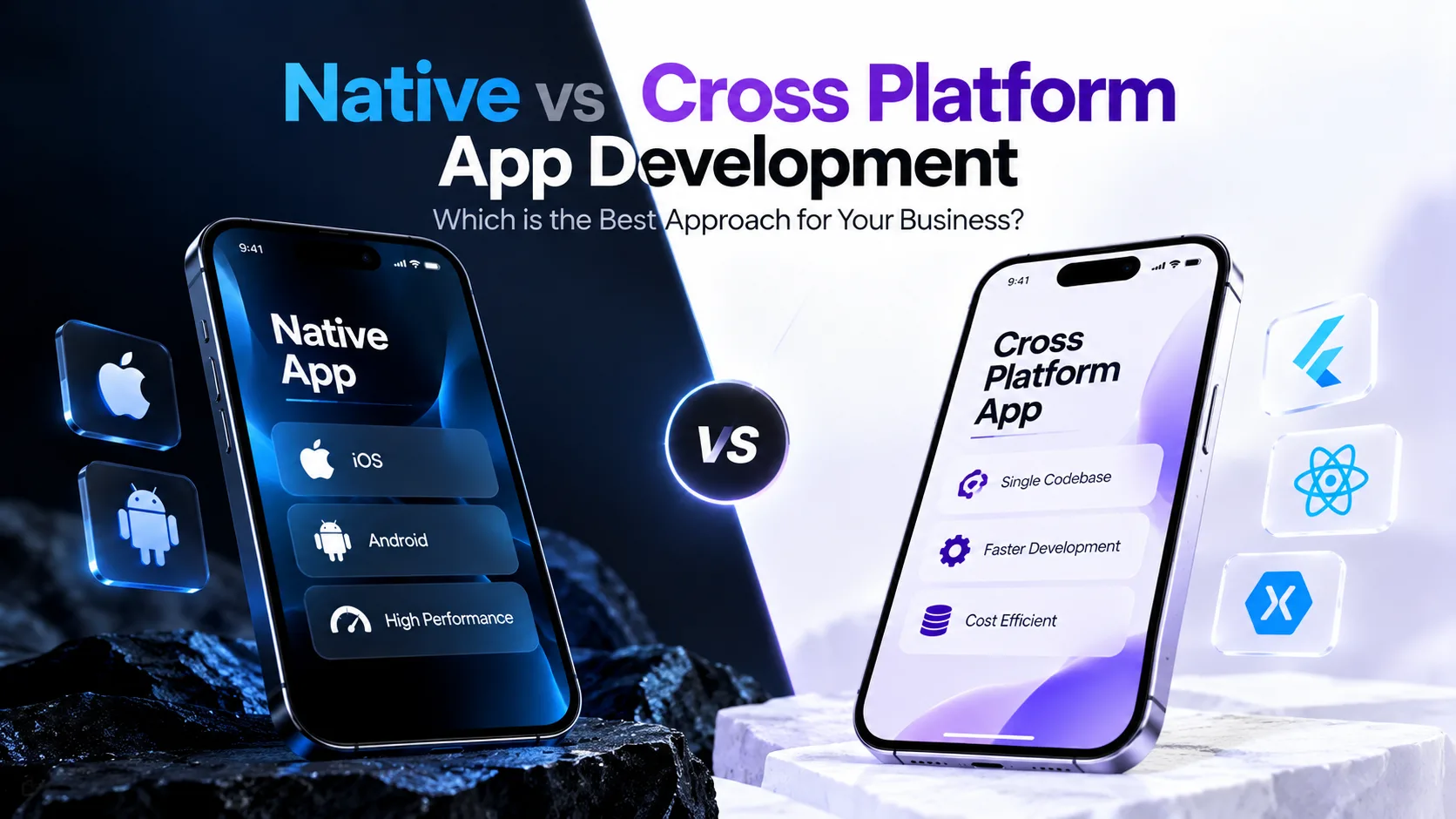
Building a mobile app is more than just deciding what features to add or how the interface should look. One of the first decisions to make is how you will develop the app. Do you create separate applications for iOS and Android, or do you use a common codebase that runs on both?
The answer depends on your business goals, budget, technical requirements, and user experience expectations. Native and cross-platform development can both be used to build successful mobile applications, but their development processes are different.
Understanding these differences before beginning a project helps businesses avoid unnecessary expenses, select appropriate technologies, and plan for future upgrades.
What is Native Application Development?
Native app development is the process of developing an app for a specific operating system. For example, iOS applications are generally developed using Swift and Apple's development tools, while Android applications commonly use Kotlin and Android development tools.
Native apps are developed specifically for a particular platform, providing developers with direct access to the platform's APIs, interface components, and device capabilities. This can be useful when an application needs advanced animations, complex processing, or close integration with device hardware.
Imagine a fitness app that continuously tracks movement, uses location services, and processes sensor data. Native development could provide the control needed to optimize these features for each operating system.
However, supporting both iOS and Android usually involves extra work for each platform. Features, testing, bug fixes, and updates may require separate implementations, which can add to the effort throughout the app's lifecycle.
What is Cross-Platform App Development?
Cross-platform app development is the practice of developing applications for more than one operating system using a common codebase. Frameworks such as Flutter and React Native allow teams to reuse application logic and, depending on the framework and architecture, user interface components.
Teams can share much of the implementation rather than building each feature twice for iOS and Android. This can help reduce duplicate work and make it easier to introduce updates across platforms.
For instance, a business introducing a customer booking application might need account registration, appointment scheduling, payment integration, notifications, and profile management for both operating systems. Much of this functionality may be developed once and reused in a cross-platform approach.
However, shared code does not eliminate all platform-specific requirements. Some device features, integrations, interface details, and performance optimizations may still require separate implementation or additional testing.
Native vs. Cross-Platform App Development: Key Differences
Both approaches can produce reliable mobile applications. The main differences come down to development effort, platform control, performance requirements, and long-term maintenance.
1. Development Cost and Time
Native development usually means developing and testing separately for iOS and Android. If a business needs both platforms from the start, this can be more resource-intensive.
Cross-platform development can reduce duplicate work by allowing teams to reuse code. For startups and businesses operating with limited resources, this can make it easier to launch on multiple platforms within a planned budget.
The final cost, however, depends on the app's complexity, integrations, design requirements, team experience, and testing needs. A complex cross-platform application may require substantial platform-specific work, whereas a native application targeting just one operating system may be relatively straightforward.
2. Performance and User Experience
Native apps have direct access to platform-specific tools and APIs. They are well suited for applications requiring intensive graphics, processing, advanced animations, or specialized hardware capabilities.
Cross-platform frameworks have also become capable of providing responsive interfaces and good performance for many typical business applications. The actual experience depends on the framework, application architecture, code quality, and optimization.
For a typical shopping, booking, or service app, cross-platform development may comfortably meet performance expectations. If you're building a graphics-intensive game or an app with complex real-time processing, native development might give you more control.
3. Maintenance and Future Upgrades
Once you launch a mobile app, it requires continuous maintenance. Operating systems evolve, security issues arise, third-party services are updated, and users expect new features.
Developing natively means teams generally have to implement changes separately for each platform. This provides flexibility, but it also means more work to keep the two versions in sync.
Cross-platform development can simplify updates for features that rely on shared code. Changing common business logic could benefit both platforms without requiring two separate implementations.
However, developers still need to test each platform separately and handle differences in operating system behavior, device compatibility, and third-party integrations.
4. Access to Device Features
Mobile apps commonly use the camera, GPS, biometrics, Bluetooth, push notifications, and local storage.
Native development provides direct access to the platform APIs required for these features. Cross-platform frameworks also offer many of these capabilities through plugins, libraries, and integration mechanisms, although some requirements may need custom native code.
Companies should identify their essential device integrations before choosing a development approach. This helps them identify potential technical limitations early instead of discovering them after development has begun.
When to Go Native
Native development may be the better option when:
- Your application requires advanced graphics, intensive processing, or real-time interactions.
- The user experience needs to closely follow the design conventions of each operating system.
- You want deep integration with specialized hardware or platform-specific features.
- You are starting with just iOS or Android.
- Your team needs immediate access to new operating system capabilities.
Native development is not necessarily the right choice for every complex app, but it can provide more control when platform-specific performance and behavior are central to the product.
When is Cross-Platform Development More Sensible?
Cross-platform development may be suitable for you if:
- You want to launch on iOS and Android without maintaining two entirely separate implementations.
- Your application mainly supports standard business processes.
- Speed of delivery and efficient use of development resources are important.
- You plan to update shared features frequently.
- You want to test a product idea across multiple platforms before making a larger investment.
For example, a startup creating an appointment management app can take a cross-platform approach to release a basic version, gather user feedback, and improve features based on actual usage.
The key point is to analyze the app's needs rather than pick a framework simply because it is popular.
Deciding on the Right Option
Before choosing between native and cross-platform development, answer a few practical questions.
First, understand your audience and the platforms they use. If your customers predominantly use one operating system, a native app could be a good place to start. If you need to support both iOS and Android, code reuse can be a significant benefit.
Next, list the features your application should support. Think about integrations, offline usage, security needs, performance expectations, and any specific hardware dependencies.
Then consider your budget and ongoing maintenance plans. Upfront development costs are just one part of the investment. Testing, updates, infrastructure, support, and future feature development also contribute to the total cost of ownership.
Lastly, review the technical approach with an experienced development team. A good assessment will explain why a particular framework suits the requirements, where platform-specific work may be needed, and how the application can evolve over time.
For businesses that want to explore the technical differences in more detail, this guide to native vs cross-platform app development is also available.
Conclusion
Both native and cross-platform app development offer practical benefits. Native development provides more control over platform-specific features and can be particularly useful for applications with high performance or hardware demands. Cross-platform development can reduce duplicated effort, simplify shared functionality, and help businesses reach iOS and Android users efficiently.
There is no universal winner. The right choice depends on your application's features, target audience, available resources, and long-term plans.
For businesses planning to launch or scale a mobile product in the United States, choosing the right technical approach is an important first step. An experienced app development company in USA can help turn business requirements into a practical development roadmap with appropriate technology choices, realistic priorities, and a clear plan for future growth.