Liposuction is often reduced to a simple idea: unwanted fat is removed and the body looks slimmer afterwards.
The reality is a little more nuanced.
Liposuction is primarily a body-contouring procedure. It is used to reshape selected areas where fat tends to remain despite otherwise stable weight and lifestyle efforts. The procedure itself is only one part of the experience. Choosing the right areas to treat, understanding what your skin can realistically do, planning for recovery and knowing when to expect the final result all matter just as much.
If you are considering liposuction, here is what is worth knowing before you focus on the before-and-after photographs.
First, Liposuction Is Not Weight-Loss Surgery
This is probably the most important distinction.
Liposuction is not designed as a treatment for general weight loss. Its role is much more specific: reducing localised fat deposits and improving the contour of selected areas.
Someone may, for example, maintain a fairly stable weight but still notice disproportionate fullness around the abdomen, waist, thighs or another area.
That is a very different situation from wanting to lose a significant amount of body weight.
During a consultation, the conversation should therefore be less about “How many kilos can I lose?” and more about:
Which area is bothering me, and what change would actually improve the proportion of my body?
Which Areas Can Be Treated?
Liposuction can be considered for several parts of the body.
Common areas include:
- Abdomen
- Waist and flanks
- Hips
- Thighs
- Upper arms
- Back
- Chin and neck
- Selected areas of the chest in men
Not every area needs to be treated simply because fat is present.
Sometimes improving one or two areas is enough to create better overall proportion. Treating too many areas without a clear objective does not automatically lead to a better result.
Good planning starts with identifying what actually looks or feels out of proportion.
What Happens During Liposuction?
The exact surgical plan varies according to the areas being treated and the technique being used, but the process generally begins well before the operation.
Consultation and Planning
Your surgeon first needs to understand what concerns you.
The areas being considered are examined, along with factors such as skin quality, body proportions, medical history and the amount and distribution of fat.
This is also the stage to discuss expectations.
Sometimes the area a patient initially wants treated is appropriate for liposuction. In other situations, skin laxity or another concern may mean that liposuction alone will not produce the change they are hoping for.
Before the Procedure
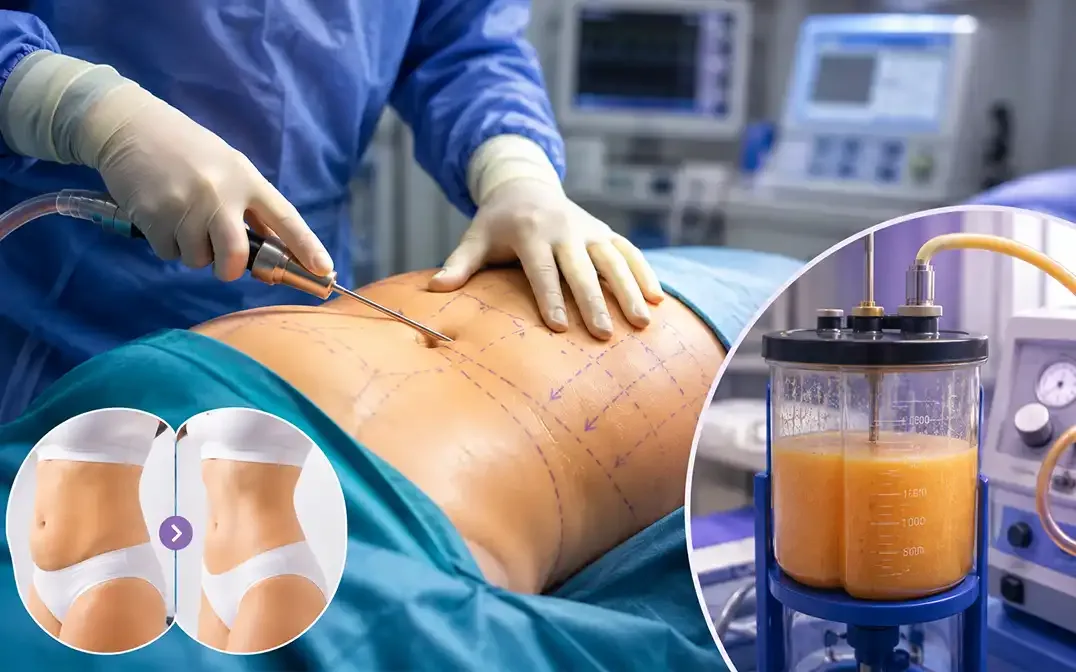
The treatment areas are typically planned and marked. Depending on the extent of surgery, the surgeon will also discuss the type of anaesthesia and preparation required beforehand.
Your medical history, current medicines and other health considerations need to be reviewed before surgery.
During the Procedure
Liposuction removes fat through small access points using specialised instruments.
Different techniques may be used depending on the individual case. These can include traditional or tumescent liposuction as well as power-assisted, ultrasound-assisted, VASER or laser-assisted approaches.
The fact that several techniques exist does not mean one is automatically “best” for everybody.
The appropriate method depends on what is being treated, the surgeon's assessment and the outcome being planned.
Who Usually Makes a Suitable Candidate?
There isn't one perfect body type for liposuction.
However, it is generally considered in people who have specific areas of unwanted fat rather than those looking for major weight reduction.
Overall health matters too.
Skin quality is another part of the conversation. Once fat volume is reduced, the skin needs to adapt to the new contour. If there is significant loose skin, removing fat alone may not solve the entire problem.
That is why suitability cannot really be decided from photographs or an online checklist.
An in-person assessment is important.
What About Skin Tightening?
This is an area where expectations can easily get mixed up.
Removing fat and tightening loose skin are not the same thing.
Liposuction can reduce the volume beneath the skin, but the degree to which the skin contracts afterwards depends partly on its existing elasticity and the individual treatment area.
If loose skin is the main concern, another procedure—or a combination of procedures—may need to be discussed.
This is especially relevant after major weight changes or pregnancy, where both excess fat and skin laxity may be present.
Recovery Is Part of the Procedure
Most people understandably focus on surgery day.
But from a patient's perspective, recovery is where much of the experience actually happens.
Swelling, bruising and temporary discomfort can occur after liposuction. A compression garment may also be recommended as part of post-operative care.
The first few days are usually about allowing the body to recover rather than judging the result.
It is worth planning the practical side before surgery:
How much time will you need away from work?
Will you need help at home?
When can you drive again?
When can exercise restart?
How long will you need to wear compression garments?
The answers depend on the extent of surgery and your individual recovery.
When Can You See the Result?
Not immediately.
Although some change may be visible early, swelling can temporarily hide the eventual contour.
Over the following weeks, the treated area generally begins to look more settled. Further changes may continue over the next few months as swelling reduces and tissues adapt.
That makes patience important.
Looking at the treated area a few days after surgery and trying to judge the final outcome can be misleading.
Before surgery, ask your surgeon what kind of timeline is realistic for the areas you are having treated.
Can the Fat Come Back?
Liposuction removes fat cells from the treated area, but it does not make the body immune to future weight changes.
A person's body can still change with weight gain, ageing, pregnancy and lifestyle factors.
This is why maintaining a reasonably stable weight after recovery matters.
Liposuction is best thought of as contouring—not as permission to stop paying attention to long-term health and weight stability.
What Are the Possible Risks?
Like every surgical procedure, liposuction comes with possible side effects and complications.
Temporary swelling and bruising are commonly discussed during recovery planning. Other potential concerns can include infection, contour irregularities, changes in sensation, fluid-related issues, scarring at access points or complications associated with surgery and anaesthesia.
The specific risk profile depends on the person, the amount and areas being treated and the surgical plan.
This is one reason choosing an Expert plastic surgeon in Bangalore should involve looking beyond price or social-media photographs.
A useful consultation should include a discussion about both what the procedure may achieve and what can potentially go wrong.
Liposuction or Tummy Tuck?
These procedures are sometimes confused, but they address different problems.
Liposuction primarily targets excess fat.
A tummy tuck is generally considered when excess abdominal skin—and sometimes concerns involving the abdominal wall—also need to be addressed.
Some patients may require one procedure. Others may be assessed for a combination.
The right choice depends on what is actually creating the concern.
If the problem is mainly a localised fat deposit and the skin has reasonable elasticity, liposuction may be considered.
If significant loose skin is present, removing fat alone may not provide the expected contour.
What About Non-Surgical Fat Reduction?
Non-surgical body-contouring treatments and liposuction should not automatically be viewed as interchangeable.
They differ in how they work, what degree of change they are intended to produce, downtime and suitability.
Someone who wants a modest change in a small area may have different options from someone looking for more significant contouring.
The useful question isn't simply, “Which treatment has less downtime?”
It is:
Which approach is actually suitable for the change I want?
Can Liposuction Be Combined With Other Procedures?
Sometimes body concerns involve more than one issue.
For example, a person may be thinking about abdominal contouring along with breast changes after pregnancy or weight fluctuations.
People researching Breast reduction & Liposuction should understand that these are separate procedures with different purposes. Whether procedures should be combined, or performed at all, depends on individual health, anatomy, surgical planning and recovery considerations.
More surgery is not automatically better.
The plan should be based on what genuinely needs to be addressed.
How Should You Choose a Surgeon?
Liposuction is commonly performed, but that does not make surgeon selection unimportant.
During your research, look at:
- Qualifications and formal plastic-surgery training
- Experience with body-contouring procedures
- Where the surgery will be performed
- How candidacy is assessed
- How risks are explained
- What follow-up care is available
- Whether the surgeon discusses limitations as openly as benefits
The consultation itself can tell you a lot.
If the conversation focuses only on how much fat can be removed or how quickly you can book the operation, important parts of the decision may be getting missed.
You should understand why the proposed treatment makes sense for your body.
Questions Worth Asking Before You Decide
You do not need dozens of questions, but a few good ones can make the consultation much more useful:
- Is liposuction actually the right procedure for my concern?
- What areas would you recommend treating, and why?
- How will my skin quality affect the result?
- Which liposuction technique would you use in my case?
- What scars should I expect?
- What is a realistic recovery timeline?
- When can I return to work and exercise?
- When should I expect to see the final result?
- What are the main risks in my individual case?
- Would another procedure address my concern better?
The answers should help you understand the treatment—not simply persuade you to have it.
The Bottom Line
Liposuction can be useful for improving selected areas of body contour, but the best results begin with realistic expectations.
It is not a replacement for weight loss. It cannot automatically correct significant loose skin. And the result does not appear the moment surgery is finished.
Think about the area you genuinely want to address. Understand what recovery will involve. Ask about limitations and risks just as openly as you ask about results.
The goal isn't to remove as much fat as possible.
It is to create a considered change that makes sense for your body, your health and your expectations.