Dental implants are a long-term tooth replacement option that can restore chewing function, appearance, and oral stability. Dental Implants Montebello are designed to replace missing teeth by using a dental implant post, an abutment, and a dental crown or other restoration. While implants have a high success rate when properly planned and cared for, patients should understand possible problems, risks, healing requirements, and daily care tips before treatment.
What Are Dental Implants?
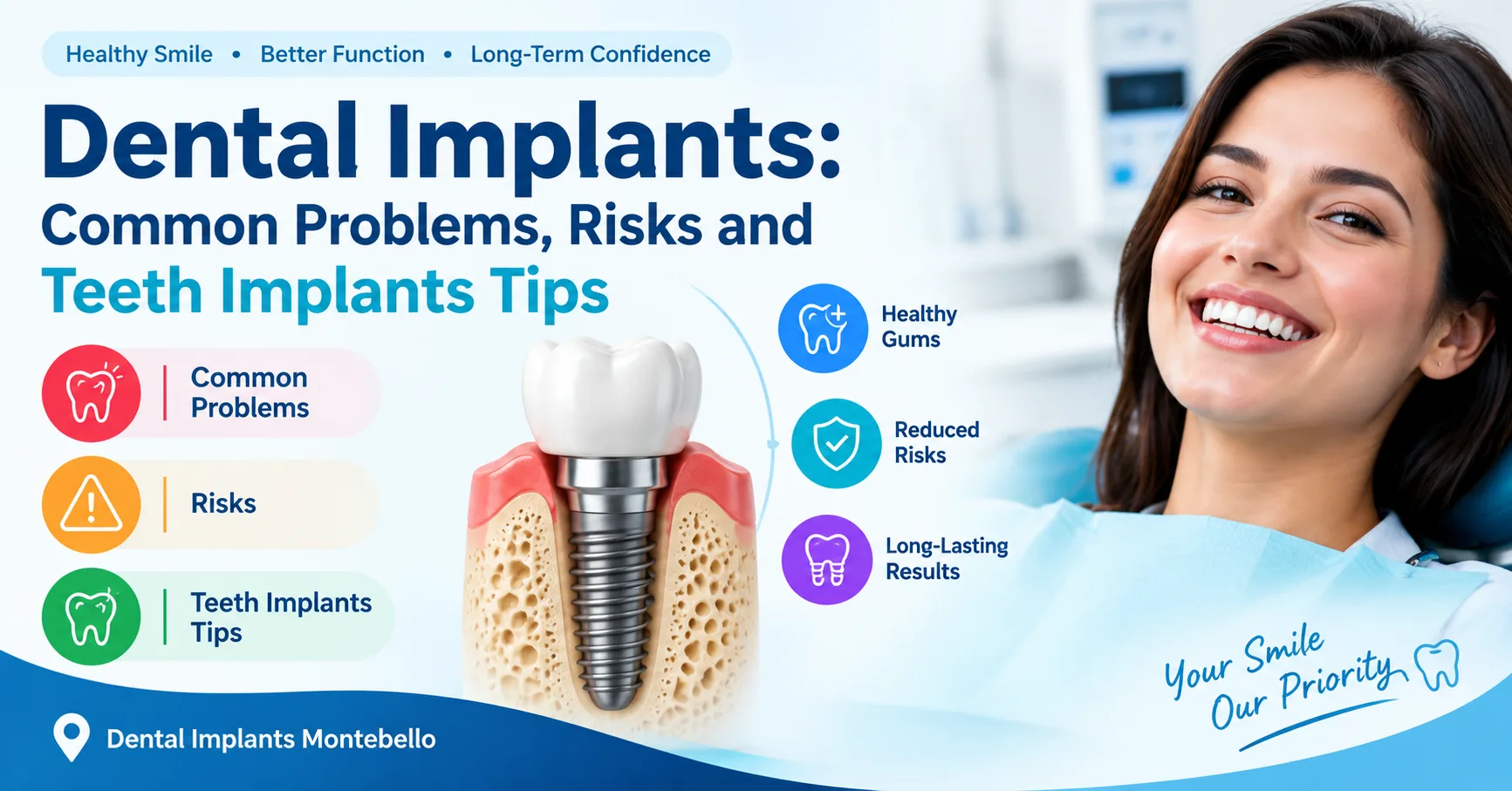
A dental implant is a small post, commonly made from titanium or another biocompatible material, that is placed into the jawbone to support a replacement tooth. After the implant heals and integrates with the surrounding bone, an abutment and dental restoration can be attached.
Dental implants may be used to replace:
- A single missing tooth
- Several missing teeth
- Multiple teeth with an implant-supported bridge
- A complete arch with an implant-supported restoration
For patients considering Dental Implants Montebello, a dental examination is important because implant treatment depends on factors such as bone health, gum condition, overall oral health, and the location of the missing tooth.
Common Dental Implant Problems
Although dental implants are designed to provide durable tooth replacement, problems can sometimes develop during healing or after the restoration is placed.
1. Discomfort and Swelling
Mild discomfort, swelling, or tenderness can occur after implant placement. These symptoms are generally part of the normal healing process. Your dental professional can provide specific aftercare instructions based on your procedure.
2. Gum Inflammation
Poor oral hygiene can allow bacteria and plaque to accumulate around an implant. Inflammation around an implant should not be ignored because untreated gum problems can affect the tissues supporting the implant.
Regular brushing, flossing, and professional dental cleanings can help maintain healthy gums.
3. Infection
An infection around the implant site can interfere with healing. Warning signs may include persistent swelling, increasing pain, unusual discharge, or continuing tenderness. Patients experiencing concerning symptoms should contact their dental provider rather than waiting for the problem to resolve on its own.
4. Implant Mobility
A properly integrated dental implant should remain stable. If an implant feels loose, it requires professional evaluation. Implant mobility can be associated with problems involving healing, bone support, or the restoration itself.
5. Restoration Problems
Sometimes the implant itself is healthy while the crown, bridge, or other restoration develops an issue. A damaged, worn, or loose restoration should be examined so the underlying implant can continue to be protected.
Dental Implant Risks Patients Should Know
Dental implant treatment involves a surgical procedure, so potential risks should be discussed with a qualified dental professional before treatment.
Possible complications can include infection, delayed healing, damage to nearby structures, inadequate bone support, gum problems, or failure of the implant to properly integrate with the jawbone.
The risk level differs from patient to patient. A detailed examination and appropriate treatment planning can help identify factors that may affect the outcome.
Patients with gum disease, insufficient bone volume, certain medical conditions, or particular lifestyle factors may require additional evaluation or treatment before receiving an implant.
Teeth Implant Tips for Better Oral Care
Good home care is an important part of maintaining dental implants.
Brush Twice a Day
Use a soft-bristled toothbrush and clean all surfaces of your teeth and around the implant restoration. Follow any special brushing instructions provided by your dentist.
Clean Between Your Teeth
Food and plaque can collect around implant-supported restorations. Depending on your restoration, your dental professional may recommend floss, interdental brushes, or another cleaning method.
Attend Regular Dental Visits
Professional examinations allow your dental team to monitor the implant, gums, surrounding teeth, and restoration. Regular dental care is particularly important if you have previously experienced gum disease.
Avoid Using Teeth as Tools
Do not use an implant-supported tooth or natural tooth to open packages, bite hard objects, or perform tasks unrelated to eating. Excessive force can damage dental restorations.
Follow Post-Treatment Instructions
After implant surgery, follow your dental professional's instructions regarding eating, cleaning, activity, medications, and follow-up appointments. Individual recovery recommendations can vary.
How Can You Reduce Dental Implant Problems?
The best approach is to combine proper treatment planning with consistent oral hygiene and professional maintenance. Before receiving an implant, discuss your dental and medical history, existing gum problems, bone condition, and expectations with your dentist.
Choosing appropriate Dentistry in montebello can also make ongoing dental examinations and maintenance more convenient for patients living in the Montebello area.
When Should You Contact a Dentist?
Contact your dental provider if you experience persistent or worsening pain, significant swelling, bleeding that does not improve, unusual discharge, fever, or a loose implant or restoration.
Do not attempt to tighten, repair, or adjust an implant or dental crown yourself. A professional examination can determine whether the issue involves the implant, surrounding tissue, or restoration.
Frequently Asked Questions About Dental Implants
Are dental implants safe?
Dental implants are widely used for replacing missing teeth, but they involve surgery and are not completely risk-free. Your dentist can evaluate your oral health and discuss potential complications before treatment.
How long do dental implants last?
Dental implants can provide long-term tooth replacement when properly placed and maintained. Their longevity depends on factors such as oral hygiene, gum health, bone support, lifestyle habits, and regular professional care.
Can dental implants get infected?
Yes. Tissues around an implant can become inflamed or infected, particularly when plaque and bacteria are not adequately controlled. Professional evaluation is important when symptoms develop.
How should I clean dental implants?
Brush twice daily and clean between teeth and around the implant restoration using the method recommended by your dental professional. Regular professional cleanings can also help maintain healthy implant-supporting tissues.
Are dental implants better than dentures?
Dental implants and dentures serve different needs. Implants are fixed into the jawbone and can provide stable tooth replacement, while conventional dentures are removable. The appropriate option depends on the patient's oral health, bone condition, treatment goals, and individual circumstances.
What should I avoid after getting a dental implant?
Immediately after implant surgery, follow your dentist's specific instructions. Avoid activities, foods, or habits that your dental professional advises against during healing. Long term, avoid biting extremely hard objects or using teeth as tools.
Final Thoughts
Dental Implants Montebello can be an effective option for replacing missing teeth, but successful treatment involves more than implant placement. Proper planning, healthy gums, good oral hygiene, regular dental examinations, and appropriate care of the restoration all contribute to long-term oral health. If you are considering an implant, a dental evaluation can help determine whether the treatment is appropriate for your individual needs and what steps may be required before treatment.