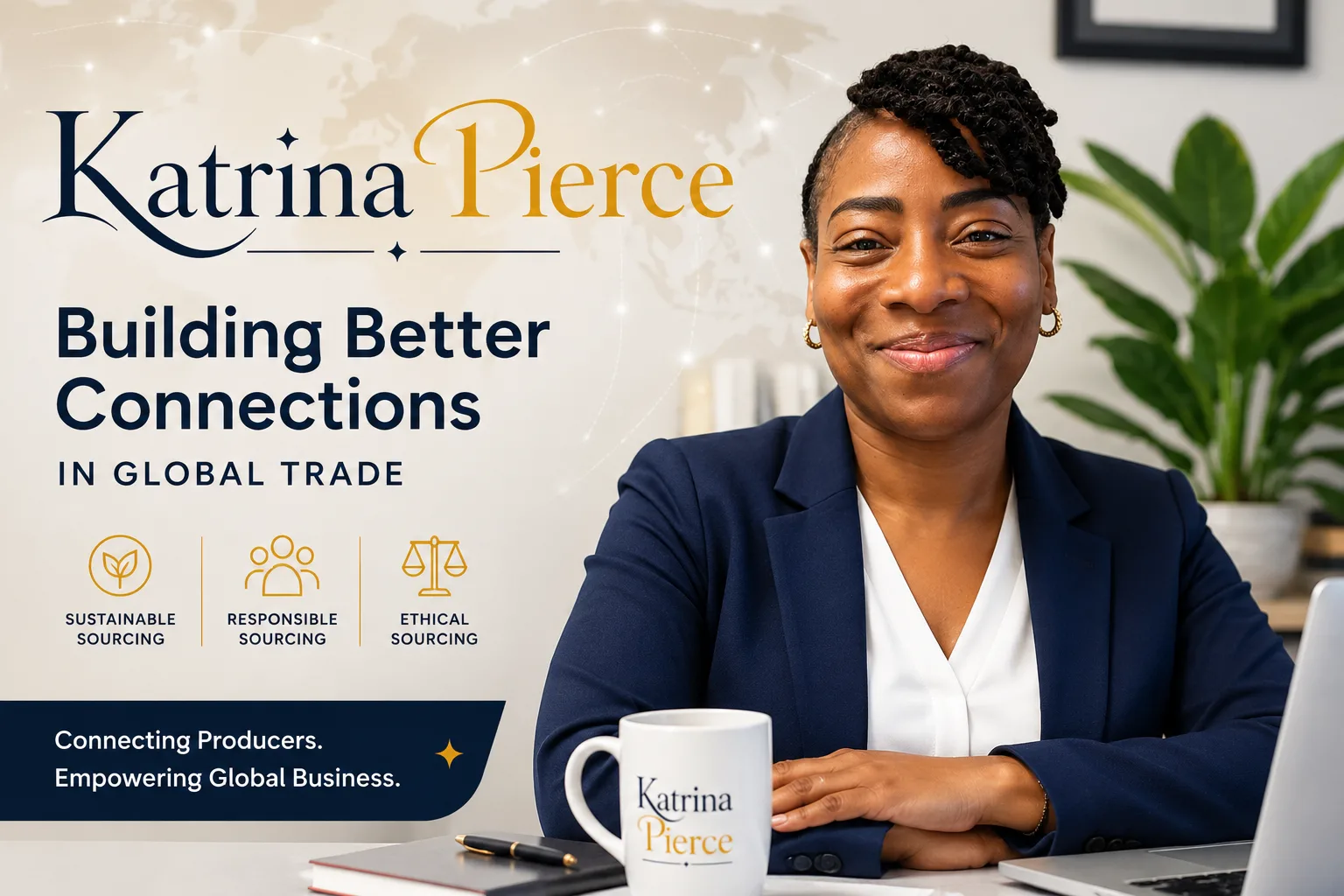
Here's something most people never think about: every product on a shelf has a story before it gets there. Someone found the raw material, someone negotiated with a supplier, someone made sure it crossed a border without getting stuck at customs. Katrina Pierce spends her time in that part of the story — the part nobody sees.
She runs Avenue 27, also known as Shea Nexus. The short version of what she does: connects producers, mostly in natural ingredients, with buyers overseas. But the way she does it is what makes her work worth talking about, especially when it comes to sustainable sourcing.
So who is she, really?
Katrina Pierce works in international trade and sourcing. Not the flashy side of it — the unglamorous side. Supplier coordination, export documentation, logistics, keeping communication open between two sides of a deal that are often thousands of miles apart.
What separates her from a lot of people in this space is that she doesn't treat sustainability like a marketing checkbox. It's baked into how she picks suppliers in the first place, not something added on after the fact.
Why sustainable sourcing isn't just a buzzword anymore
A few years ago, "sustainable sourcing" was one of those phrases companies threw on a website and moved on from. That's changing. Consumers ask more questions now. Regulators are paying closer attention. And honestly, businesses are starting to figure out that a supplier who cuts corners on ethics is usually the same one who'll cut corners on quality eventually.
Katrina Pierce sustainable sourcing work leans into this shift instead of resisting it. Fair pay for producers, attention to environmental impact, real transparency, not just words about it. That's the difference between doing sustainability and saying you do it.
Responsible sourcing as a smart move, not just a nice one
Most people treat responsible sourcing like it's purely an ethical decision, something you do because it feels right. Katrina Pierce treats it more like a business decision. And honestly, that framing makes more sense.
Think about it this way: a supplier who's paid fairly and treated like an actual partner is going to be more reliable when things go sideways. A shortage hits, a shipment gets delayed, demand spikes suddenly — that supplier is more likely to prioritize you if the relationship was built on something more than just price. Responsible sourcing isn't charity. It's insurance.
Ethical sourcing and the whole producer-buyer thing
A big chunk of what Katrina Pierce does is sit in the middle of two groups that rarely talk to each other directly: producers who need market access and fair terms, and buyers who need verified suppliers and consistent quality.
Ethical sourcing is basically what holds that middle ground together. It's not just about avoiding bad practices, it's about actively building enough trust that both sides feel like the relationship is worth protecting. That's harder than it sounds when you're dealing with people on opposite sides of the planet who've never met in person.
The shea butter piece of it
One place this shows up clearly is shea butter. It's everywhere in skincare, cosmetics, personal care products. The supply chain runs from producers in West Africa all the way to international markets, passing through processors, exporters, and logistics providers along the way.
That's a lot of hands touching one product before it reaches a shelf. Katrina Pierce's sustainable sourcing approach pays attention to the people at the very start of that chain, the ones who usually get left out when big companies only care about the final price tag.
What businesses actually get out of working with her
Ask her clients and you'll hear some version of the same thing repeatedly. Clarity, for one. International sourcing feels overwhelming if you don't have a whole compliance team backing you up, and her advice tends to be usable right away instead of sitting in some report nobody reads.
Trust, too. She doesn't treat suppliers like interchangeable names on a spreadsheet. That supplier relationship management approach tends to hold up better when something unexpected happens, because there's already a real relationship there to lean on.
And better decisions overall. Markets shift constantly. Having someone who actually understands both the ethical side and the logistics side of sourcing means fewer nasty surprises later.
Where things are headed
Global trade is slowly moving away from a model that's purely about who can offer the lowest price. Businesses are catching on that reliability and transparency save money down the line, even if it costs a bit more upfront. That's exactly the direction Katrina Pierce has been building toward for years.
Sustainable sourcing, responsible sourcing, ethical sourcing, these aren't just words she uses because they sound good. They're basically the whole foundation of how she connects producers to the people who need them.
Wrapping up
At the end of the day, Katrina Pierce's work is a reminder that sourcing isn't just logistics. It's relationships, it's fairness, it's actually following through on what you say you'll do. Through Avenue 27 and Shea Nexus, her focus on doing sourcing the right way is a decent example of what global trade could look like more often.
More about her work is at katrinapierce.com.