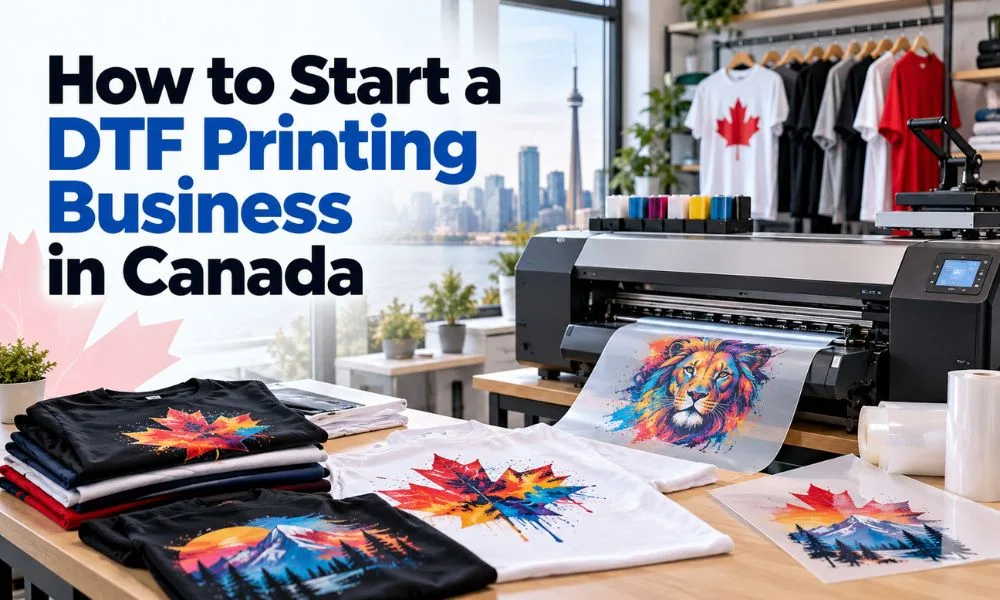
Starting a custom apparel printing business is an exciting opportunity for entrepreneurs who want to serve local businesses, clothing brands, sports teams and event organizers. One printing method that has gained attention is direct-to-film (DTF) printing, mainly because it allows businesses to decorate different types of garments without maintaining a large inventory of finished products.
However, starting a successful DTF printing business involves more than purchasing a machine. You need to understand the printing process, choose suitable equipment, calculate production costs and create a reliable workflow.
This guide explains what Canadian entrepreneurs should consider before investing in DTF printing equipment.
What Is DTF Printing and How Does It Work?
Direct-to-film printing is a garment decoration process in which a design is printed onto a special transfer film and then applied to fabric using adhesive powder and heat.
The process generally includes five steps:
- Preparing artwork using suitable design software.
- Printing the design onto DTF transfer film.
- Applying adhesive powder to the printed design.
- Curing the adhesive according to the manufacturer's instructions.
- Transferring the design onto a compatible garment using a heat press.
DTF printing can be used for various applications, including custom T-shirts, hoodies, uniforms, tote bags and promotional apparel.
Unlike some garment printing methods, DTF can work with a range of compatible textile materials, making it attractive for businesses handling different customer orders.
Essential Equipment for Starting a DTF Printing Business
Choosing suitable equipment is one of the most important decisions when establishing your printing business.
1. DTF Printer
A reliable DTF printer is the foundation of your production process.
Before selecting a printer, consider:
- Expected daily and monthly printing volume
- Print width and supported media
- White ink maintenance requirements
- Print quality and colour consistency
- Availability of technical support
- Warranty and replacement parts
Canadian entrepreneurs can explore different DTF printers to compare equipment based on their production needs.
The best printer is not necessarily the most expensive model. It should match the number and type of orders you expect to fulfil.
2. DTF Film, Inks and Adhesive Powder
DTF printing depends on compatible consumables.
Poor-quality or incompatible materials may lead to inconsistent transfers, wasted garments and unnecessary maintenance.
When selecting supplies, check compatibility with the printer and curing system. Follow the manufacturer's storage and handling recommendations.
Businesses planning regular production should also maintain an appropriate inventory of DTF printing supplies to reduce interruptions caused by missing consumables.
3. Heat Press Machine
A heat press transfers the printed design from film onto the garment.
Temperature consistency, pressure control and platen size are important considerations.
For example, a business producing full-front T-shirt designs may need a larger working area than a shop specializing in small chest logos.
Explore suitable heat press machines and check their compatibility with your intended transfer process before purchasing.
4. Supporting Equipment and Workspace
Beyond the printing equipment, you may need:
- A suitable computer and design software
- Appropriate powder curing equipment
- Ventilation and safe handling arrangements
- Storage for transfer films and inks
- Worktables and garment preparation space
- Packaging materials
- Cleaning and maintenance supplies
Your workspace should support safe operation, comfortable movement and efficient production.
How Much Does It Cost to Start a DTF Printing Business in Canada?
The startup investment depends on your equipment configuration, production capacity and workspace requirements.
A small operation focused on occasional custom orders will have different costs from a commercial printing shop producing hundreds of garments each week.
Before purchasing equipment, prepare a budget covering the complete workflow.
Equipment Costs
Include the printer, curing equipment, heat press, computer and any required accessories.
Consumable Costs
Account for film, ink, adhesive powder, replacement components and cleaning materials.
Operating Expenses
Your ongoing expenses may include:
- Workspace rent
- Electricity
- Labour
- Equipment maintenance
- Packaging
- Shipping
- Advertising
- Business insurance
Do not estimate profitability using only the cost of blank garments and ink.
The actual cost of completing an order includes labour, materials, overhead and possible reprints.
How to Choose Products for Your First Customers
One advantage of starting a DTF printing business is the ability to serve different customer groups.
However, offering too many products immediately can make production difficult to manage.
Start with a few products that are easy to test, price and fulfil consistently.
Custom T-Shirts
Custom T-shirts are useful for company events, community groups, small clothing brands and promotional campaigns.
Offer a limited selection of garment styles and colours initially.
Business Uniforms
Restaurants, construction companies, cleaning businesses and service providers may need branded uniforms.
These customers can also generate repeat orders when new employees join their teams.
Sports and Community Apparel
Local sports clubs, fundraising events and community organizations often require customized garments.
Clear production deadlines and accurate sizing are especially important for these orders.
Personalized Merchandise
Tote bags, hoodies and other suitable textile products can help businesses expand beyond standard T-shirt printing.
Always test new materials before adding them to your catalogue.
How to Price DTF Printing Orders Profitably
Setting prices too low is a common challenge for new printing businesses.
A practical pricing method begins with calculating the full cost of producing each order.
Include the blank garment, transfer materials, labour, equipment expenses, packaging and expected waste.
Next, determine a selling price that covers those costs and provides a reasonable profit margin.
For example, an order for 50 identical shirts may require less artwork preparation per garment than an order containing 50 different personalized designs.
Your pricing should reflect those differences.
You should also establish clear policies for artwork revisions, rush orders, minimum quantities and customer-approved designs.
Common DTF Printing Mistakes to Avoid
New business owners can reduce unnecessary expenses by understanding common production problems.
Ignoring Printer Maintenance
DTF printers require regular maintenance, particularly when working with white ink.
Follow the equipment manufacturer's recommended cleaning and operating procedures.
Using Incompatible Materials
Different printers, inks, films and adhesives may have specific compatibility requirements.
Avoid assuming that every consumable works with every machine.
Skipping Wash Testing
A print may look attractive immediately after pressing but perform differently after repeated washing.
Test representative products before promising durability to customers.
Accepting Unrealistic Deadlines
Production takes time, particularly when orders include multiple garment sizes or personalized artwork.
Allow enough time for customer approvals, printing, quality checks and corrections.
How to Grow Your DTF Printing Business
Once you have established a reliable production process, focus on attracting customers who need consistent printing services.
Create a portfolio featuring actual products and close-up photographs of finished designs.
Develop relationships with local businesses, event organizers, sports teams and independent clothing brands.
Make ordering straightforward by explaining available garments, pricing, artwork requirements and turnaround times.
As orders increase, review your production capacity before expanding into additional equipment.
Growth should be based on consistent customer demand rather than purchasing machines simply because they offer more features.
Frequently Asked Questions About DTF Printing
1. Is DTF printing a good business to start in Canada?
DTF printing can be a practical business opportunity for entrepreneurs serving local apparel and merchandise markets. Success depends on customer demand, equipment reliability, product quality and accurate pricing.
2. Can a DTF printer print on cotton and polyester?
DTF transfers can be applied to various compatible fabrics, including many cotton and polyester garments. Results depend on the materials, transfer system and pressing conditions.
3. Do I need a heat press for DTF printing?
Yes. A suitable heat press is normally required to apply DTF transfers to garments. Consistent temperature, pressure and timing are important for reliable results.
4. How do I maintain a DTF printer?
Maintenance requirements vary by model. Common tasks include following recommended white ink procedures, checking consumables, inspecting print quality and cleaning approved components according to the manufacturer's instructions.
5. How can I find customers for a DTF printing business?
Start by approaching local businesses, sports organizations, event planners and independent clothing brands. A portfolio of real printed samples, clear pricing and dependable delivery can help generate repeat orders.
Get Started with the Right DTF Printing Equipment
Starting a DTF printing business requires thoughtful planning, suitable equipment and a clear understanding of your customers' needs.
Whether you are setting up a small apparel shop or expanding an existing printing business, choosing equipment that matches your production goals can help you avoid unnecessary expenses.
Need help choosing DTF printing equipment for your business?
Contact RB Digital to discuss your printing requirements, equipment options and suitable supplies.