Falling off a mechanical bull is not a matter of if but when. Every rider eventually loses their grip, and the quality of that moment, how the landing feels and whether anyone gets hurt, separates a well-designed attraction from a liability waiting to happen. Joy Inflatable has built its mechanical bull ride around this simple truth, treating the fall as the most important part of the ride to engineer for. The features described here work together as an impact-reduction system, each one softening a different part of the dismount experience so that the worst outcome of an unplanned exit is usually a bruised ego and a request to go again.
Rethinking the Fall as a Designed Experience
Traditional inflatable mechanical bull for sale bulls often treat the fall as an afterthought, with a loose mat or padded pit catching whatever happens next. Joy Inflatable takes the opposite approach, designing the fall zone first and building the ride around it. The reasoning is straightforward: riders spend only a fraction of their session in danger of falling, but that fraction is when injuries occur. By engineering the landing surface, the ride geometry, and the containment barriers as a coordinated system, the company reduces the forces a rider experiences during a dismount rather than simply hoping the mats are thick enough.
The Cushioned Inflatable Arena as a Landing Surface
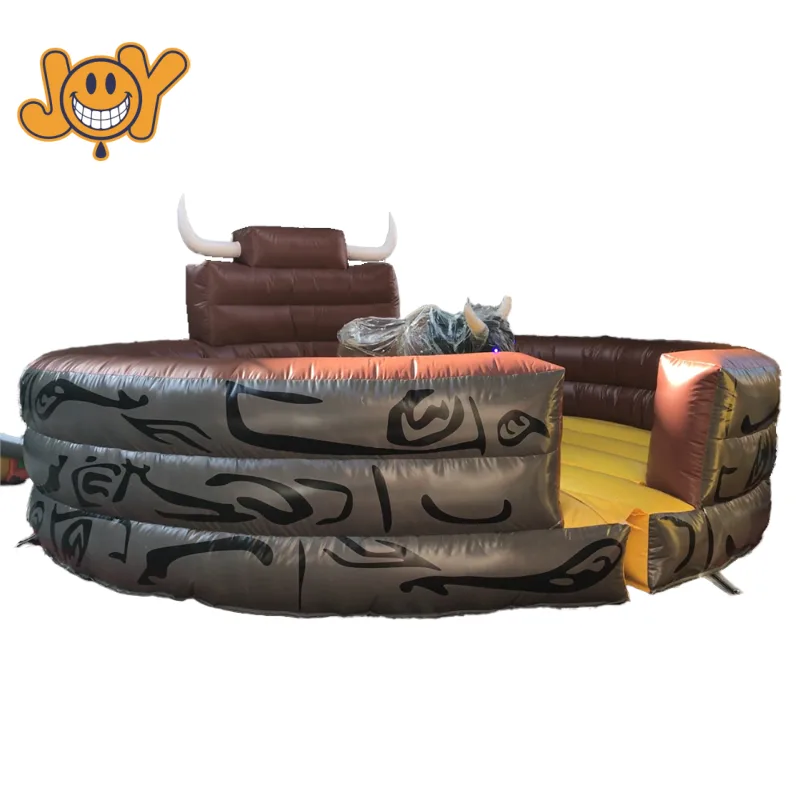
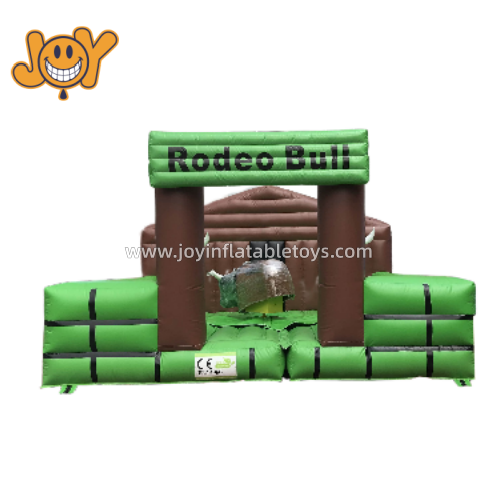
The inflatable arena is the most visible safety feature, and its role is to absorb impact across the entire ride zone rather than in one designated spot. Because riders can fall in any direction, Joy Inflatable builds the arena floor and walls as a continuous air-filled cushion, so there are no hard edges or uncovered gaps waiting to catch an elbow or knee. The floor is calibrated to yield on impact yet remain firm enough to walk on safely, and the walls provide a soft barrier for riders who tumble sideways. This all-around cushioning means the landing is forgiving regardless of which way a rider goes down.
Padding Around the Bull Body and Grip Area
Much of the fall risk sits exactly where riders spend their time: on the bull itself. Joy Inflatable wraps the bull body in dense foam padding so that a rider sliding off the side or being thrown forward contacts a soft surface rather than a hard frame. The handles are positioned to encourage a natural grip and are built to release cleanly, reducing the chance of a rider being dragged or twisting an arm as they lose hold. Even the mount and dismount points are padded, because many minor injuries happen before the ride starts rather than during it.
Motion Control as a Fall Prevention Tool
The best way to reduce fall impact is to reduce how violently riders fall in the first place, and Joy Inflatable's control system serves as a prevention layer as well as an entertainment feature. Operators can dial down bucking intensity and spin speed, meaning a nervous rider can enjoy the ride without ever reaching the conditions that produce hard falls. The system also allows the bull to be brought to a controlled stop, so an attendant who sees a rider struggling can end the session before the fall becomes a hard one. Prevention and cushioning work together here, each covering what the other cannot.
Containment Barriers That Keep Riders in the Safe Zone
A rider thrown from the bull should land inside the padded arena, not outside it onto concrete or gravel. Joy Inflatable's inflatable walls act as a containment barrier, tall enough to stop a tumbling rider's momentum and soft enough to bounce them back into the cushioned zone. This matters especially at crowded events where spectators press close to the ride, since the walls also keep onlookers from wandering into the fall area. The combined effect is a defined safety envelope in which both riders and bystanders stay protected without requiring ropes, fences, or constant crowd management.
Operator Readiness and Emergency Response
Even the best cushioning cannot replace an attentive attendant. Joy Inflatable trains buyers to watch each rider closely, keep a hand near the emergency stop during intense sessions, and intervene the moment a rider looks distressed rather than waiting for the fall to happen. Attendants should also know how to help a fallen rider up safely, check for injury without causing alarm, and reset the ride calmly between sessions. Quick, practiced response turns a frightening tumble into a minor moment, and it is the human layer that completes the impact-reduction system built into the ride itself.