A patrol rifle gets signed out for a Saturday training session. By Monday the range is packed up, but the rifle isn't back in the rack. Nobody notices until the monthly inventory check three weeks later.
That gap is a safety risk, a blow to public trust, and a compliance headache. Here's how GSM GPS weapon tracking helps you catch the problem the moment a weapon moves where it shouldn't.
Why Weapons Go Missing in the First Place
Most missing weapons aren't lost in a dramatic break-in. They slip through everyday routines. Logbook entries get skipped when people are rushed, weapons move between buildings and vehicles without a clear record, and insider misuse is hard to spot because the person already has access.
Timing matters too. Federally licensed firearms dealers must report theft or loss to the ATF within 48 hours of discovering it. If you only find out during an audit, you're already behind.
How GSM GPS Weapon Tracking Works
A GSM GPS tracker does two jobs: it finds the weapon, and it reports back.
GPS for Weapon Location Monitoring
GPS uses satellite signals to work out where the tracker is. Once it's attached to a weapon or its case, your team can see where that weapon was last reported and where it's been.
GSM for Transmitting Location Information
The cellular network sends those location updates to your monitoring platform. In the US, older 2G and 3G networks have been shut down, so choose a tracker that runs on current networks like LTE-M. How often updates arrive depends on coverage, battery life, and device settings. That matters if you run several sites or work in remote areas.
Centralized Monitoring and Movement Records
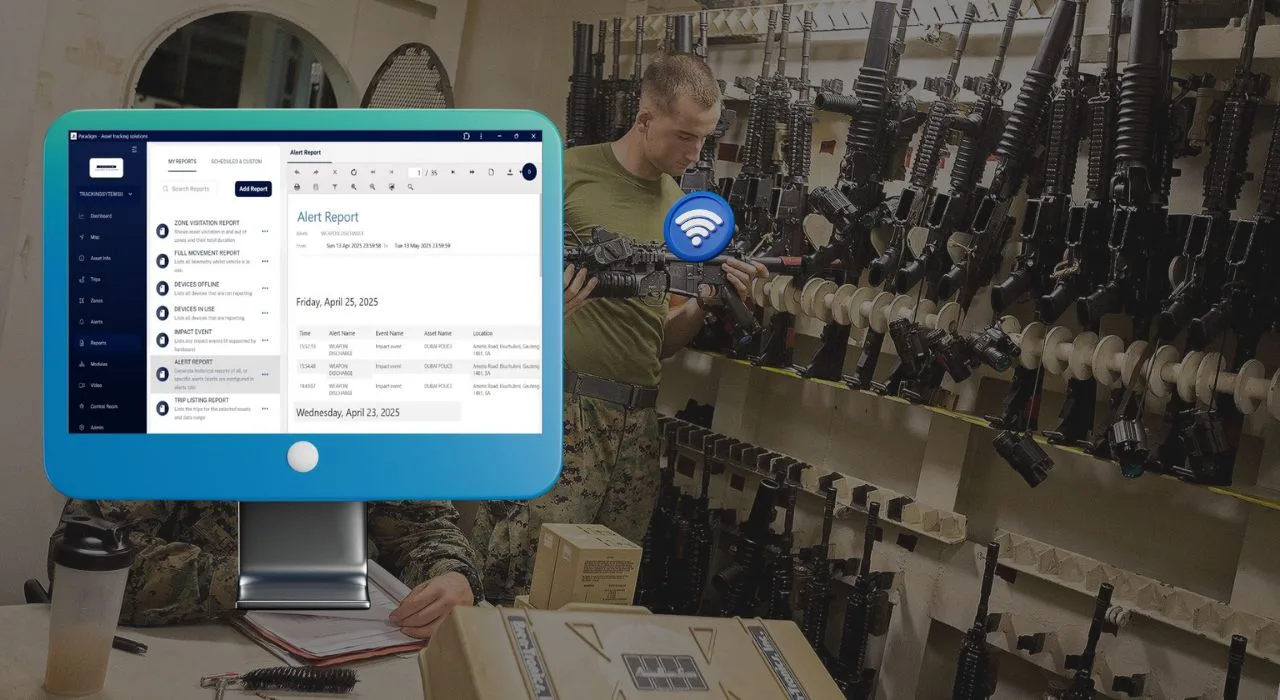
Everything lands in one dashboard. Instead of flipping through paper registers, your team can see each weapon's movement history and check it against approved transfers.
Practical Ways to Prevent Unauthorized Weapon Movement
Tracking works best when it backs up good habits, not when it replaces them.
Establish Clear Weapon Movement Authorization
Decide who can approve a transfer, who can release or receive a weapon, and what paperwork each move needs. When everyone knows the rules, anything unusual stands out quickly.
Use Alerts to Identify Unexpected Movement
Set a geofence around your armory or range and get an alert when a weapon leaves it. Treat an alert as a reason to check, not as proof that someone did something wrong.
Maintain Accurate Weapon Handover Records
Shift changes and site transfers are where records fall behind. Log who handed the weapon over, who received it, when, and where it went. Then compare that log with the tracking data.
Review Tracking Data During Regular Audits
Check your physical inventory against your records and tracking history on a regular schedule. If something doesn't match, look into it quickly and write down what you find.
Who Needs Weapon Tracking Most
Police departments and sheriff's offices use it to keep officers accountable and protect public trust. Private security companies rely on it to meet client contracts. Firearm dealers use it to stay on top of ATF requirements, and training facilities use it to keep tabs on weapons that change hands many times a day.
Challenges to Consider When Using GSM GPS Tracking
Tracking isn't perfect. GPS can be less accurate indoors, and updates may be delayed where cell coverage is weak. Ask vendors how their system handles dropped signals and low batteries, and keep locked storage, access controls, and physical checks in place. It's also worth reviewing data security and any federal, state, or local rules before you roll it out.
Choosing the Right Weapon Tracking Software
Compare alert speed, battery life, coverage where you operate, how clear the movement history is, and how well it fits your current inventory process. For police, military, and security teams, it should work with the procedures you already have rather than forcing you to start over.
Conclusion: Improve Weapon Security with GSM GPS Weapon Tracking
Think back to that missing rifle. With clear rules and tracking in place, it gets flagged the minute it leaves the range, not three weeks later.
Want to see how it would work for your team? Explore NexGenIoT weapon tracking software and get in touch to book a demo.