
Introduction
The UK's warehousing and logistics sector continues to evolve as businesses strive to meet growing customer demands and maintain efficient supply chain operations. With increasing forklift traffic, high-density storage systems, and busy warehouse environments, maintaining workplace safety has become more challenging than ever.
Forklifts play a vital role in material handling operations, but they can also present significant safety risks when operators have limited visibility. Blind spots, obstructed views, and restricted awareness of nearby pedestrians or obstacles can lead to accidents, product damage, and costly downtime.
To address these challenges, many organisations are investing in wireless forklift camera systems. These advanced visibility solutions provide operators with real-time video feeds that improve situational awareness and support safer material handling practices.
Why Visibility Is Critical in Forklift Operations
Poor visibility remains one of the leading causes of forklift-related incidents in warehouses and industrial facilities.
Several factors contribute to this problem:
Large and Bulky Loads
Pallets and oversized loads often block the operator's direct line of sight.
Blind Spots Around the Forklift
Standard forklift designs naturally create areas that are difficult for operators to see.
Narrow Warehouse Aisles
Modern warehouses maximise storage capacity, leaving limited room for manoeuvring.
High-Level Storage Racking
Operators frequently need to place pallets at significant heights where visibility becomes increasingly restricted.
Busy Work Environments
Forklifts often share operational space with pedestrians, increasing the need for enhanced awareness.
These challenges highlight the importance of technologies that help operators maintain a clear view of their surroundings.
What Is a Wireless Forklift Camera System?
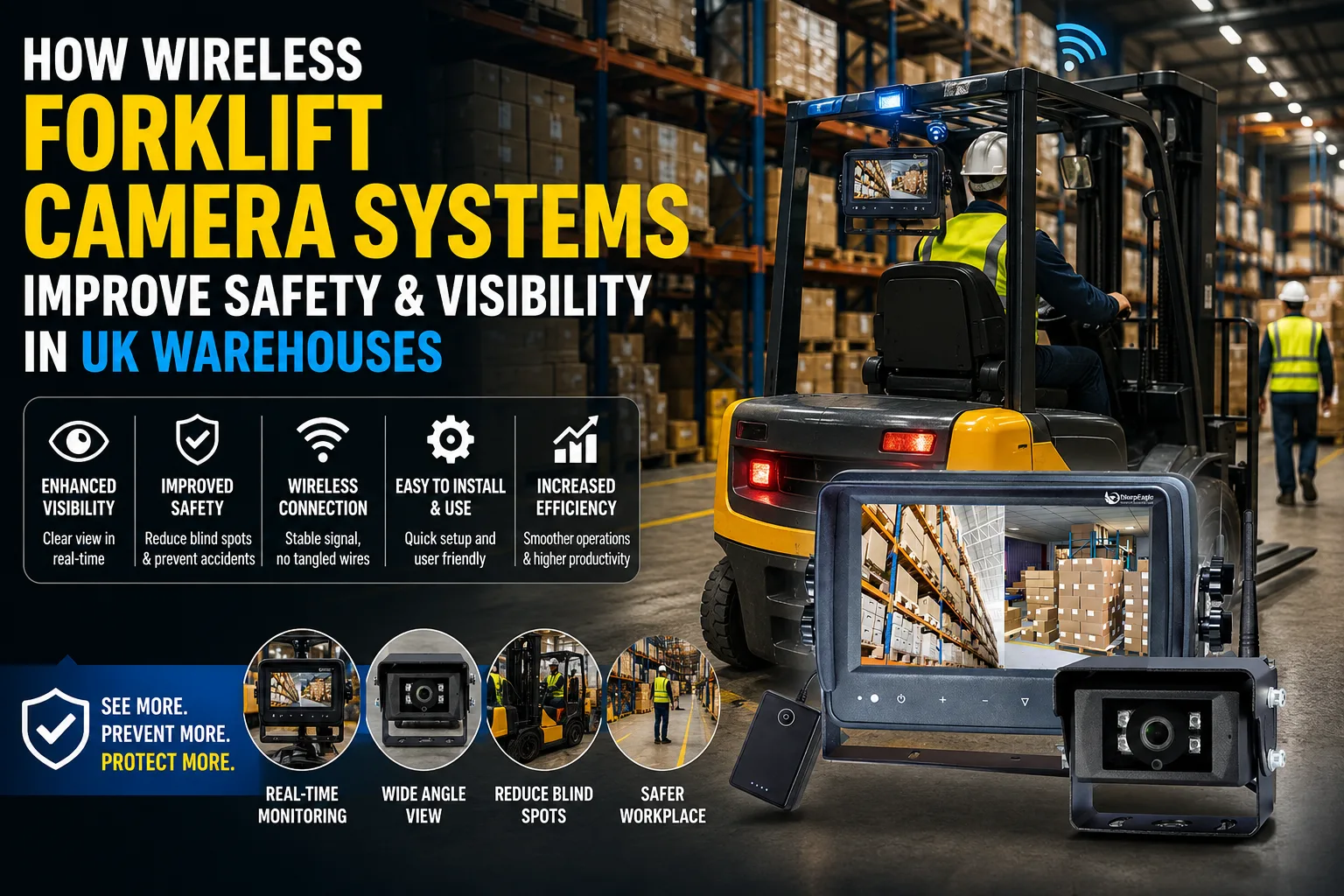
A wireless forklift camera system is a visibility-enhancing solution that uses strategically positioned cameras and wireless video transmission to provide operators with live visual information.
Unlike traditional wired systems, wireless solutions eliminate complex cable installations while delivering reliable real-time video directly to an in-cab monitor.
Depending on operational requirements, cameras can be mounted on:
- Forks
- Mast assemblies
- Rear sections
- Counterweights
- Overhead guards
The system enables operators to monitor critical areas that would otherwise be hidden from view.
Key Benefits of Wireless Forklift Camera Systems
Enhanced Operator Visibility
Wireless camera systems provide clear visibility of blind spots and operational zones.
This helps operators identify obstacles, pedestrians, and equipment before incidents occur.
Reduced Accident Risks
Improved awareness allows drivers to react more quickly to potential hazards, helping reduce collisions and workplace injuries.
Improved Load Handling Accuracy
Operators can align forks more precisely and position pallets accurately during lifting and stacking operations.
Increased Productivity
With better visibility, operators spend less time repositioning loads and correcting mistakes.
This contributes to faster workflow completion and improved warehouse efficiency.
Reduced Product and Infrastructure Damage
Accurate load placement helps minimise accidental impacts with racking systems, pallets, and warehouse equipment.
Easier Installation and Maintenance
Wireless systems remove the need for extensive wiring, making installation simpler and reducing maintenance requirements.
Why UK Warehouses Are Choosing Wireless Camera Technology
Many UK businesses are moving away from traditional visibility solutions and embracing wireless technologies.
Some of the reasons include:
Greater Flexibility
Wireless camera systems can be installed on various forklift models with minimal modifications.
Reduced Downtime
Faster installation means forklifts spend less time out of service.
Scalability
Businesses can easily expand camera coverage as operational requirements change.
Cost-Effective Safety Improvements
Wireless systems offer an efficient way to improve visibility without major infrastructure changes.
These advantages have made wireless camera technology increasingly popular in warehouses, distribution centres, and manufacturing facilities across the UK.
Key Features to Look for in a Wireless Forklift Camera System
When evaluating forklift camera solutions, businesses should consider the following features:
High-Definition Video Quality
Clear video feeds allow operators to identify hazards and handle loads accurately.
Stable Wireless Transmission
Reliable signal performance is essential for uninterrupted monitoring.
Night Vision Capability
Many warehouse operations continue around the clock, making low-light visibility important.
Rugged Industrial Design
Equipment should withstand vibration, dust, moisture, and demanding operating environments.
Real-Time Monitoring
Instant video transmission ensures operators receive immediate visual feedback.
How SharpEagle Wireless Forklift Camera Systems Support Safer Operations
Modern warehouse environments require visibility solutions capable of supporting demanding material handling operations.
SharpEagle's Wireless Forklift Camera Systems are designed to provide operators with real-time visibility while eliminating the limitations associated with traditional wired installations.
The systems offer high-definition imaging, reliable wireless transmission, durable industrial construction, and flexible mounting options suitable for various forklift applications.
For businesses handling high-value inventory or operating in busy logistics environments, enhanced visibility can significantly improve both safety and operational efficiency.
Many organisations also combine wireless camera systems with additional safety technologies such as ForkView Camera Systems, AI Forklift Cameras, Reverse Sensor Systems, and Forklift Warning Lights to create a comprehensive forklift safety programme.
Industries Benefiting from Wireless Forklift Camera Systems
Logistics and Distribution Centres
High-volume operations require accurate and efficient material handling.
Manufacturing Facilities
Improved visibility helps support safer transportation of raw materials and finished products.
Retail Fulfilment Centres
Camera systems help reduce handling errors and improve productivity.
Food and Beverage Warehouses
Accurate pallet placement reduces product damage and operational disruptions.
Cold Storage Facilities
Enhanced visibility supports safe operations in challenging working environments.
Best Practices for Improving Forklift Safety
While camera systems provide significant benefits, they should be integrated into a broader safety strategy.
Organisations should also focus on:
- Operator training and certification
- Routine forklift inspections
- Clearly marked pedestrian routes
- Warehouse traffic management plans
- Safe load-handling procedures
- Regular workplace safety assessments
Combining technology with strong operational practices delivers the greatest safety improvements.
Contact SharpEagle UK for Forklift Camera Solutions
Improving warehouse safety starts with better visibility. SharpEagle offers advanced forklift camera systems designed to help operators reduce blind spots, improve load-handling accuracy, and enhance workplace safety.
Whether you operate a warehouse, logistics hub, manufacturing facility, or distribution centre, our team can help you identify the right visibility solution for your operational requirements.
For expert guidance on improving forklift safety in your facility, contact the SharpEagle team today.
Conclusion
As warehouses become busier and operational demands continue to increase, visibility remains one of the most important factors influencing forklift safety.
Wireless forklift camera systems provide a practical solution for reducing blind spots, improving operator awareness, and supporting safer material handling operations. By investing in advanced visibility technologies, UK businesses can reduce accidents, improve productivity, and create safer working environments for employees and visitors alike.