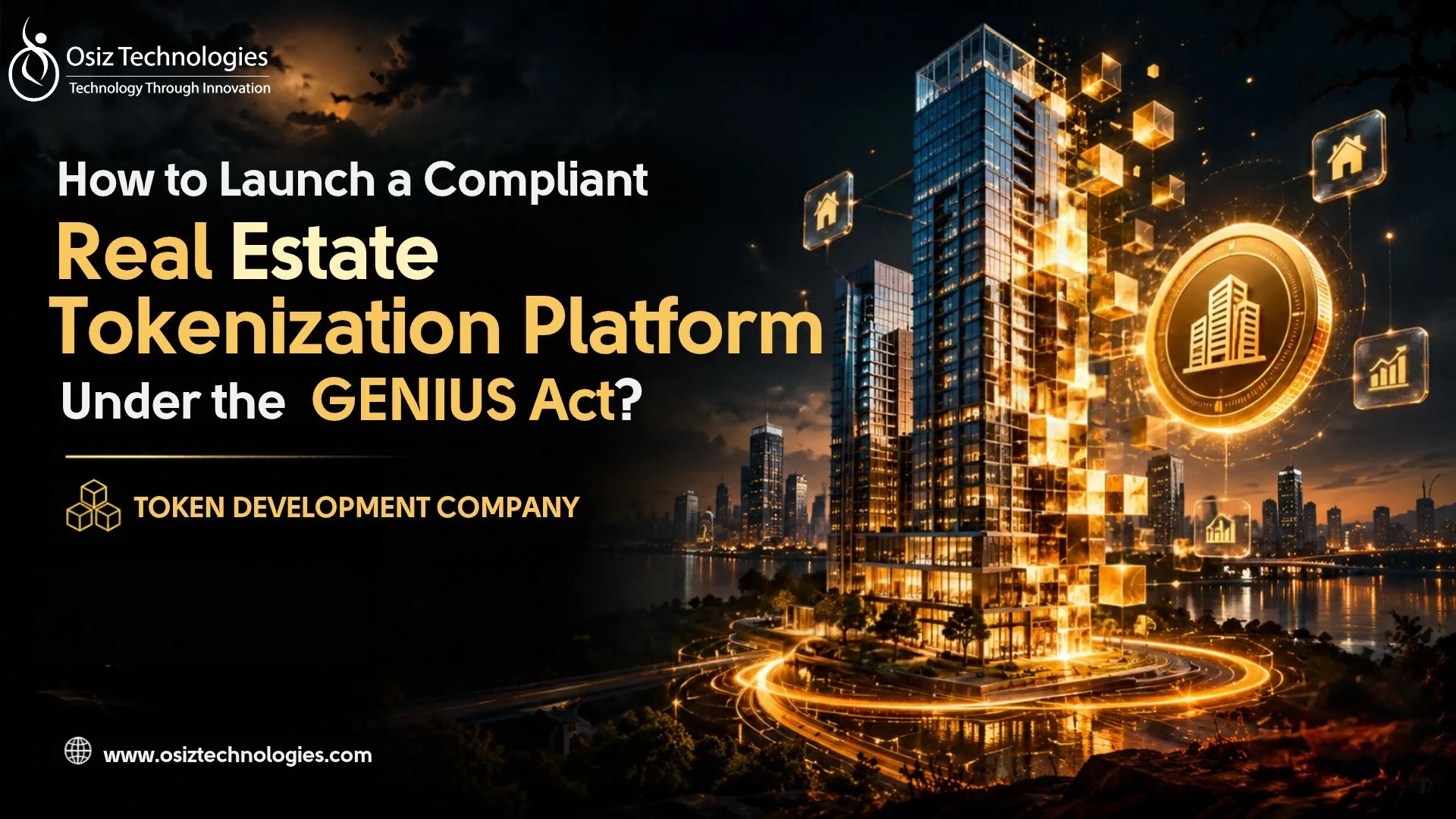
Real estate tokenization is creating new opportunities for businesses looking to connect property investments with blockchain technology. By converting eligible property-related rights into digital tokens, businesses can explore fractional investment models, transparent ownership records, and more accessible digital asset management. However, launching a successful platform requires more than smart contracts and token creation. Businesses must consider the legal structure, investor protection, transaction security, and applicable US regulations before going live.
The GENIUS Act, signed into law on July 18, 2025, establishes a federal framework for payment stablecoins. Although it does not directly regulate every aspect of real estate tokenization, it is an important consideration for platforms that plan to integrate payment stablecoins into their operations. Understanding this distinction can help businesses build a more informed development strategy.
Why Is Real Estate Tokenization Gaining Attention?
Traditional real estate investment can involve substantial capital, extensive paperwork, and complex ownership transfers. Tokenization offers an alternative approach by representing eligible property-related rights through blockchain-based digital tokens.
For example, a commercial property investment may be structured so that eligible investors acquire interests represented by digital tokens. Depending on the legal arrangement, this model can support fractional ownership, digital recordkeeping, and automated transaction processes.
Businesses exploring this opportunity need to define their investment model carefully. A token may represent an ownership interest, a security, a contractual right, or another type of asset-related claim. Its legal classification depends on the underlying structure and rights attached to it, not simply the blockchain on which it operates.
Understand the GENIUS Act and US Compliance Requirements
Before starting token development, businesses should understand which regulations apply to their proposed platform. The GENIUS Act focuses on payment stablecoins and establishes requirements for permitted issuers, including reserve backing, redemption, and regulatory oversight.
A real estate tokenization platform may use a payment stablecoin to facilitate eligible transactions. If it does, the business must assess whether the stablecoin and its issuer satisfy applicable requirements. The platform must also consider other legal obligations relevant to its activities.
Real estate tokens that qualify as securities may be subject to US securities laws, including applicable registration or exemption requirements. Depending on the business model, additional obligations involving anti-money laundering, investor verification, custody, tax, property ownership, and state-level rules may also apply.
Working with qualified US legal and compliance professionals before development begins helps businesses establish a suitable operating structure. Technology can support compliance processes, but it cannot independently guarantee legal compliance.
Choose the Right Token Development Model
Selecting an appropriate token model is one of the most important stages of platform planning. Businesses should first determine what investors will actually receive when they purchase a token.
Security tokens may represent interests structured through a company, fund, or other legally established investment vehicle. Other token models may represent contractual rights or different asset-related claims. Each structure has different technical and legal considerations.
A professional token development company can help translate the approved business model into technical requirements. These may include token standards, transfer restrictions, investor eligibility checks, ownership records, and integration with the platform's transaction workflow.
The goal is to build a token system that reflects the intended rights and restrictions accurately. Businesses should avoid choosing a token standard solely because it is popular or easy to deploy.
Build Secure Smart Contracts for Property-Related Tokens
Smart contracts are essential components of many tokenization platforms. They can automate token issuance, approved transfers, distribution rules, and other predefined operations.
For real estate applications, smart contracts may include controls that restrict transfers to eligible participants, enforce transaction conditions, and maintain consistent token balances. Where legally and technically appropriate, these controls can help reduce manual work and improve operational transparency.
However, property ownership is not automatically transferred or legally established just because a blockchain records a token transaction. The platform's legal documents, property records, ownership structure, and token functionality must work together.
Before launch, developers should test smart contracts for vulnerabilities, access-control weaknesses, and unexpected transaction scenarios. Independent security audits and a clear process for handling discovered issues can further strengthen platform reliability.
Integrate Investor Verification and Compliance Workflows
A real estate tokenization platform may need to verify investor identities, assess eligibility, and maintain records of relevant transactions. The exact requirements depend on the offering, the participants, and the applicable laws.
Features such as identity verification, know-your-customer checks, sanctions screening, permissioned access, and transaction monitoring can support the platform's compliance operations where required. Token transfer controls can also help prevent transactions that violate configured eligibility restrictions.
Businesses should determine which checks are necessary with their legal and compliance advisers before these features are implemented. Collecting personal information also requires careful consideration of data security, access permissions, retention policies, and applicable privacy laws.
Plan Stablecoin Payments and Platform Integrations
Payment functionality can influence the overall user experience. Some platforms may support eligible payment stablecoins alongside other approved payment methods, helping users complete transactions through a digital workflow.
When stablecoins are involved, businesses should evaluate issuer eligibility, redemption arrangements, wallet compatibility, transaction monitoring, and applicable regulatory requirements. The GENIUS Act's framework is relevant to qualifying payment stablecoins, but it should not be treated as a substitute for assessing the rules that apply to real estate investment products.
The development team should also test wallet connectivity, transaction confirmations, payment failures, and record reconciliation. Reliable integrations help make the platform easier to operate while reducing avoidable transaction issues.
Create a User-Friendly and Scalable Platform
A real estate tokenization platform should make complex processes understandable to property owners, investors, and administrators. A well-designed interface can display available offerings, token allocations, transaction histories, relevant documents, and account activity in an organized manner.
An administrative dashboard may provide tools for managing listings, reviewing verification status, monitoring transactions, and maintaining platform records. Role-based access controls can help ensure that users only access the functions appropriate to their responsibilities.
Scalability also deserves attention. Businesses should assess expected transaction volumes, blockchain fees, network performance, data storage, and integration requirements before choosing the technical architecture. Testing the platform under realistic usage conditions can help identify performance issues before launch.
Follow a Structured Launch and Testing Process
A successful launch begins with a clear roadmap. Start by defining the investment model, target audience, business objectives, and applicable legal requirements. Next, establish the token structure, select suitable blockchain infrastructure, and document the platform's functional and security requirements.
The development stage can then cover smart contracts, user interfaces, wallets, payment integrations, and administrative tools. Testing should include functional validation, security reviews, transaction scenarios, and user acceptance testing.
Before going live, businesses should confirm that their offering documents, operational procedures, investor onboarding, and technical controls align with the approved legal structure. Ongoing monitoring, software updates, incident response planning, and periodic compliance reviews are also important after launch.
Conclusion: Build Your Real Estate Tokenization Platform with Osiz Technologies
Launching a real estate tokenization platform requires a combination of blockchain expertise, carefully designed token structures, secure smart contracts, and a clear understanding of applicable regulations. While the GENIUS Act provides a framework for payment stablecoins, businesses must separately evaluate the securities, property, and other legal requirements relevant to their specific model.
Osiz Technologies is a token development company specializing in blockchain-based token solutions tailored to different business requirements. Its token development capabilities can support businesses exploring custom token creation, token standards, smart contract development, and multi-chain implementation. For real estate tokenization projects, these technical capabilities can help establish the foundation for token issuance, transaction workflows, wallet integration, and platform functionality. By aligning development requirements with the client's business model and working alongside qualified legal and compliance professionals, businesses can plan a more secure, scalable, and regulation-aware tokenization platform.