Today, batteries are powering way more than just small gadgets. From electric vehicles and industrial machinery, to energy buffering systems and mobility options battery technology has turned into a real driving force for modern innovation. But with so many choices around, selecting the right battery can feel kind of overwhelming, like you missing a key detail or two.
At Advantex Battery, we get it. Choosing the right power solution isn’t just about grabbing any battery, it’s really about reliability, effectiveness, and that long term steadiness. Whether you need a Lithium ion battery for personal use, or you’re handling commercial applications, understanding your own requirements is the first step, before anything else.
Think about buying running shoes without knowing if you’re actually doing marathons, or gym sessions, or maybe hiking routes. The wrong selection might work at the beginning, but later on the results slow down and performance drops. Batteries are basically the same story.
So let us walk through how to pick the right Lithium ion battery, based on what you really need.
Understand Your Purpose First
Before selecting any battery, ask yourself one simple question:
"What exactly will this battery power?"
Kind of strange, but it matters, because each different application has its own energy demands in real life.
For example:
• An electric scooter requires a different battery setup than an industrial vehicle, yes
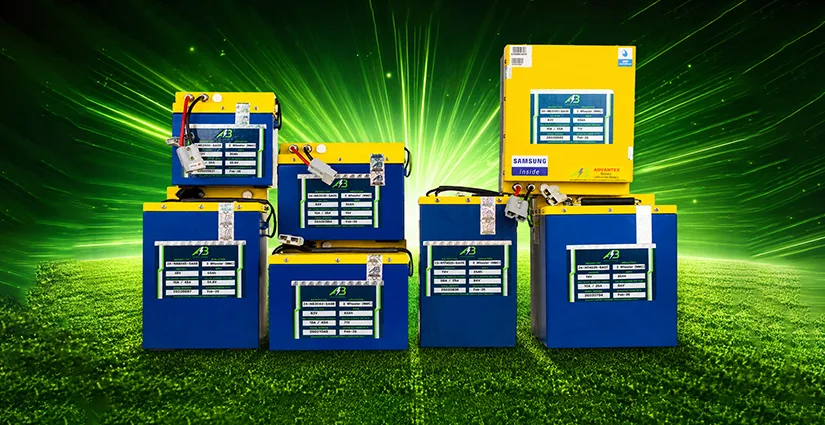
• A two wheeler battery needs lightweight construction and fast charging
• A three wheeler battery often requires greater endurance, and load handling too
• Energy storage systems prioritize long backup duration, obviously
At Advantex Battery, we believe understanding usage is the foundation for choosing the ideal Lithium ion battery.
Check Battery Capacity and Range
Battery capacity sort of decides how much usable energy a battery can actually hold.
Most often you’ll see it measured in ampere-hours, or in kilowatt-hours (kWh), depending on the device.
Here’s a more practical way to look at it. Suppose two delivery executives buy electric scooters.
Rahul does about 20 km per day, while Aman regularly covers more than 100 km every day, for deliveries and such.
Now if Rahul goes with a big-capacity battery meant for long distance travel, he might end up paying extra for energy he doesn’t really need. On the other hand, if Aman picks a smaller battery, he could get hit with frequent charging interruptions and lose reliability.
So the correct Lithium ion battery needs to align with your real day-to-day energy needs.
When you understand your usage patterns, you can fine-tune both cost and performance.
Consider Charging Speed
Charging time matters more than a lot of people realize, honestly.
A battery that offers great range but takes forever to charge can become pretty inconvenient, pretty fast.
For companies, that downtime is not just an annoyance either, it hits productivity directly.
At Advantex Battery, our battery solutions are designed with real-world, practical usage in mind, not some ideal scenario.
For example:
• Fleet operators usually need a quick turnaround time
• Delivery vehicles need the fewest charging interruptions possible
• Personal EV users tend to care about convenience first
So choosing a Lithium ion battery with solid charging efficiency can really upgrade the whole experience, day to day.
Understand Battery Life Cycle
Battery life is usually gauged by how many charge cycles it can take.
A single cycle kind of means one whole go around of charging, then discharging.
When cycle life is higher, you tend to get longer battery lifespan, fewer replacements, and in the end better long term savings too.
Even if a battery with a cheaper starting cost feels tempting, a shorter lifespan can end up costing you more later on, depending on usage.
So, investing in a solid Lithium ion battery, more often than not, works out as the more economical choice over time.
At Advantex Battery, we focus on answers that blend performance together with durability.
Choose According to Vehicle Type
Electric mobility is moving pretty fast, and the battery needs are not the same in every kind of vehicle category. A lithium battery for EV use really should be picked based on things like the load, the speed demands, and the real day-to-day operating conditions, not just the label. Like if you look at it practically, a two wheeler battery usually ends up prioritizing things such as lightweight build, a compact footprint, support for quick acceleration, and that daily commute efficiency. But when you get into a three wheeler setup, the battery conversation shifts a bit, it often calls for higher load capacity, longer operating duration, and steadier performance even during continuous use. If the wrong battery type gets chosen, it can quietly reduce efficiency, and then the whole vehicle performance can feel off, not just a little.
Safety Features Matter
Safety should never really be overlooked, right. Modern battery technology comes with smart controls, kind of, that help guard against Overcharging, short circuits and overheating as well as voltage fluctuations. Imagine using a smartphone with no protective software at all … it would be constantly kind of in danger of malfunction, you know.
In the same way, a dependable Lithium ion battery ought to contain advanced safety mechanisms, not just raw power. At Advantex Battery, we prioritize safety, because trustworthy energy solutions really start with secure technology.
Pay Attention to Weight and Design
One of the biggest advantages with most current lithium battery designs is that they’re sort of lightweight in construction. Compared with the older, traditional batteries, lithium technology tends to give you, a higher energy density, less overall weight and a more compact size, so it also feels more portable.
This matters even more when you look at electric mobility uses. When a Lithium ion battery is lighter, it can support better efficiency and generally improved vehicle performance. For EV users, every single kilogram really does count.
Consider Environmental Conditions
Not every battery works the same way in every situation, even if it looks pretty similar. Some things, like extreme heat, high humidity, frequent charging cycles, and dust exposure, can push battery performance in a direction you didn’t expect. For instance, commercial vehicles that run most of the day, through different weather conditions, really need sturdier battery systems.
At Advantex Battery, we see it this way: your battery performance is tied to the tech, but it’s also shaped by how and where it’s being used. Picking a Lithium ion battery that’s built for your environment helps deliver a steadier output and, in general, more reliable results.
Work with a Trusted Manufacturer
Battery quality depends a lot on which company makes it, and i mean that pretty literally. As demand keeps rising, more and more options are showing up on the market, so it’s not always easy to tell what’s solid and what’s just average. Still, the quality benchmarks can jump around quite a bit from one manufacturer to another.
If you pick a trusted lithium battery manufacturer in India, it usually means you get a few things you can actually feel in day to day use, like:
• Better quality control
• Dependable support
• Steady and consistent performance
• Higher level manufacturing standards
At Advantex Battery, as a top lithium battery manufacturer in India, we concentrate on providing high-output battery solutions built for today’s energy needs. Because when the tech is powering critical tasks and setups, reliability is not a nice to have… it becomes kind of essential.
Final Thoughts
Choosing the right Lithium ion battery isn’t really about grabbing the largest or the priciest option, it is more about matching the smartest fit for what you actually need.
If you’re looking for a lithium battery for EV, a dependable two wheeler battery, a long-lasting three wheeler battery, or options from a trusted lithium battery manufacturer in India, the right direction starts with knowing your requirements, not guessing.
At Advantex Battery, we think power should do more than just run your devices— it should help move things forward, improve efficiency, and drive innovation.
Because a good battery doesn’t only store energy, it also unlocks possibilities.