Introduction
Modern manufacturing requires precision, consistency, and efficiency, particularly when producing components for electronic enclosures and industrial equipment. Gaskets play an important role in protecting sensitive components from dust, moisture, environmental exposure, and electromagnetic interference. As product designs become more compact and complex, manufacturers increasingly rely on automated technologies to achieve accurate gasket application.
Robotic dispensing has become an important advancement in Form in Place Gasketing. By automating material application, manufacturers can achieve consistent gasket patterns, improve dimensional accuracy, and reduce production variations. This technology supports the manufacturing of Form in Place Gaskets that meet specific design and performance requirements across different industrial applications.
What Is Robotic Dispensing in Form in Place Gasketing?
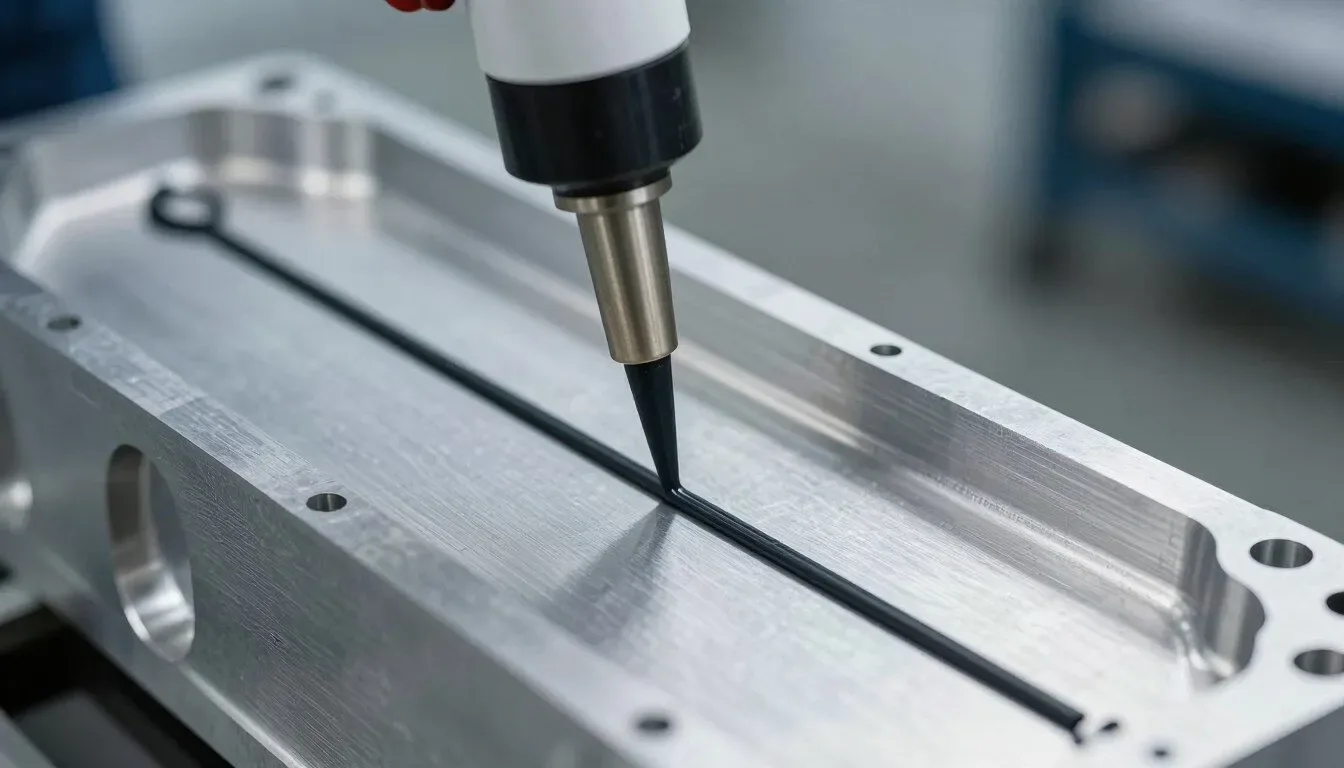
Robotic dispensing is an automated manufacturing process that uses programmable equipment to apply gasket materials directly onto component surfaces. The system follows predefined paths to dispense precise amounts of material according to the component's design specifications.
Unlike manual application, robotic dispensing provides greater control over dispensing speed, material flow, positioning, and application patterns. This makes it suitable for components with complex geometries, narrow channels, and customized sealing requirements.
The process can help manufacturers produce consistent gasket profiles while minimizing material waste and reducing dependence on manual operations.
1. Improves Gasket Application Accuracy
Accuracy is one of the most important requirements in gasket manufacturing. Incorrect positioning, uneven material distribution, or inconsistent bead dimensions can affect sealing performance.
Robotic dispensing systems follow programmed application paths, helping maintain accurate gasket placement across production runs. This allows manufacturers to apply materials according to specified dimensions and component geometries.
Improved positioning accuracy is particularly beneficial for electronic enclosures and components that require precise sealing around sensitive internal assemblies.
2. Ensures Consistent Material Distribution
Uniform material application is essential for producing reliable gaskets. Variations in bead width, height, or material volume can create gaps and inconsistencies that affect the finished component.
Robotic dispensing systems help regulate material flow and application speed. When properly configured, they can maintain more consistent gasket profiles across multiple components.
This repeatability helps manufacturers reduce production defects and maintain consistent quality standards.
3. Reduces Manufacturing Errors and Material Waste
Manual gasket application can involve variations caused by operator technique, positioning, and material handling. These variations may result in excessive material usage, incomplete coverage, or inconsistent gasket dimensions.
Automated dispensing helps reduce these challenges through programmed application paths and controlled material delivery.
By applying material only where required, manufacturers can improve material utilization and minimize unnecessary waste. Reduced rework and fewer application defects can also contribute to improved production efficiency.
4. Supports Complex Component Designs
Modern electronic enclosures often feature irregular surfaces, narrow grooves, corners, and customized shapes. Applying gasket material accurately to these designs can be challenging with conventional manual methods.
Robotic dispensing offers greater flexibility because application paths can be programmed to follow specific component geometries.
This capability makes automated Form in Place Gaskets suitable for selected applications involving compact electronic housings, industrial equipment, and customized enclosure designs.
5. Improves Production Efficiency and Repeatability
Manufacturers often need to produce large quantities of components while maintaining consistent quality. Manual gasket application can require additional time and repeated adjustments.
Robotic dispensing can automate repetitive application tasks and support standardized production workflows. Once the dispensing parameters are properly established, the system can reproduce the required gasket pattern across multiple components.
This improves process repeatability and can help manufacturers increase production efficiency while maintaining application consistency.
Applications of Robotic Dispensing Technology
Robotic dispensing supports gasket manufacturing across several industries where accurate sealing and component protection are important.
- Electronics Manufacturing: Helps apply gaskets to electronic enclosures that require protection against dust and moisture.
- Automotive Industry: Supports sealing applications in selected automotive electronic housings and electrical components.
- Telecommunications: Helps create consistent sealing profiles for communication equipment enclosures.
- Industrial Equipment: Supports customized gasket applications in control panels, machinery, and industrial housings.
- Medical Electronics: Can be used for selected electronic equipment housings requiring precise sealing and component protection.
The appropriate gasket material and dispensing process depend on the component design, environmental requirements, and intended application.
Why Choose Professional Form in Place Gasketing Services?
Achieving accurate gasket application requires more than automated equipment. Material selection, dispensing parameters, surface preparation, component design, and quality control all influence the final result.
VTI Vacuum Technologies provides specialized manufacturing capabilities, including Form in Place Gasketing, to support different industrial requirements. Located in Reedsburg, WI, VTI Vacuum Technologies serves manufacturers looking for precision-focused gasket application and manufacturing solutions.
Professional manufacturing expertise helps evaluate component specifications, material compatibility, application requirements, and production expectations to determine an appropriate gasketing approach.
Conclusion
Robotic dispensing is transforming Form in Place Gasketing by improving application accuracy, material consistency, production repeatability, and manufacturing efficiency. Automated systems help manufacturers handle complex component geometries while reducing application variations and unnecessary material waste.
As electronic products become more compact and manufacturing requirements continue to evolve, robotic dispensing will remain an important technology for precision gasket applications. Choosing suitable Form in Place Gaskets and an appropriate dispensing process helps manufacturers achieve reliable sealing performance and consistent product quality.