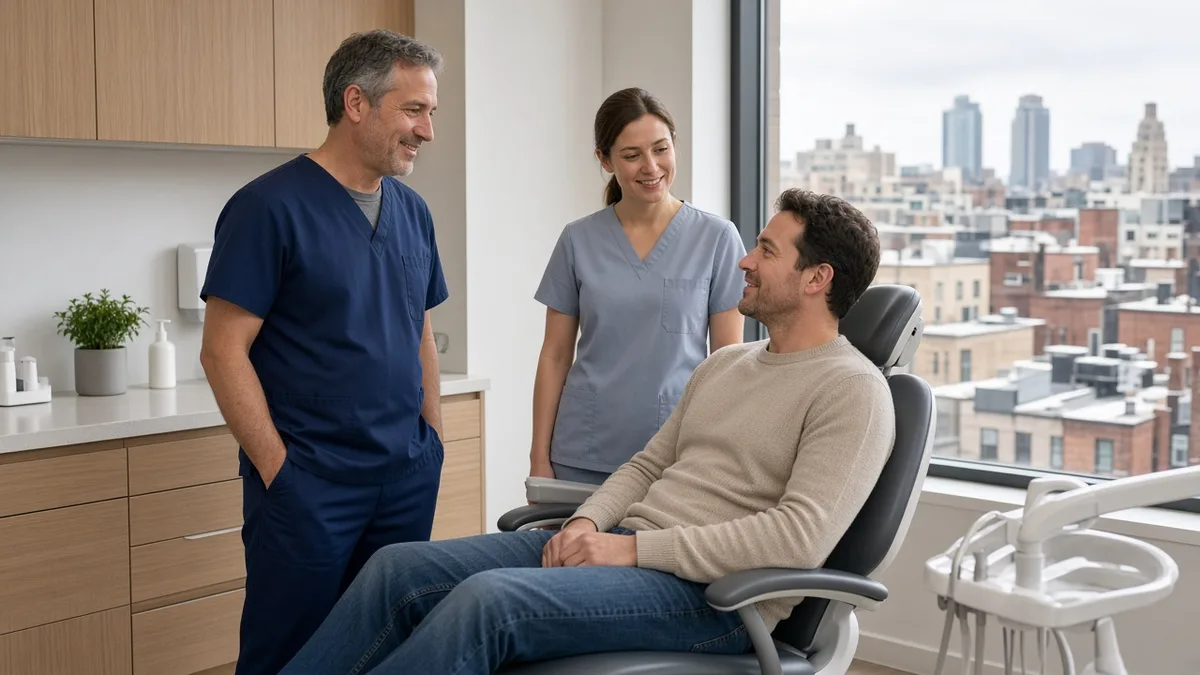
A graduate student moves into an apartment in Graduate Hospital and realizes she has not seen a dentist in two years. A filling feels rough, and cold water makes one tooth ache. She searches for a dentist nearby who takes her student insurance, reads a few reviews, and books with the practice whose website explained exactly what her first visit would involve and showed a photo of the front desk team smiling.
That decision took about fifteen minutes. In that window, a dental practice either earns a new patient who may stay for years or loses her to the office a few blocks away. Most of the factors that tipped the decision were within the practice's control.
How patients choose a dentist
Patients weigh a handful of things. Location comes first, since few people want to cross the city for a cleaning. Insurance comes next. Then reviews, which reveal how the practice treats people, how long waits are, and whether the dentist is gentle. Finally, the website and profile shape the overall impression of professionalism and comfort.
Many adults feel some anxiety about dental care. The practices that address that anxiety openly, with calm language and clear explanations, tend to win more first visits.
Consider adding a short page specifically for nervous patients. Describe how the team explains each step, whether patients can take breaks, what numbing and sedation options exist, and how you handle someone who has avoided the dentist for years. People in that situation often feel embarrassed, and a page that says plainly you have seen it all before and will not judge them can be the reason they finally book.
Neighborhood matters in Philadelphia
Philadelphia patients often search by neighborhood. Someone in Fishtown may not consider a practice in South Philly, even if the distance is short, because of how they commute and where they spend their days. Make sure your profile, website, and content reflect the neighborhoods you realistically serve, and mention nearby landmarks and transit lines that help people orient.
Service pages that patients understand
Create a page for each major service you offer: cleanings and exams, fillings, crowns, root canals, implants, whitening, clear aligners, emergency care, and pediatric dentistry if you see children. Explain each service in plain language, describe what the appointment involves, and address common worries such as pain and recovery time.
Emergency dental care deserves special attention. People with a broken tooth or sudden pain search urgently, often outside business hours. A clear emergency page with instructions on what to do, how to reach the office, and whether same day appointments are available can bring in patients who become long term clients.
Be clear about insurance and costs
List the major insurance plans you accept and explain how to confirm coverage. If you are out of network for some plans, explain what that means for the patient. Mention payment options, financing, or membership plans for patients without insurance. Clear information here saves time for the front desk and prevents unpleasant surprises.
Reviews with privacy in mind
Reviews are powerful for dental practices, but replies must protect patient privacy. Thank reviewers warmly without confirming they are patients or mentioning any treatment details. For negative reviews, respond politely, invite the person to call the office, and avoid discussing specifics in public.
Ask for reviews at natural moments, such as after a comfortable cleaning or when a patient expresses relief after a procedure. A short text with a direct link works well, sent the same afternoon while the visit is still fresh. Encourage patients to describe their experience, especially comfort and communication, since those details help anxious readers.
Keep your Google profile accurate
Choose "Dentist" as your primary category, with secondary categories for specialties you truly offer. Keep hours current, including early mornings and evenings if you offer them. Many working patients search specifically for practices open before or after work.
Add photos of the waiting room, treatment rooms, team, and the building entrance. In a city full of older buildings and shared entrances, a photo of the door and a sentence about which floor you are on can prevent confusion. Mention parking or the nearest SEPTA station.
Individual dentist listings
Some practices have listings for individual dentists in addition to the main office. That can help visibility, but set it up carefully so the listings do not look like duplicate offices. Link each dentist's listing to their profile page on the website.
Build trust with helpful content
Write short articles that answer common patient questions. How often should I get a cleaning? What should I do if a filling falls out? Are whitening strips safe? Is it normal for gums to bleed? These pages help patients and show expertise.
Profile pages for each dentist and hygienist add a personal touch. Include training, interests, and what they enjoy about their work. Patients often choose a practice because they feel a connection with a particular provider.
Families and children
If you treat children, give families their own page. Parents want to know the age you start seeing kids, how you make visits fun rather than frightening, and whether siblings can be booked back to back. A practice near a cluster of schools in Mount Airy or Chestnut Hill can attract whole families with that one page, and families tend to stay with a dentist for many years.
Thoughtful search engine optimization services Philadelphia practices use tend to tie all of this together: accurate listings, clear service pages, helpful content, and reviews, all pointing toward the same simple goal of making the first visit easy to book.
Quick answers for practice owners
Should we list prices? Ranges for common services and new patient specials can help, especially for patients without insurance.
Do we need online booking? It helps, especially for younger patients. Make sure it shows real availability.
How do we handle a review that mentions treatment details? Reply generally without repeating any details, and thank them for sharing.
Make the first visit feel easy
Patients choose dentists who seem close, trustworthy, and comfortable. Show your location clearly, explain insurance and services in plain language, collect and answer reviews carefully, and keep your profile current. If you would like help coordinating these pieces, search for a local marketing agency near me with healthcare experience and ask how they would help nervous patients feel ready to book.