From Crisis to Catalyst: The Unexpected Rise of Online Learning
On a chilly March morning in 2020, millions of students worldwide logged into virtual classrooms for the first time. What began as a desperate response to the COVID-19 pandemic rapidly evolved into a sweeping transformation redefining education itself. By 2026, online learning is no longer a stopgap but a dominant and sophisticated mode of education, shaping how knowledge is delivered, accessed, and assessed globally.
This seismic shift is best encapsulated by the UNESCO report of late 2025, which estimated that over 65% of higher education institutions worldwide now offer predominantly digital curricula, compared to less than 20% pre-pandemic. Yet, despite this rapid adoption, the journey from emergency remote teaching to refined online pedagogy involved overcoming significant hurdles, including infrastructure disparities, pedagogical challenges, and skepticism from traditional educators.
Consider the story of Fatima, a university student in Morocco, who accessed a world-class AI ethics course taught by a professor in Canada through an online platform. Her experience is mirrored by millions worldwide, illustrating the unparalleled reach and inclusivity online learning now offers. However, this democratization also raises questions about quality, engagement, and equity, which educators and technologists continue to wrestle with.
“Online learning has shifted from a mere alternative to becoming a primary educational strategy — one that demands continuous innovation and careful evaluation.” — Dr. Helena Vig, Education Technology Specialist
Tracing the Evolution: How Online Learning Became Mainstream
The roots of online learning stretch back to the 1990s with rudimentary computer-based training and correspondence courses. As internet access expanded in the 2000s, platforms like Khan Academy, Coursera, and Udacity pioneered Massive Open Online Courses (MOOCs), introducing scalable digital education. However, these early efforts were often criticized for low completion rates and lack of interactivity.
The 2010s saw incremental improvements with mobile learning and blended models, but the real inflection came in 2020 with global lockdowns forcing education systems to pivot overnight. This rapid shift exposed both the potential and limitations of online learning:
- Technological readiness varied drastically between regions, highlighting the digital divide.
- Many instructors lacked training in virtual pedagogies, leading to poor learner engagement.
- Assessment methods struggled to adapt, raising concerns about academic integrity.
Post-pandemic, investments surged into adaptive learning technologies, AI-driven tutoring, and immersive tools like virtual reality (VR) classrooms. Governments and private sector collaborations have also expanded broadband infrastructure, especially in underserved areas. According to the World Bank’s 2025 report, global internet penetration among youth aged 15-24 reached 89%, facilitating broader online learning participation.
These developments laid the groundwork for a new educational paradigm, where online learning complements and often exceeds the capabilities of traditional classrooms.
Inside the Digital Classroom: Data-Driven Insights and Comparative Analysis
Today’s online learning environments are distinguished by personalization, accessibility, and data integration. Platforms leverage AI algorithms to adapt content pacing and difficulty according to individual learner profiles, enhancing retention and motivation. For example, studies from the International Journal of Educational Technology in 2025 found adaptive systems improved learning outcomes by an average of 23% compared to static content delivery.
Moreover, online education has demonstrated cost-effectiveness and flexibility unmatched by conventional models. A meta-analysis published by the Education Policy Institute in early 2026 revealed:
- Average cost per learner reduced by 35% through digital delivery.
- Increased enrollment rates among non-traditional students, including working adults and caregivers.
- Improved access for geographically isolated populations, with rural student participation growing 40% since 2022.
Despite these gains, challenges persist. Student engagement metrics remain a focal concern, as dropout rates in some online courses hover around 30-40%. This contrasts with traditional in-person retention rates averaging 15-20%. Experts attribute this partly to the lack of social interaction and real-time feedback in some asynchronous formats.
Comparatively, hybrid models—combining online and face-to-face elements—have emerged as a preferred approach at many universities. For instance, the University of Melbourne’s 2026 report showed that students in hybrid programs outperformed purely online or traditional cohorts by an average GPA margin of 0.4 points.
“The future of education is not purely digital or analog but a thoughtful blend leveraging the strengths of both.” — Professor Luis Martinez, University of Melbourne
These insights underscore the complexity of online learning’s impact, demonstrating that technology alone is insufficient without pedagogical innovation.
2026 Milestones: Innovations and Trends Shaping Online Education
The landscape of online learning in 2026 is marked by rapid technological advances and evolving learner expectations. Key developments include:
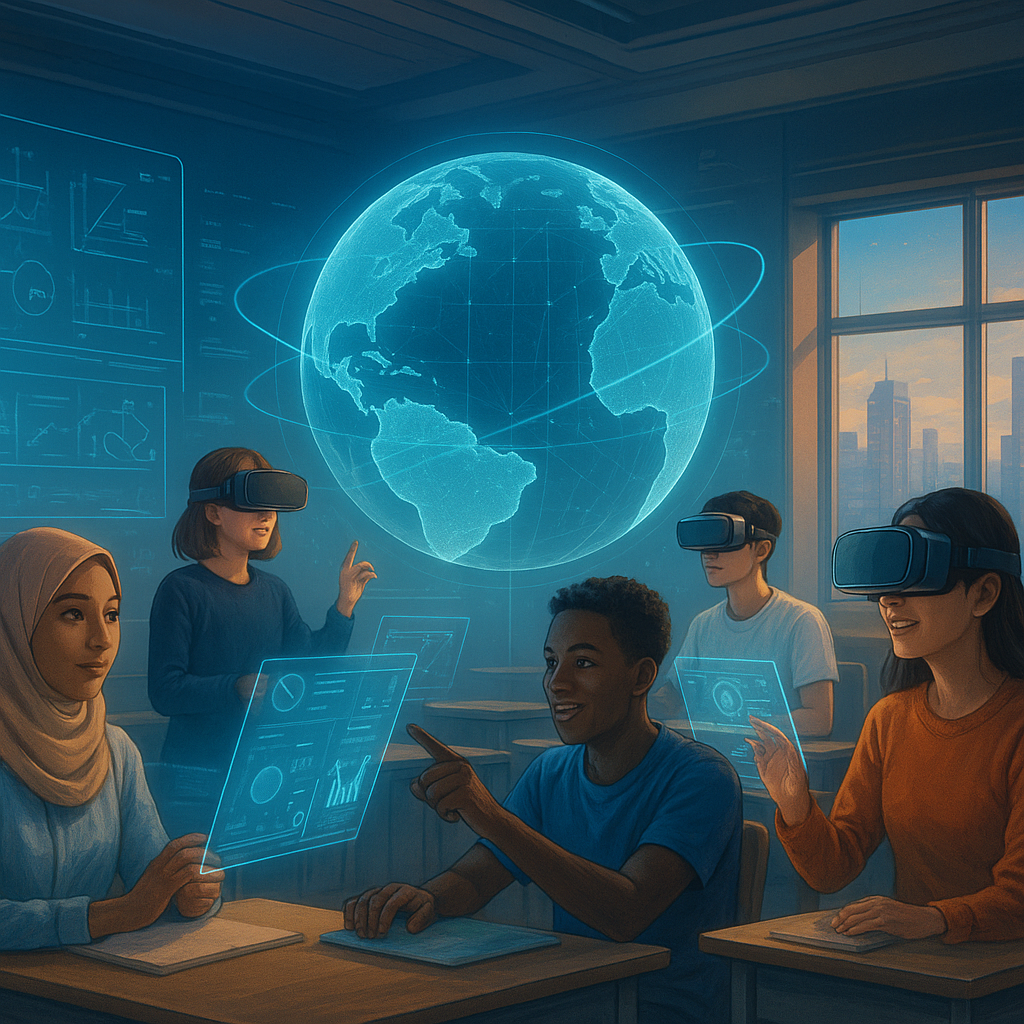
- Immersive Learning Environments: VR and augmented reality (AR) have matured into mainstream tools. Platforms like EduSphere and VirtuClass enable realistic simulations for medical training, engineering, and even social sciences, providing experiential learning unavailable in traditional settings.
- AI-Powered Tutors and Mentors: Sophisticated AI agents now offer 24/7 personalized tutoring, answering queries, and guiding study plans. These systems incorporate natural language processing and emotional recognition to adapt support dynamically.
- Blockchain Credentials: Verification of learning achievements through blockchain has enhanced academic transparency and portability, facilitating global recognition of digital degrees and micro-credentials.
- Global Collaborative Classrooms: Cross-border virtual cohorts foster intercultural exchange and teamwork, breaking down geographical silos. Initiatives like GlobalEd Connect have enrolled over 2 million learners in international projects since 2024.
Furthermore, governments worldwide are increasingly integrating online learning into national education strategies. For example, South Korea’s Ministry of Education recently announced mandatory digital literacy modules for all secondary students, reflecting a shift towards preparing learners for a digital economy.
These trends echo themes discussed in TheOmniBuzz’s Rethinking Learning: How 2026 Is Transforming Online Education Forever, which highlights how technology and policy are converging to reshape learning ecosystems.
Voices from the Field: Educators and Industry Experts Weigh In
Educators and industry leaders emphasize that online learning’s success hinges on intentional design and human factors. Dr. Sanya Patel, an instructional designer with the Global Education Alliance, notes:
“Technology is an enabler, but meaningful education requires community, motivation, and interaction. The best online courses create spaces for dialogue and critical thinking.”
Meanwhile, employers increasingly value digital skills certification, driving demand for competency-based online programs. LinkedIn’s 2026 Workplace Learning Report indicates that 72% of hiring managers prefer candidates with verified online credentials, underscoring a shift in how education translates to employability.
However, experts caution against overlooking equity issues. Dr. Miguel Santos, a sociologist studying digital inequality, warns:
“Without targeted efforts, online learning risks reinforcing existing disparities. Access, affordability, and cultural relevance must be prioritized to ensure inclusive education.”
These perspectives align with findings in TheOmniBuzz’s Mastering Online Learning: Proven Strategies for Exceptional Digital Education, which advocates for evidence-based practices and learner-centered approaches.
Looking Ahead: Opportunities and Challenges on the Horizon
As online learning cements its role in education, several critical areas demand attention to harness its full potential:
- Enhancing Engagement: Integrating gamification, social learning, and AI-driven feedback to reduce attrition and boost motivation.
- Addressing Digital Divide: Expanding affordable internet access and devices, especially in low-income and rural areas.
- Quality Assurance: Developing robust accreditation frameworks for online programs to maintain academic standards globally.
- Ethical AI Use: Ensuring transparency and fairness in AI tutors and assessment tools to avoid biases and privacy violations.
- Lifelong Learning Integration: Supporting continuous skill development aligned with fast-changing labor markets through modular, stackable credentials.
In parallel, hybrid education models will likely dominate, blending the best of online and offline experiences. Policymakers, educators, and technologists must collaborate to create ecosystems that are adaptable, equitable, and learner-centric.
The ongoing evolution of online learning also invites critical reflection on the societal role of education itself—beyond mere content delivery to fostering critical citizenship, creativity, and resilience.
For readers seeking strategic insights to optimize their own learning or institutional offerings, TheOmniBuzz’s coverage such as Why Online Learning Is No Longer Just an Option but a Necessity provides actionable frameworks and case studies.
In sum, online learning in 2026 stands as a testament to human adaptability and innovation, poised to redefine education for generations to come.