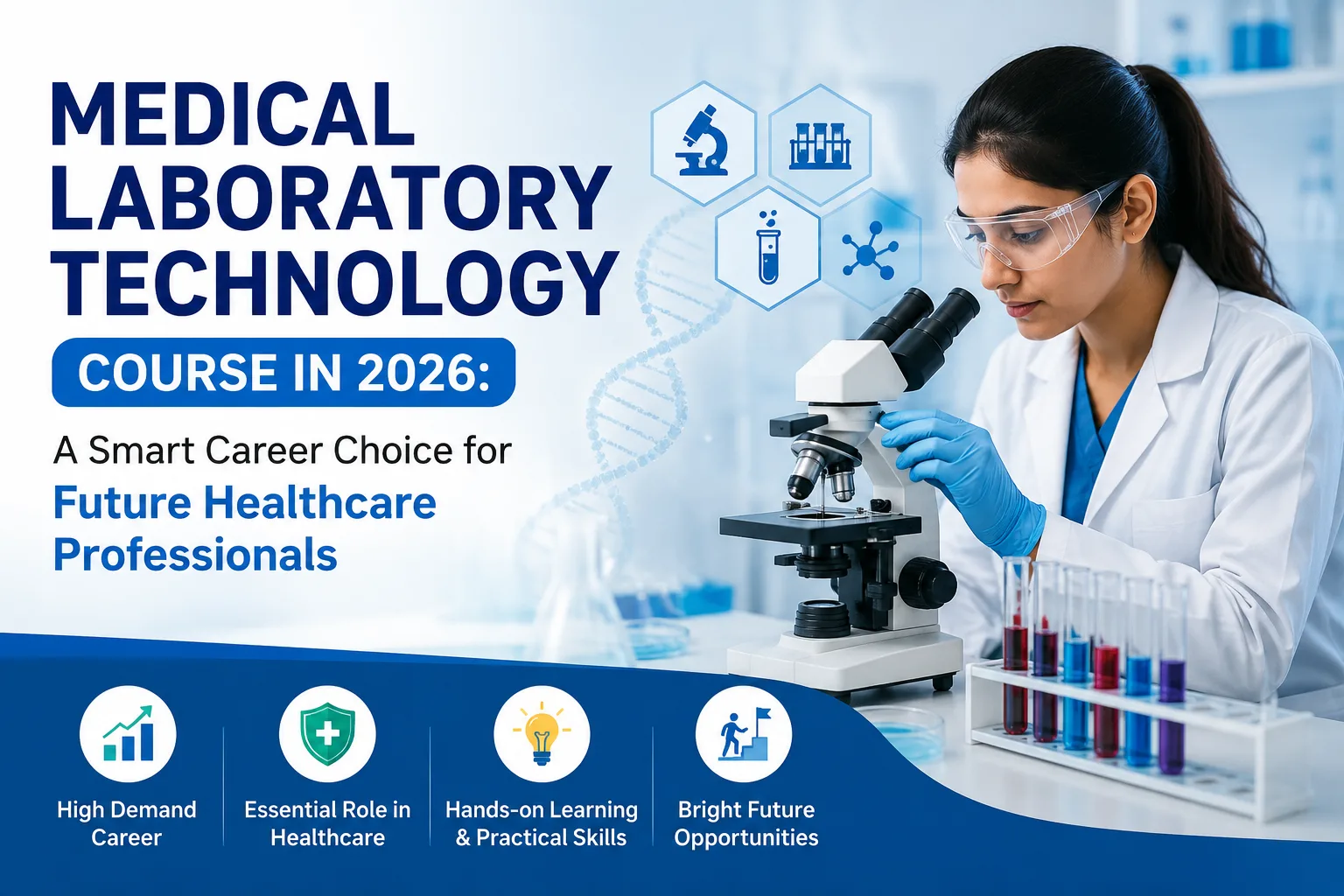
The healthcare industry is experiencing rapid transformation with advancements in diagnostics, medical technology, and patient care systems. While doctors and nurses remain essential pillars of healthcare, laboratory professionals play an equally important role by providing accurate diagnostic information that supports medical decisions.
A Medical Laboratory Technology Course prepares students to become skilled professionals who can perform laboratory investigations, analyze samples, operate diagnostic equipment, and maintain quality standards in healthcare environments. With increasing dependence on laboratory testing for disease detection and treatment monitoring, the demand for trained professionals in this field continues to grow.
Modern healthcare facilities rely on laboratories for various diagnostic procedures, including blood analysis, microbiological testing, pathology investigations, and clinical examinations. The accuracy of these reports directly impacts patient care, making laboratory professionals an important part of the healthcare ecosystem.
Growing Importance of Laboratory Professionals in Healthcare
The expansion of hospitals, diagnostic centres, research facilities, and specialized healthcare services has created more career opportunities for individuals with technical laboratory skills.
Professionals trained in medical laboratory science can explore opportunities in:
- Hospitals and healthcare centres
- Diagnostic laboratories
- Pathology departments
- Blood banks
- Research institutions
- Pharmaceutical companies
- Biotechnology organizations
- Public health laboratories
As healthcare services become more accessible across urban and rural areas, the requirement for qualified laboratory professionals is expected to increase further.
Skills Developed Through Medical Laboratory Education
A well-structured laboratory technology program focuses on developing both theoretical knowledge and practical expertise. Students learn about important areas such as clinical pathology, microbiology, hematology, clinical biochemistry, laboratory safety, and quality control procedures.
Practical training helps students understand:
- Proper sample collection and handling
- Laboratory equipment operation
- Diagnostic testing methods
- Maintaining accuracy in reports
- Following safety and hygiene protocols
- Managing laboratory records
These skills help graduates confidently work in professional healthcare environments.
Future Trends Transforming Laboratory Careers
Technology is reshaping the healthcare industry, and medical laboratories are also adopting innovative solutions. Automation, artificial intelligence, digital reporting systems, and advanced diagnostic methods are improving the speed and accuracy of testing procedures.
Future laboratory professionals will increasingly work with:
- Automated diagnostic instruments
- Digital pathology systems
- Molecular diagnostic techniques
- AI-supported laboratory analysis
- Advanced healthcare software platforms
Students who continue upgrading their technical knowledge will have better opportunities in this evolving healthcare landscape.
Why Students Are Choosing Healthcare Skill-Based Careers
Many students today prefer career-focused education that provides practical skills and industry exposure. Healthcare programs offer opportunities to build specialized knowledge while contributing to meaningful work that impacts patient health.
For students looking for career options after school, healthcare diploma programs provide an opportunity to enter the medical field early and develop professional expertise. These programs focus on practical learning and prepare students for employment-oriented roles.
Building a Successful Career in Medical Laboratory Technology
Choosing the right educational institute is an important step toward career success. Students should consider factors such as updated curriculum, practical laboratory facilities, experienced faculty, clinical exposure, and internship opportunities.
A strong foundation in laboratory technology combined with continuous learning can help professionals achieve long-term growth in the healthcare sector.
Conclusion
Medical laboratory technology is becoming one of the most promising healthcare career fields due to increasing demand for accurate diagnostics and advanced medical testing. As healthcare continues evolving, skilled laboratory professionals will remain essential contributors to patient care.
For students interested in science, technology, and healthcare, pursuing a Medical Laboratory Technology Course can provide valuable skills, diverse career opportunities, and a pathway toward a stable professional future.
With innovation driving the healthcare industry forward, laboratory careers are expected to remain highly relevant and rewarding in 2026 and beyond.